The StemMACS Trilineage Differentiation Kit enables directed differentiation of pluripotent stem cells into ecto-, meso- and endoderm. Combined with immunofluorescent or flow cytometric analysis it provides a simple 7-day assay for functional characterization of ES and iPS cell lines.


Related products for StemMACS™ Trilineage Differentiation Kit, human


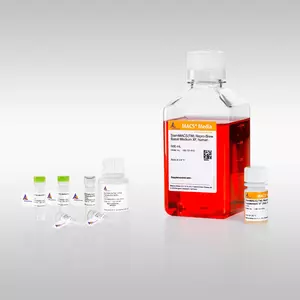
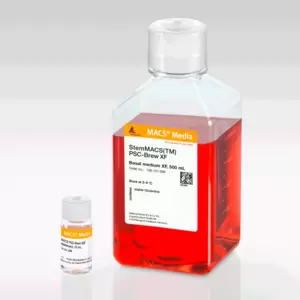


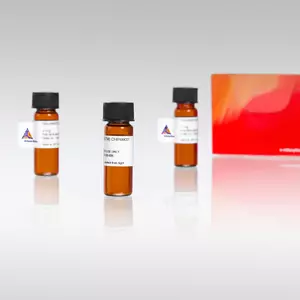
The StemMACS Trilineage Differentiation Kit enables directed differentiation of pluripotent stem cells into ecto-, meso- and endoderm. Combined with immunofluorescent or flow cytometric analysis it provides a simple 7-day assay for functional characterization of ES and iPS cell lines.
Pluripotency is the ability to differentiate into the three embryonal germ layers, ectoderm, mesoderm, and endoderm, and is a defining characteristic of pluripotent stem cells (PSCs). Therefore, basic characterization of PSC lines includes typically a test for pluripotency in addition to surface marker expression and morphology. However, traditional pluripotency assays such as embryoid body and teratoma formation are both time-consuming and difficult to quantitate.
The StemMACS Trilineage Differentiation Kit provides a functional assay that can be completed in 7 days. In contrast to other pluripotency assays, the StemMACS Trilineage Differentiation Kit allows either analysis by immunocytochemistry or quantitative analysis by flow cytometry. The kit is enabling parallel assessment of multiple hPSC lines. The 12-well format is optimal for flow cytometric analysis. For immunocytochemistry, the 24-well format may be sufficient.
Assessment of differentiation potential of human pluripotent stem cells.
Protocol overview
Quantitative analysis of trilineage differentiation: Four different iPSC lines were differentiated into ectoderm, mesoderm, and endoderm using the StemMACS™ Trilineage Differentiation Kit. On day seven, the differentiation cultures were analyzed by flow cytometry. While all lines showed pluripotent differentiation potential, the assay also revealed differences in their propensity to differentiate into certain lineages, e.g. CXCR4+Sox17+ definitive endoderm cells.
Comparison of different PSC lines: Visualization of the flow cytometric data from figure 2 demonstrates differences in differentiation behaviour.
Immunocytochemistry analysis of trilineage differentiation: Two of the PSC lines analyzed in fig. 2 were also subjected to immunocytochemistry analysis using the indicated markers. While differentiation into the 3 germlayers was clearly detectable, the degree of differentiation was difficult to quantify (as apparent, e.g., by comparing the mesoderm samples to fig. 2)
- Gaignerie, A. et al. (2018) Urine-derived cells provide a readily accessible cell type for feeder-free mRNA reprogramming. Sci Rep (8): 14363