Fluorescent dyes


1 Fluorescent dyes
Flow cytometry has an inherent need to continuously increase the number of fluorochromes to meet the
growing demand of sophisticated multicolor analysis.
Vio® Dyes represent a family of fluorochromes for flow cytometry and fluorescence microscopy developed
by Miltenyi Biotec. VioBlue®, VioGreen™, Vio Bright FITC, PE-Vio® 615, PE-Vio 770, PerCP-Vio 700, Vio 515, Vio Bright 515, APC-Vio 770 are characterized by high fluorescence intensities and low spillover, making them an ideal choice for multicolor applications. Combined with traditional fluorochromes, such as FITC, PE, PerCP, and APC, the Vio Dyes expand Miltenyi Biotec’s antibody portfolio and allow a greater selection of antibodies for multiparameter cell analysis.
1.1 Vio® Dyes
- Superior mean fluorescence intensity for excellent signal
- High stain index for clear population discrimination
- Hassle-free and ideal for multicolor experiments due to low compensation

 View details
Fluorochrome specifications
| Fluorochrome | Excitation | Exmax (nm) | Emmax (nm) | MACSQuant® | Analyzer | MACSQuant | VYB |
| aser (nm) | |||||||
| VioBlue | 405 | 400 | 452 | V1 | 450/50 | V1 | 450/50 |
| VioGreen | 405 | 388 | 520 | V2 | 525/50 | V2 | 525/50 |
| Vio Bright 515 | 488 | 488 | 514 | B1 | 525/50 | B1 | 525/50 |
| Vio 515 | 488 | 488 | 514 | B1 | 525/50 | B1 | 525/50 |
| Vio Bright FITC | 488 | 496 | 522 | B1 | 525/50 | B1 | 525/50 |
| FITC | 488 | 495 | 520 | B1 | 525/50 | B1 | 525/50 |
| PE | 488 or 561 | 565 | 578 | B2 | 585/40 | Y1 | 586/15 |
| PE-Vio 615 | 488 or 561 | 565 | 619 | B3 | 655–730 | Y2 | 615/20 |
| PerCP | 488 | 482 | 675 | B3 | 655–730 | N/A | N/A |
| PerCP-Vio 700 | 488 | 482 | 704 | B3 | 655–730 | N/A | N/A |
| PE-Vio 770 | 488 or 561 | 565 | 775 | B4 | 750 LP | Y4 | 750 LP |
| APC | 561 or 640 | 652 | 660 | R1 | 655-730 | Y3 | 661/20 |
| APC-Vio 770 | 561 or 640 | 652 | 775 | R2 | 750 LP | Y4 | 750 LP |
 Related PDFs:
 Related products:
1.1.1 Violet laser (405 nm)
VioBlue® Dye (Emmax 452 nm)
The VioBlue® Dye is a coumarin-based fluorochrome with excitation and emission wavelengths of 400 nm and 455 nm, respectively. It is a superior alternative to Pacific Blue™, Alexa Fluor® 405, or BD™ Horizon™ V450. Multiplexing of VioBlue with other fluorochromes is easily possible, adding to the variety of marker combination for multiparameter flow cytometry. Designed to maximize the potential of a flow cytometer’s violet laser, the VioBlue Dye shows superior performance compared with many other fluorochromes excited at 405 nm, including significant advances in brightness, signal-to-noise ratios, and intralaser compensation requirements. In addition, VioBlue exhibits minimal photo-induced degradation, and can consequently be used for many different applications, such as fluorescence microscopy.
VioBlue Dye at a glance:
- Coumarin-based dye with excitation and emission wavelengths of 400 nm and 455 nm, respectively
- Superior alternative to Pacific Blue, Alexa Fluor 405, or BD Horizon V450
- Multiplexing of VioBlue with other fluorochromes is easily possible, adding to the variety of marker combinations for multiparameter flow cytometry
- Combined use with the VioGreen Dye possible
Absorption and emission maxima of fluorochromes related to VioBlue.
| Fluorochrome | Absorption max. (nm) | Emission max. (nm) |
| VioBlue | 400 | 455 |
| Pacific Blue | 405 | 455 |
| Cascade Blue® | (375); 401 | 423 |
| Alexa Fluor 405 | 405 | 421 |
| eFluor® 405 | 405 | 450 |
| BD Horizon V450 | 404 | 448 |
Laser and filter compatibility
With a maximum absorption and emission at 400 nm and 455 nm, respectively, VioBlue Conjugates are fully compatible with standard filter sets from all major flow cytometry hardware providers, giving researchers the flexibility to use the VioBlue Dye with all existing platforms.

 View details
Enhanced brightness
Compared to well-established fluorochromes with high fluorescence intensities, such as PE, VioBlue exhibits a similar degree of fluorescence.
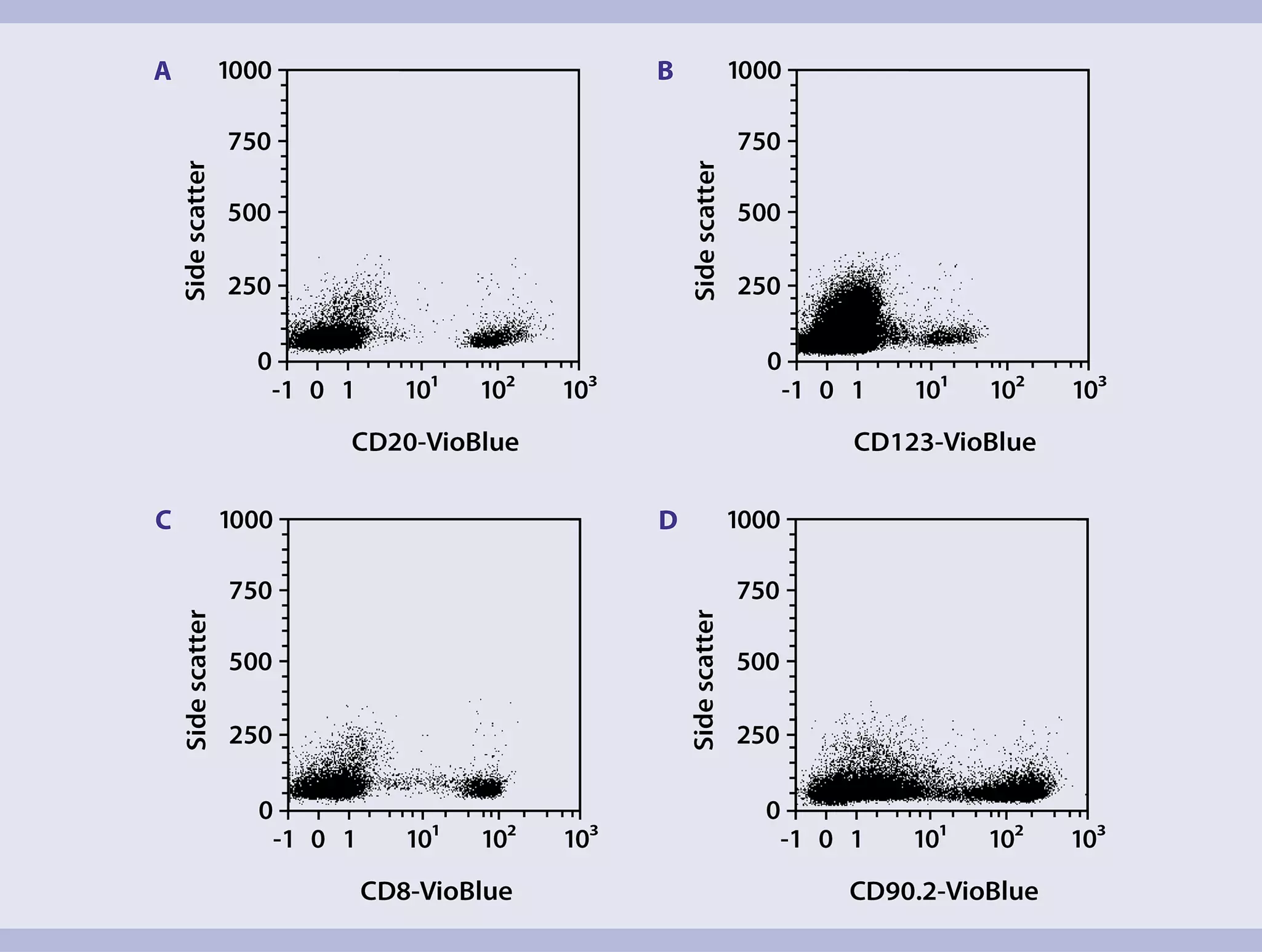
VioBlue Conjugates provide a superior alternative to many spectrally similar conjugates for the V1 channel, further increasing the options of multicolor analysis.

Decreased spillover
VioBlue Conjugates exhibit minimal spillover into the V2 channel, making them perfect candidates for multicolor panels which utilize both violet channels. Furthermore, VioBlue is negligibly excited by the 488 nm laser, and thus requires no compensation between the V1 and B1 channels.
High stability during fixation
It is of crucial importance for a conjugate to retain its fluorescent properties after fixation, in order to allow researchers to maximize the use of biological samples. The VioBlue Dye has a very high stability after fixation with paraformaldehyde, equal to or exceeding many other spectrally similar fluorochromes.

VioGreen™ Dye (Emmax 520 nm)
The VioGreen™ Dye is a fluorochrome with a large Stokes shift, emitting strong fluorescence at 520 nm upon excitation at 405 nm. It is a non-protein fluorochrome with significantly increased mean fluorescence intensities and higher stain indices compared to related fluorochromes such as Pacific Orange™, Krome Orange™, and BD Horizon V500. Designed to maximize the potential of a flow cytometer’s violet laser, the VioGreen Dye shows superior performance compared with many other fluorochromes excited at 405 nm, including significant advances in brightness, signal-to-noise ratios, and intralaser compensation requirements. In addition, VioGreen exhibits minimal levels of photo-induced degradation, and can consequently be used for many different applications, such as fluorescence microscopy.
VioGreen Dye at a glance:
- Large Stokes shift fluorochrome, emitting strong fluorescence at 520 nm upon excitation at 405 nm
- Significantly increased mean fluorescence intensities and higher stain indices than Pacific Orange™, Krome Orange™, and BD Horizon™ V500
- Non-protein fluorochrome
- Combined use with the VioBlue Dye possible
- Perfectly suited for multiparameter flow cytometry using all current flow cytometers
Absorption and emission maxima of fluorochromes related to VioGreen.
| Fluorochrome | Absorption max. (nm) | Emission max. (nm) |
| VioGreen | 388 | 520 |
| Pacific Orange | 400 | 551 |
| Krome Orange | 398 | 528 |
| AmCyan | 458 | 489 |
| Horizon V500 | 415 | 500 |
Laser and filter compatibility
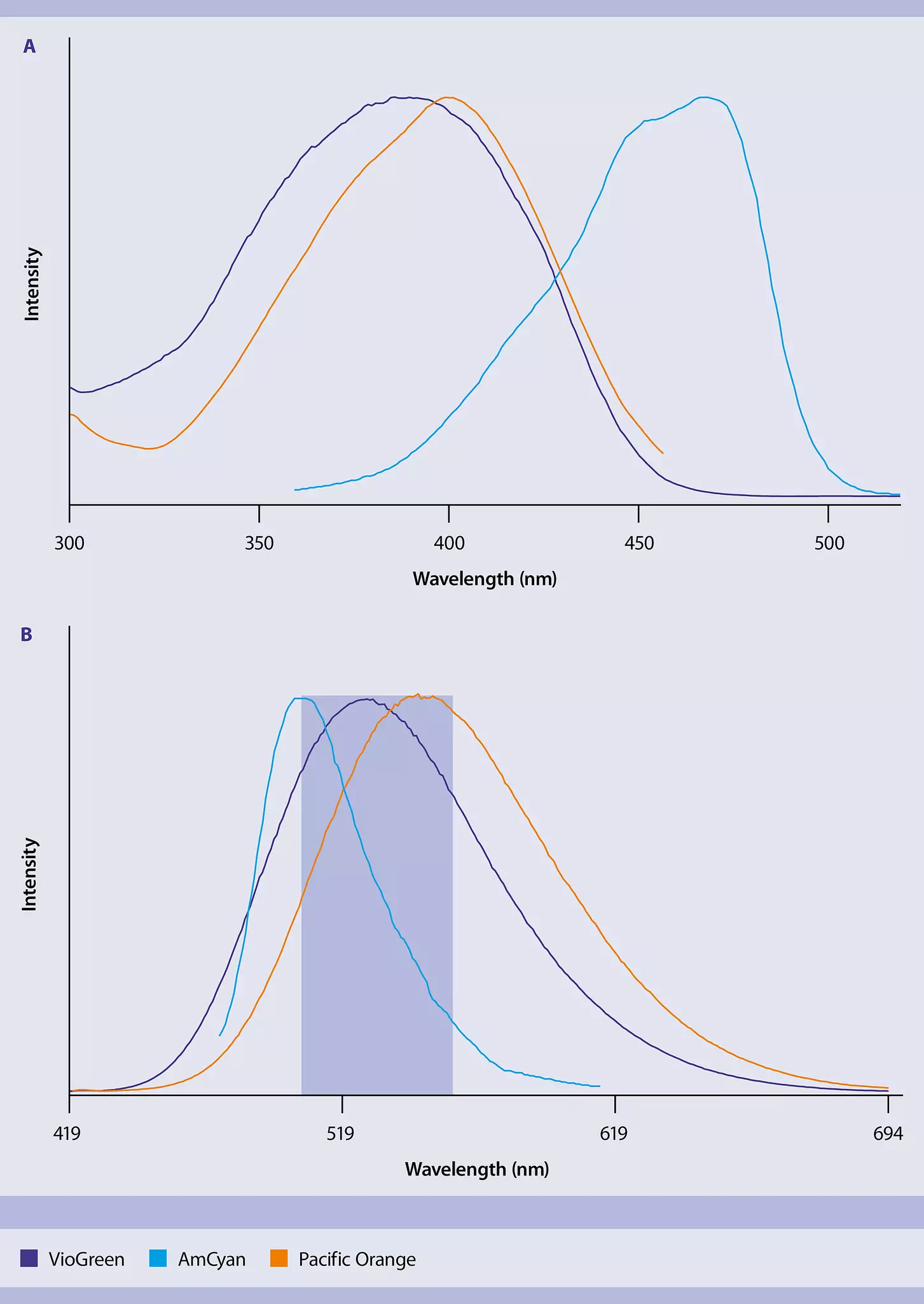
With a standard 525/50 nm filter set, VioGreen exhibits a more favorable spectral profile than Pacific Orange or AmCyan.
Enhanced brightness
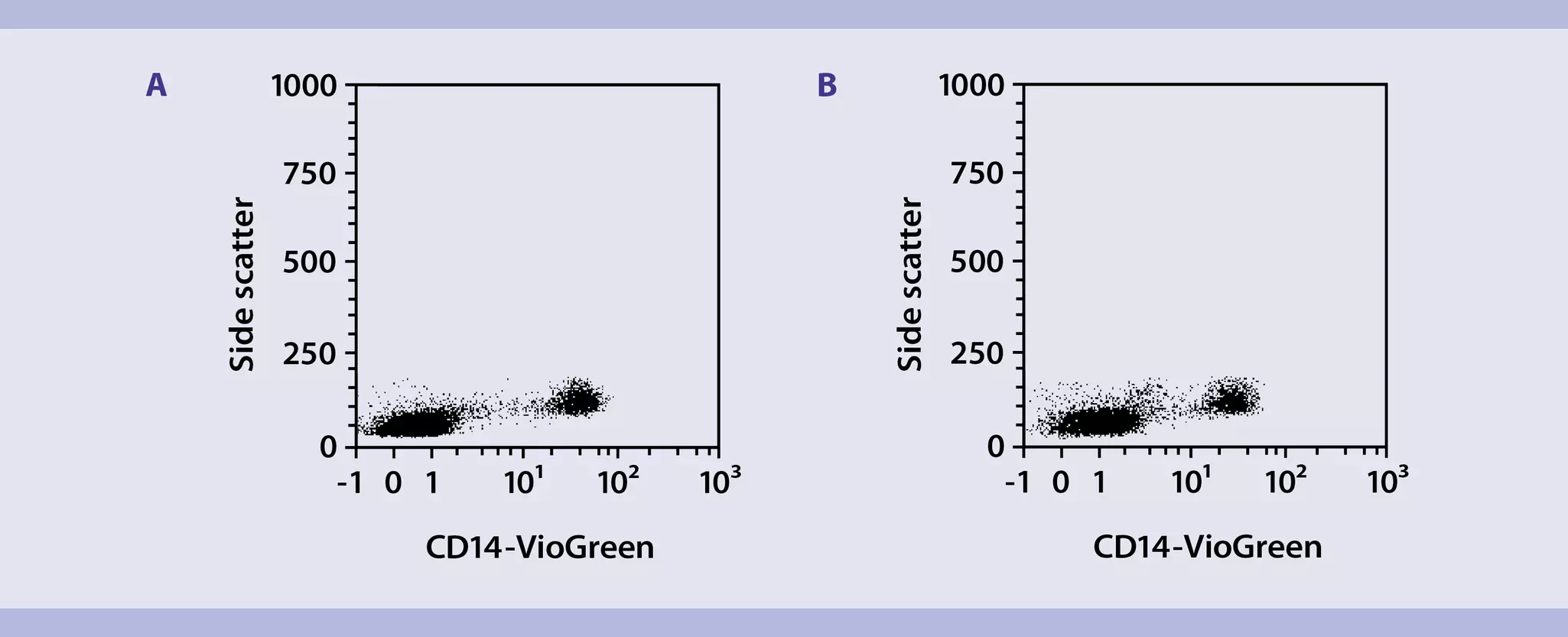
Like most dyes designed for the violet laser, VioGreen shows a lower fluorescence intensity compared to other well-established fluorochromes, such as PE. However, human and mouse cell populations stained with a VioGreen-conjugated antibody can be easily identified and distinguished from unstained cells.

In addition, many VioGreen Conjugates exhibit brighter fluorescence compared to spectrally similar conjugates, including Pacific Orange, AmCyan, and Horizon V500, as measured by mean fluorescence intensity (MFI) or stain index (normalized signal-to-noise ratio).
MFI and stain indices of CD8-VioGreen and CD8-Pacific Orange.
| Sample | Conjugate | MFI | Stain Index |
| A | CD8-VioGreen | 12.1 | 12.7 |
| A | CD8-Pacific Orange | 6.4 | 8.4 |
| B | CD8-VioGreen | 11.3 | 11.9 |
| B | CD8-Pacific Orange | 6.1 | 7.0 |

High stability during paraformaldehyde and ethanol fixation
The VioGreen Dye exhibits strong photostability during paraformaldehyde and ethanol fixation, with only minimal photo-induced degradation. This highlights the dye’s suitability for use in studies that require fixation.
1.1.2 Blue laser (488 nm)
Vio Bright™ 515 (Emmax 514 nm)
Vio Bright™ 515 is an extraordinarily bright dye for the FITC channel. The proprietary multimerization technology allows a 4-fold increase in brightness over the traditional FITC dye. The fluorochrome is excited by the blue laser (488 nm) and its emission peak is at 514 nm. Improved brightness in combination with 25% less spillover into the PE channel enables optimal detection of rare surface markers in the FITC channel.
Vio Bright 515 at a glance:
- Brightest Vio Dye for the blue laser (488 nm)
- Excellent choice for surface markers, in particular for antigens with low expression levels
- Spillover into B2/PE-channel reduced by 25%
- High photostability for immunofluorescence microscopy applications
Absorption and emission maxima of fluorochromes related to Vio Bright 515.
| Fluorochrome | Absorption max (nm) | Emission max (nm) |
| Vio Bright 515 | 488 | 514 |
| Vio 515 | 488 | 514 |
| Vio Bright FITC | 496 | 522 |
| FITC | 495 | 520 |
| Alexa Fluor 488 | 495 | 519 |
| BD Horizon Brilliant Blue 515 | 490 | 515 |
Laser and filter compatibility
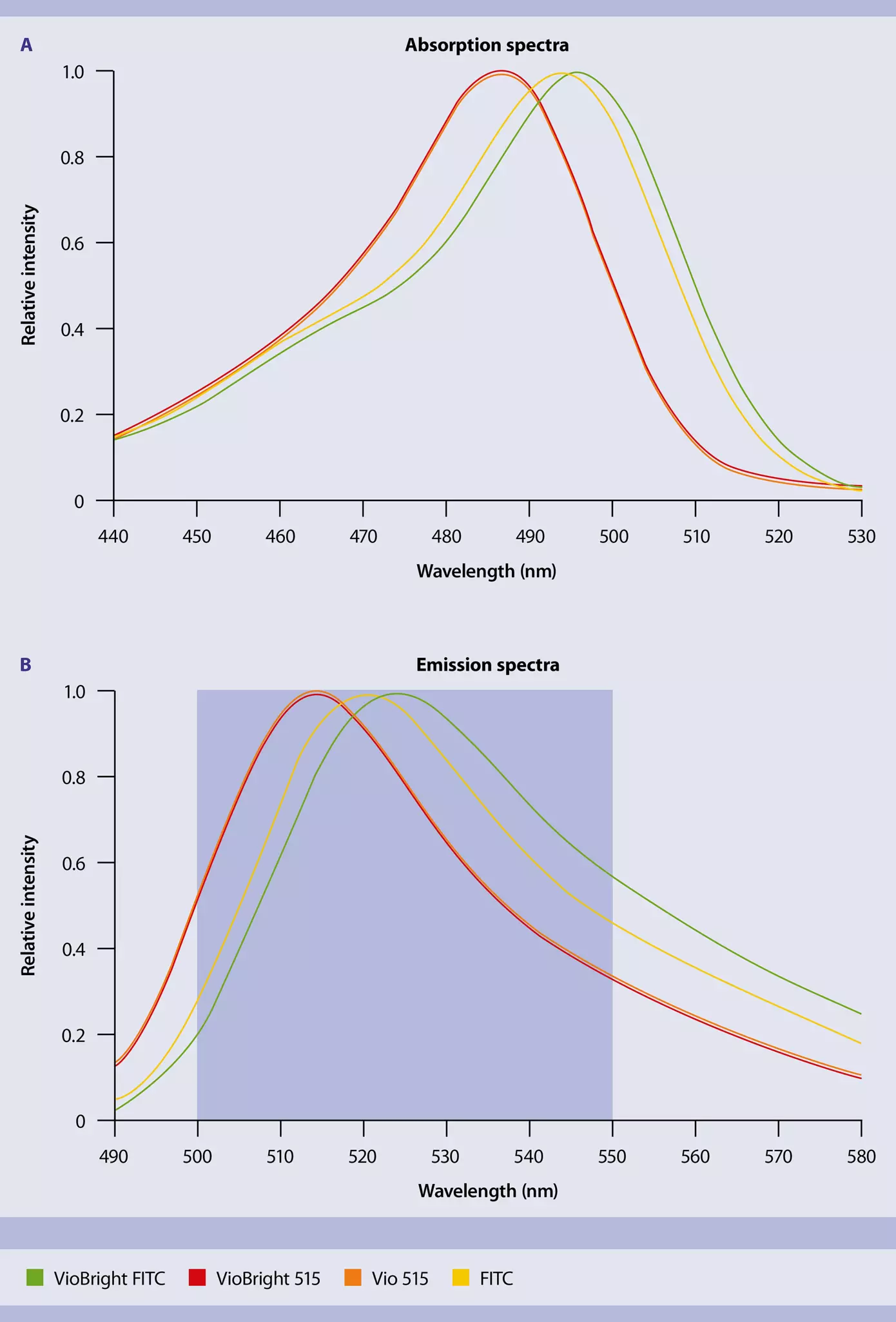
Vio Bright 515 can be excited with a blue laser (488 nm) and displays peak excitation and emission at 488 nm and 514 nm, respectively. Its fluorescence signal can be detected with a standard FITC filter, such as the 525/50 nm filter of the MACSQuant Flow Cytometers. Thus, no changes in detection filters or the cytometer itself are required. With Vio Bright 515 the potential of the most commonly used laser-filter combination in flow cytometers can be extended to detect a wider variety of markers, including intracellular markers.
Enhanced brightness
Vio Bright 515 is the best choice for the detection of markers with low expression levels. With stain indices and mean fluorescent intensities (MFI) higher than those of PE, Vio Bright 515 staining allows for an excellent resolution of positive and negative cell populations.
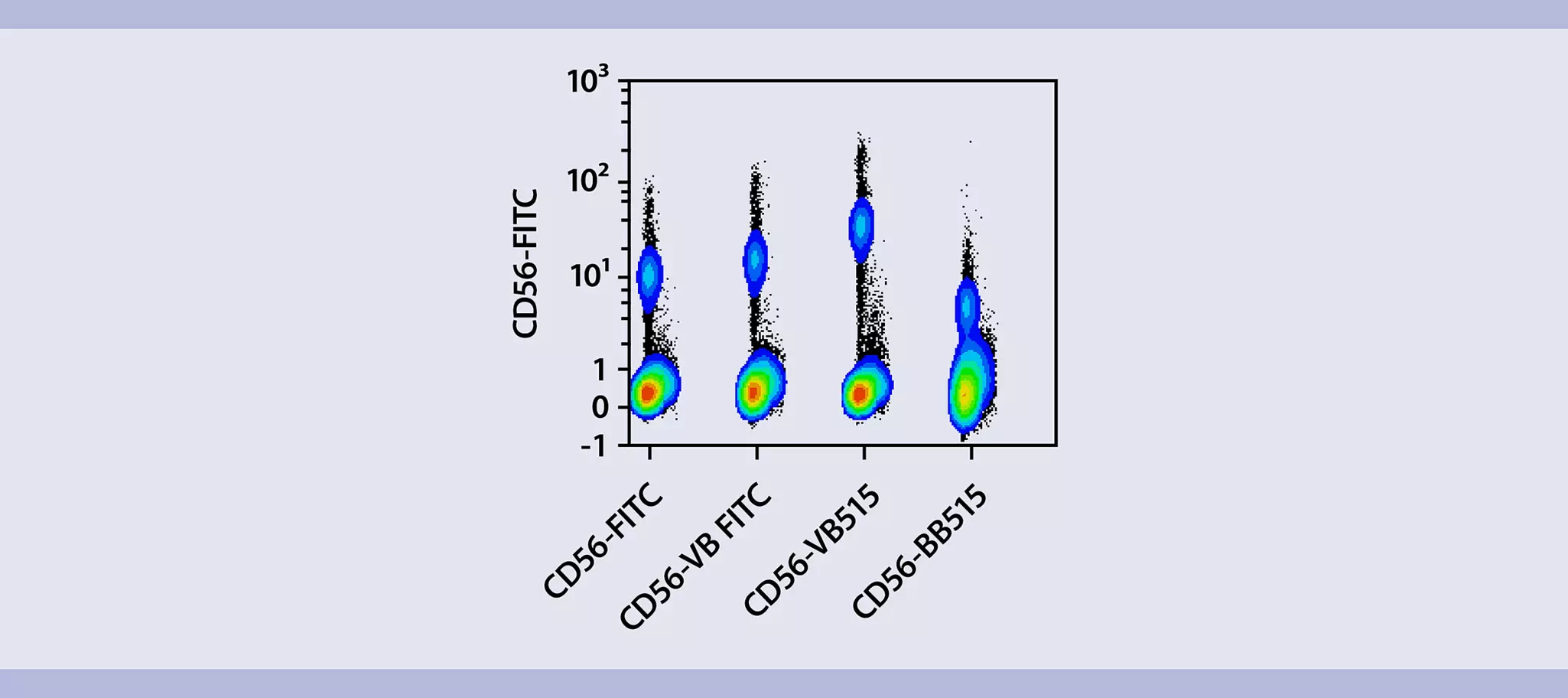
MFI and stain indices of CD56 antibodies conjugated to various fluorochromes.
| Conjugate | Clone | MFI | Stain index | MACSQuant Analyzer compensation in channel B2 (%) |
| CD56-FITC | REA196 | 10.6 | 18.3 | 6.6 |
| CD56-Vio Bright FITC | AF12 | 15.8 | 22.6 | 8.6 |
| CD56-Vio Bright 515 | REA196 | 31.9 | 56.3 | 4.2 |
| CD56-BB515 | B159 | 4.9 | 4.4 | 6.2 |
Higher specificity – better resolution
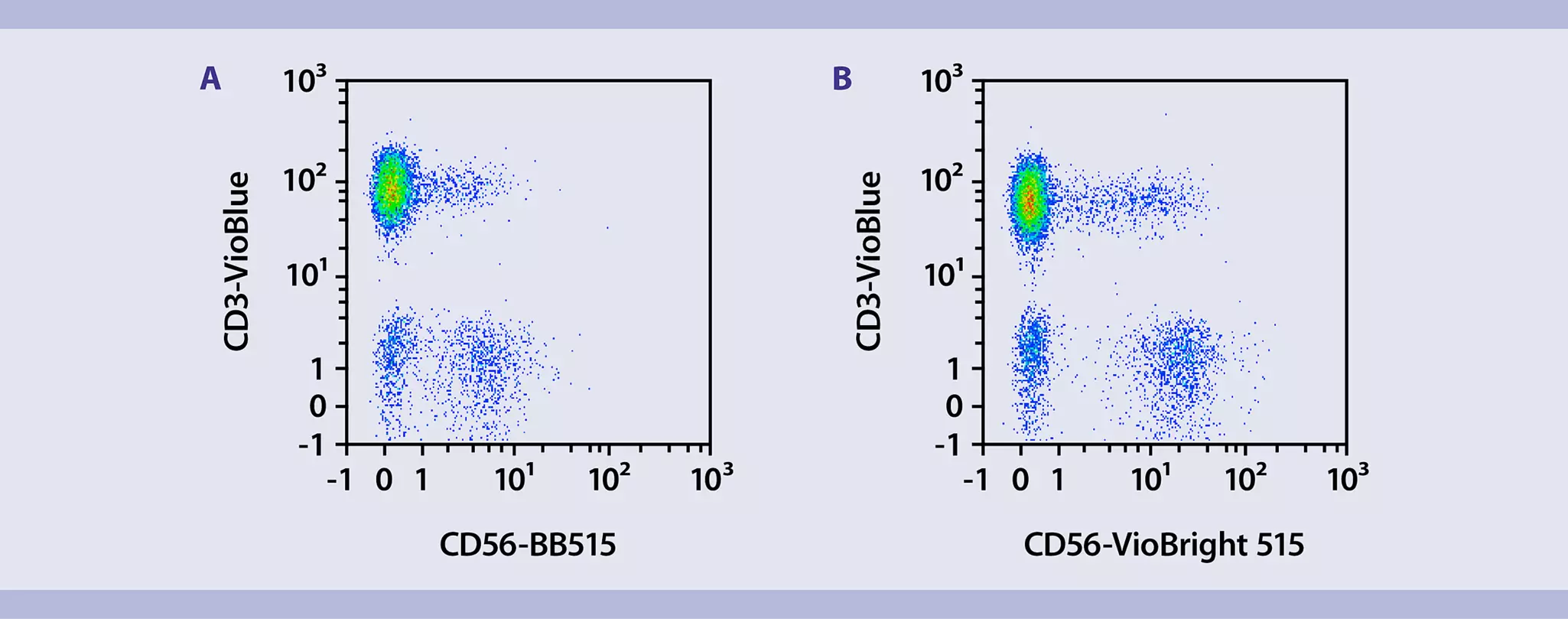
Vio Bright 515 is the optimal dye for the analysis of dim markers, such as CD56. In the example shown here, the CD56+CD3+ NKT cell population from whole blood could be analyzed more precisely (right dot plot) than with an alternative bright dye for the same channel (left dot plot).
High stability during fixation
Bright fluorochromes, such as PE and APC, are often sensitive to fixatives. However, for successful flow cytometric analysis of intracellular markers, stability of the fluorochrome conjugates during fixation is essential. Vio Bright 515 conjugates show excellent stability towards methanol- and paraformaldehyde-based fixatives with only little compromise in brightness.
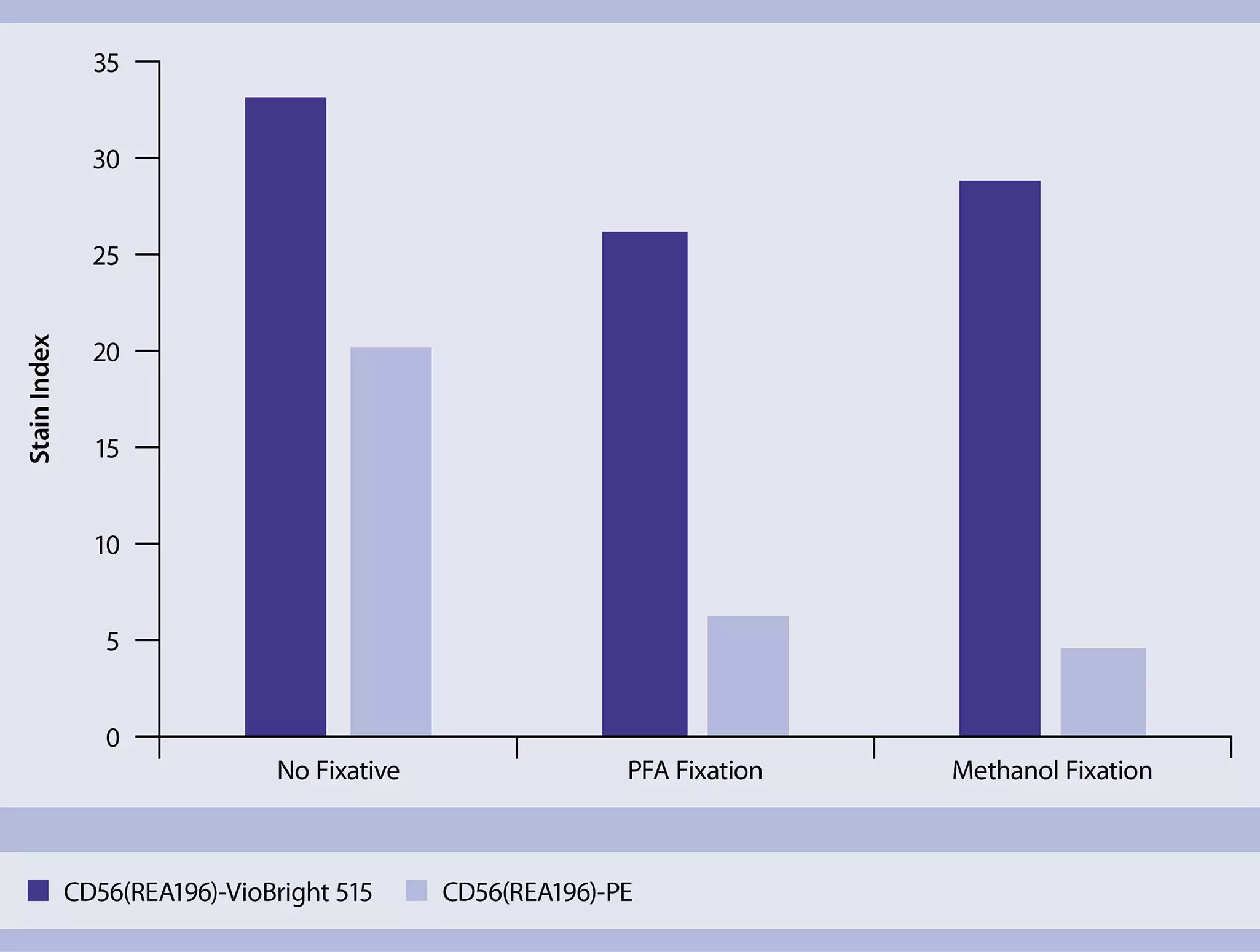
Stability of CD56-Vio Bright 515 and CD56-PE towards fixation with PFA or methanol.
| No fixative | PFA fixation | Methanol fixation | |||||
| Conjugate | Clone | MFI | Stain index | MFI | Stain index | MFI | Stain index |
| CD56-Vio Bright 515 | REA196 | 23.9 | 37.97 | 11.27 | 29.99 | 21.77 | 33.23 |
| CD56-PE | REA196 | 11.27 | 23.13 | 3.39 | 7.00 | 2.69 | 5.33 |
Photostability
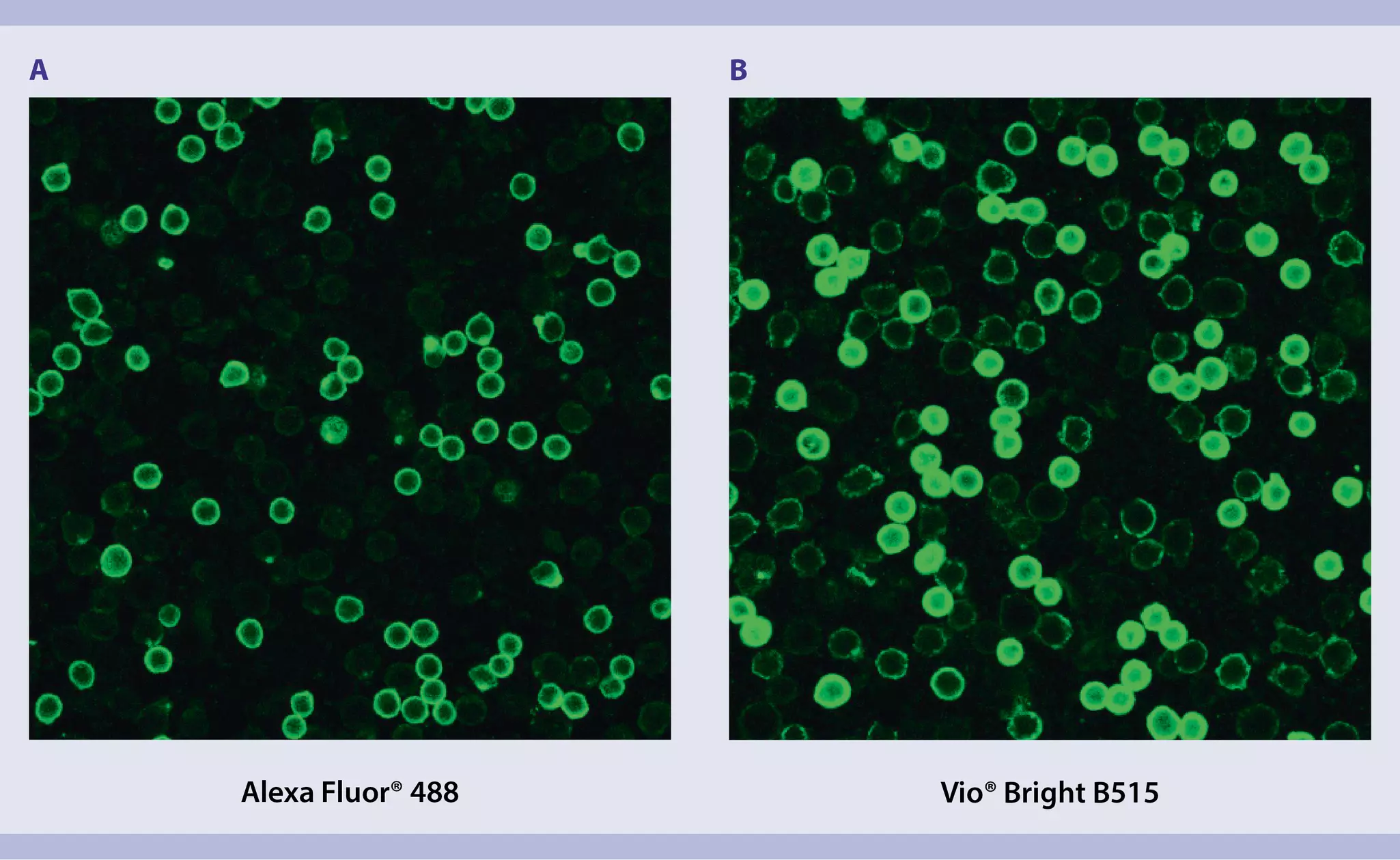
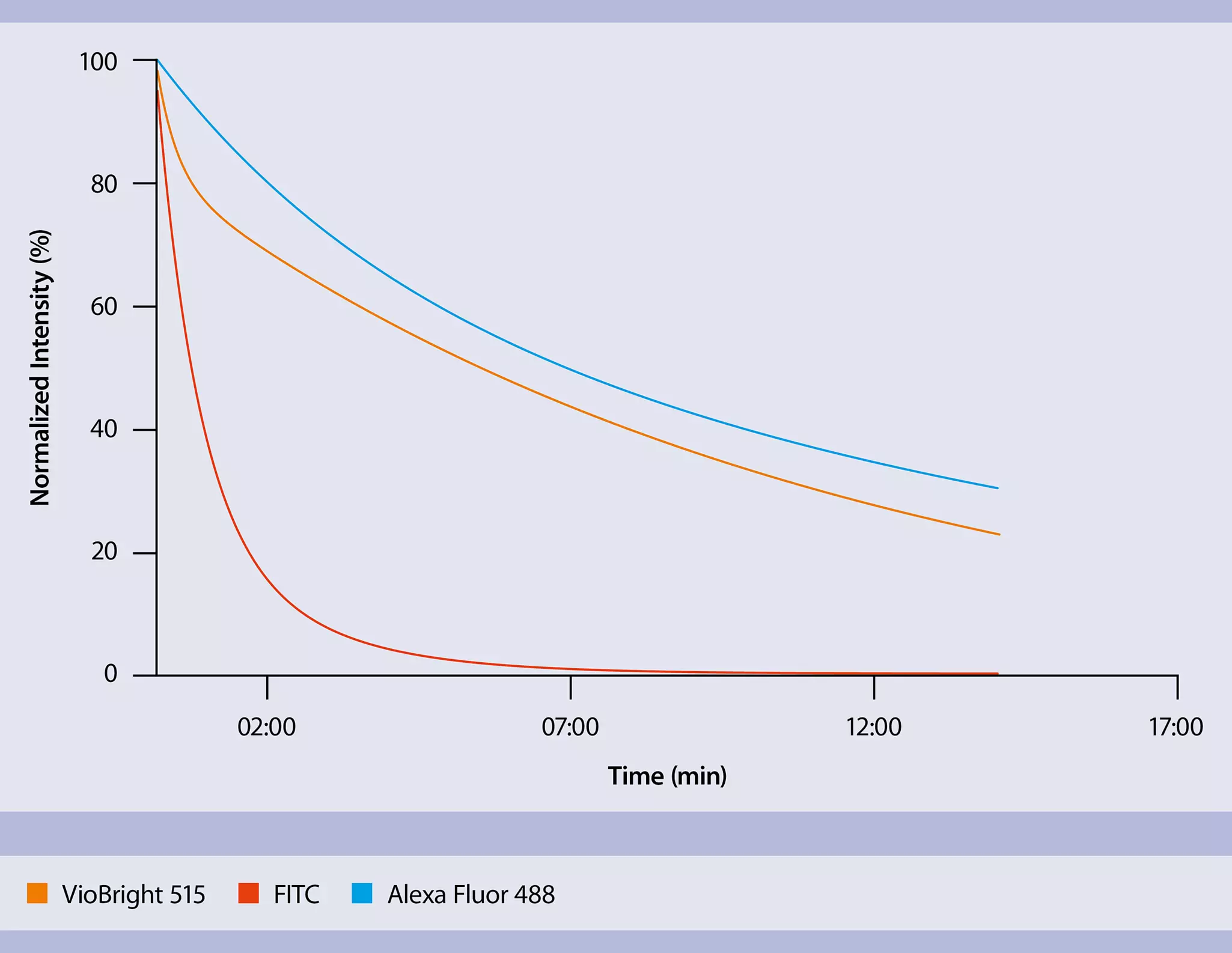
The stability of Vio Bright 515 upon exposure to confocal laser light was analyzed at different time points on a Zeiss LSM710 confocal microscope. Compared to a FITC conjugate, significantly higher mean fluorescence intensities (MFI) were demonstrated for the Vio Bright 515–conjugated antibody at these time points. The Vio Bright 515 conjugate showed photostability comparable to the Alexa Fluor 488–conjugated antibody, indicating the excellent suitability of Vio Bright 515 for immunofluorescence microscopy.
Vio® 515 (Emmax 514 nm)
Vio® 515 is an organic small-molecule dye, designed for the B1/FITC channel. Compared to FITC, Vio 515 displays an improved brightness and allows the analysis of intracellular markers that were not accessible in this channel before. The dye thus provides more flexibility in multicolor panel design. Vio 515 shows 25% less spillover into the PE channel and facilitates optimal detection of intracellular markers, such as cytokines and transcription factors. The dye is excited by the blue laser (488 nm), and its emission peak is at 514 nm.
Vio 515 at a glance:
- Brighter alternative to FITC for detection of intracellular markers, such as cytokines and transcription factors
- Spillover into B2/PE channel reduced by 25%
- High photostability for immunofluorescence microscopy applications
Absorption and emission maxima of fluorochromes related to Vio 515.
| Fluorochrome | Absorption max (nm) | Emission max (nm) |
| Vio Bright 515 | 488 | 514 |
| Vio 515 | 488 | 514 |
| Vio Bright FITC | 496 | 522 |
| FITC | 495 | 520 |
| Alexa Fluor 488 | 495 | 519 |
| BD Horizon Brilliant Blue 515 | 490 | 515 |
Laser and filter compatibility
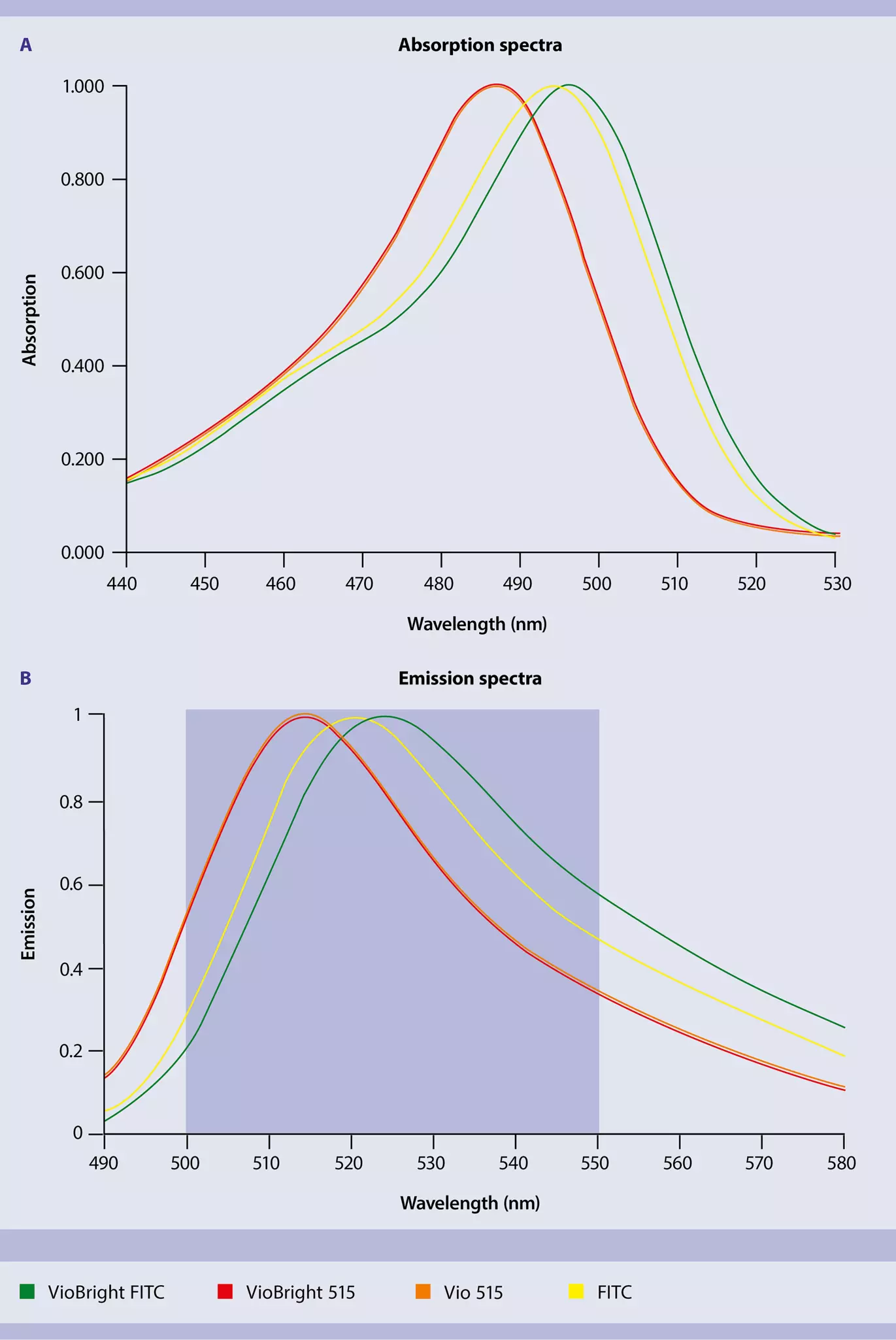
Upon excitation with a blue laser (488 nm), Vio 515 displays peak excitation and emission at 488 nm and 514 nm, respectively. Its fluorescent signal can be detected with a standard FITC filter, such as the 525/50 nm filter of the MACSQuant Instruments. Thus, no changes in detection filters or the flow cytometer itself are required. With Vio 515 the potential of the most commonly used laser-filter combination in flow cytometers can be extended to detect a wider variety of markers, including intracellular markers.
Enhanced brightness
With stain indices and mean fluorescent intensities (MFI) higher than those of FITC, Vio 515 staining allows for an improved resolution of positive and negative populations as shown in the figure below.
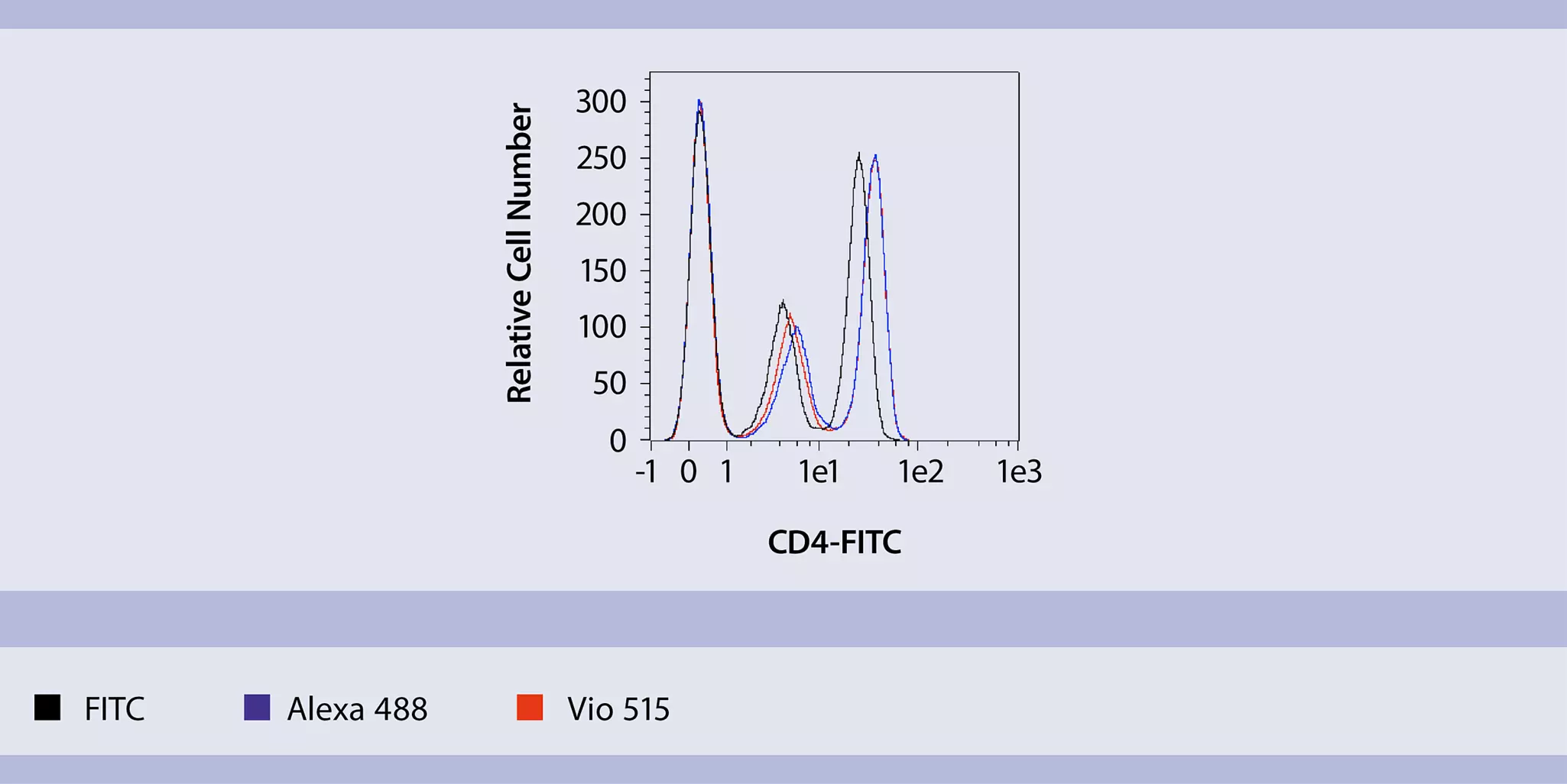
MFI and stain indices of CD4 antibodies conjugated to various fluorochromes.
| Conjugate | Clone | MFI | Stain index | MACSQuant Analyzer compensation in channel B2 (%) |
| CD4-FITC | VIT4 | 25.3 | 50.0 | 6.4 |
| CD4-Alexa Fluor 488 | VIT4 | 35.7 | 68.2 | 5.6 |
| CD4-Vio 515 | VIT4 | 35.9 | 71.2 | 4.4 |
Higher specificity – better resolution
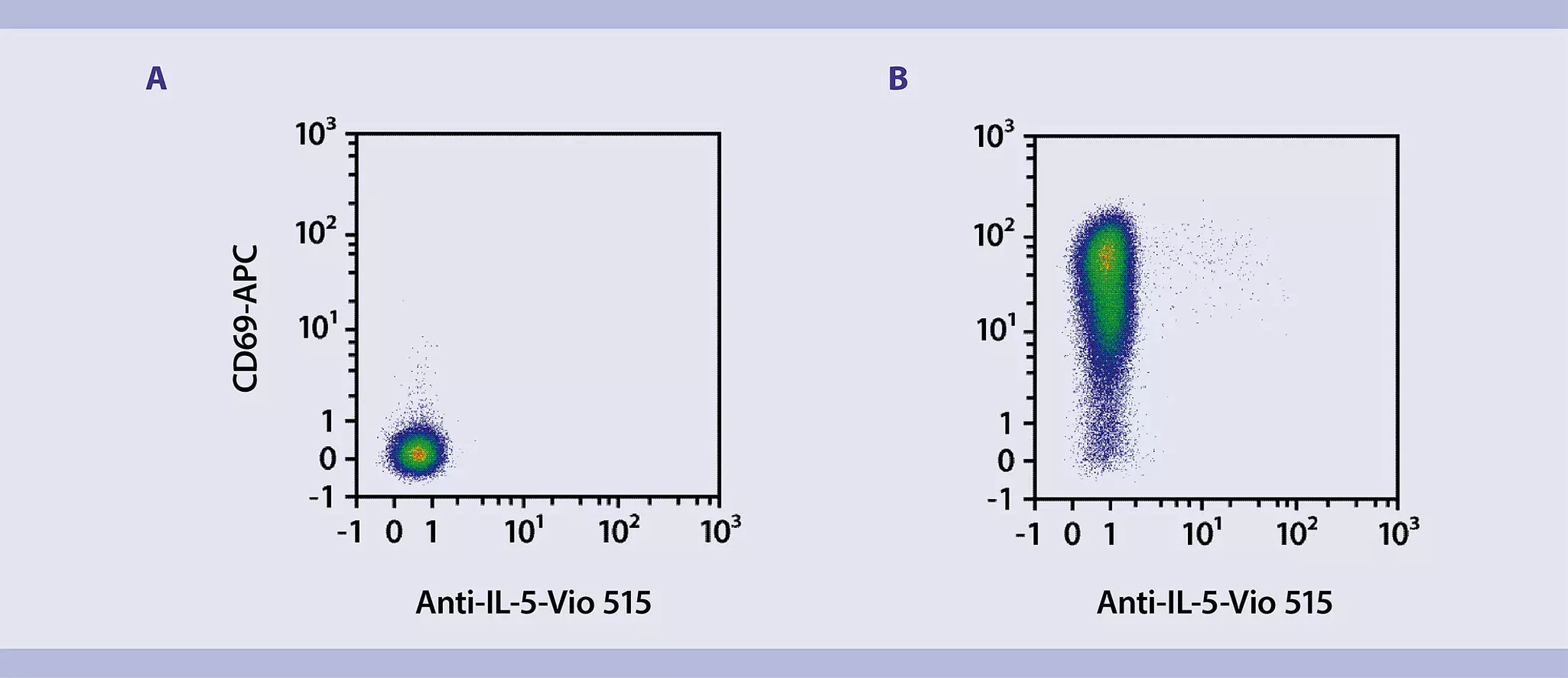
Vio 515 is an optimal reagent for the analysis of intracellular markers such as cytokines. In this example of PFA-fixed human PBMCs, an Anti-IL-5-Vio 515 antibody enabled the detection of an IL-5–expressing CD4+CD69+ T cell subset.
Photostability
The stability of Vio 515 upon exposure to confocal laser light was analyzed at different time points on a Zeiss LSM710 confocal microscope. Vio 515 shows photostability comparable to Alexa Fluor 488, indicating an excellent suitability for immunofluorescence microscopy.
Vio 515 displayed a significantly higher mean fluorescence intensity (MFI) than FITC at different time points.

Vio Bright™ FITC (Emmax 522 nm)
Vio Bright™ FITC is excited by a blue laser (488 nm). The Vio Bright Technology allows for an increased number of conjugated FITC molecules per antibody, compared to conventional FITC conjugation. With a brightness similar to PE, Vio Bright FITC expands the options of multicolor flow cytometry. In addition, it provides a bright alternative for confident detection of rare cells, as well as dim and uncharacterized markers.
Vio Bright FITC at a glance:
- Brightness similar to PE for confident detection of rare markers and markers with low expression levels
- Excellent bright alternative to PE for flexible multicolor panel design
- Signal detectable in the standard FITC channel with peak excitation and emission wavelengths of 496 nm and 522 nm, respectively
- Works with standard staining protocol
Absorption and emission maxima of fluorochromes related to Vio Bright FITC.
| Fluorochrome | Absorption max. (nm) | Emission max. (nm) |
| Vio Bright FITC | 496 | 522 |
| FITC | 495 | 520 |
| Alexa Fluor 488 | 495 | 519 |
| BD Horizon Brilliant Blue 515 | 490 | 515 |
Laser and filter compatibility
Upon excitation with a blue laser (488 nm), Vio Bright FITC displays peak absorption and emission at 496 nm and 522 nm, respectively. Its high-intensity fluorescent signal can be detected using a standard FITC filter, such as the 525/50 nm filter of MACSQuant Instruments. Thus, no changes in detection filters or the flow cytometer itself are required when using Vio Bright FITC instead of FITC or other related fluorochromes. Along with PE, Vio Bright FITC increases the potential of the blue laser, one of the most common laser lines available for single- or multilaser instruments.

Enhanced brightness
Vio Bright FITC is a superior choice for the detection of markers with low expression levels. With stain indices and mean fluorescence intensities similar to PE, Vio Bright FITC staining allows for an excellent resolution of positive and negative cell populations.
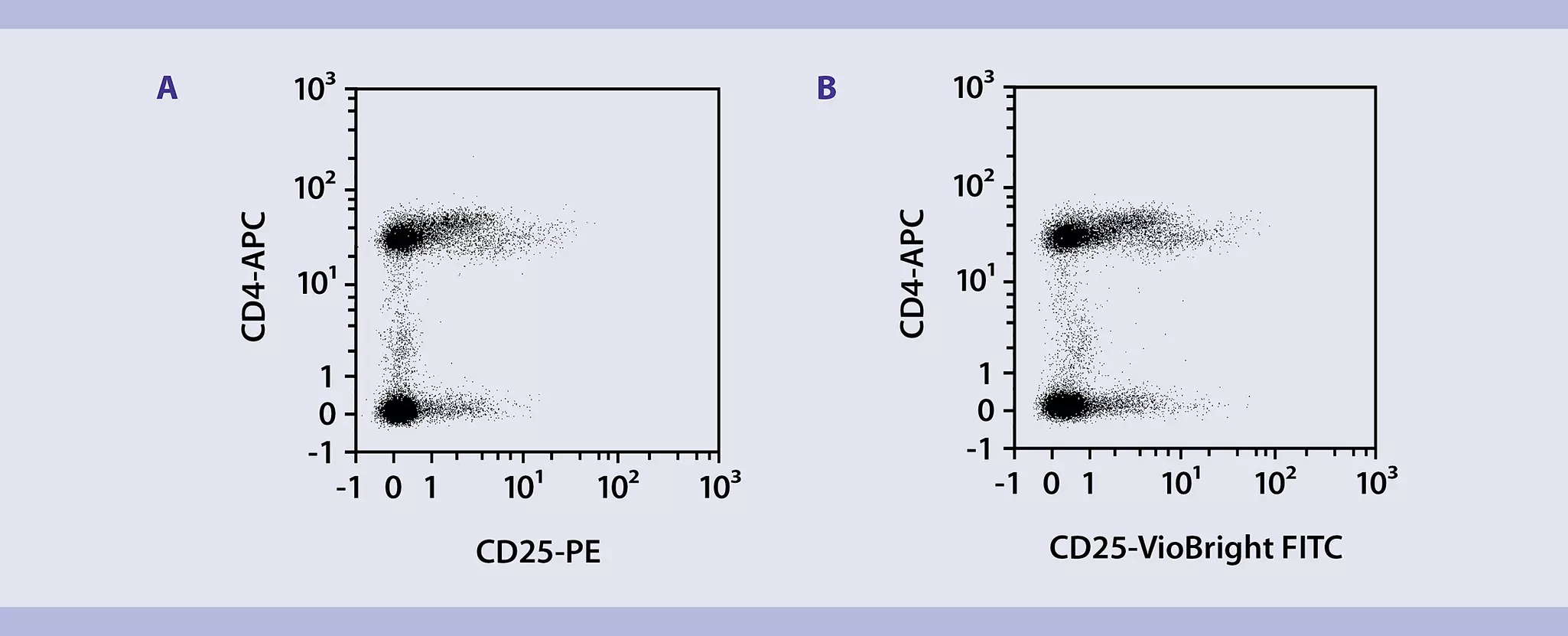
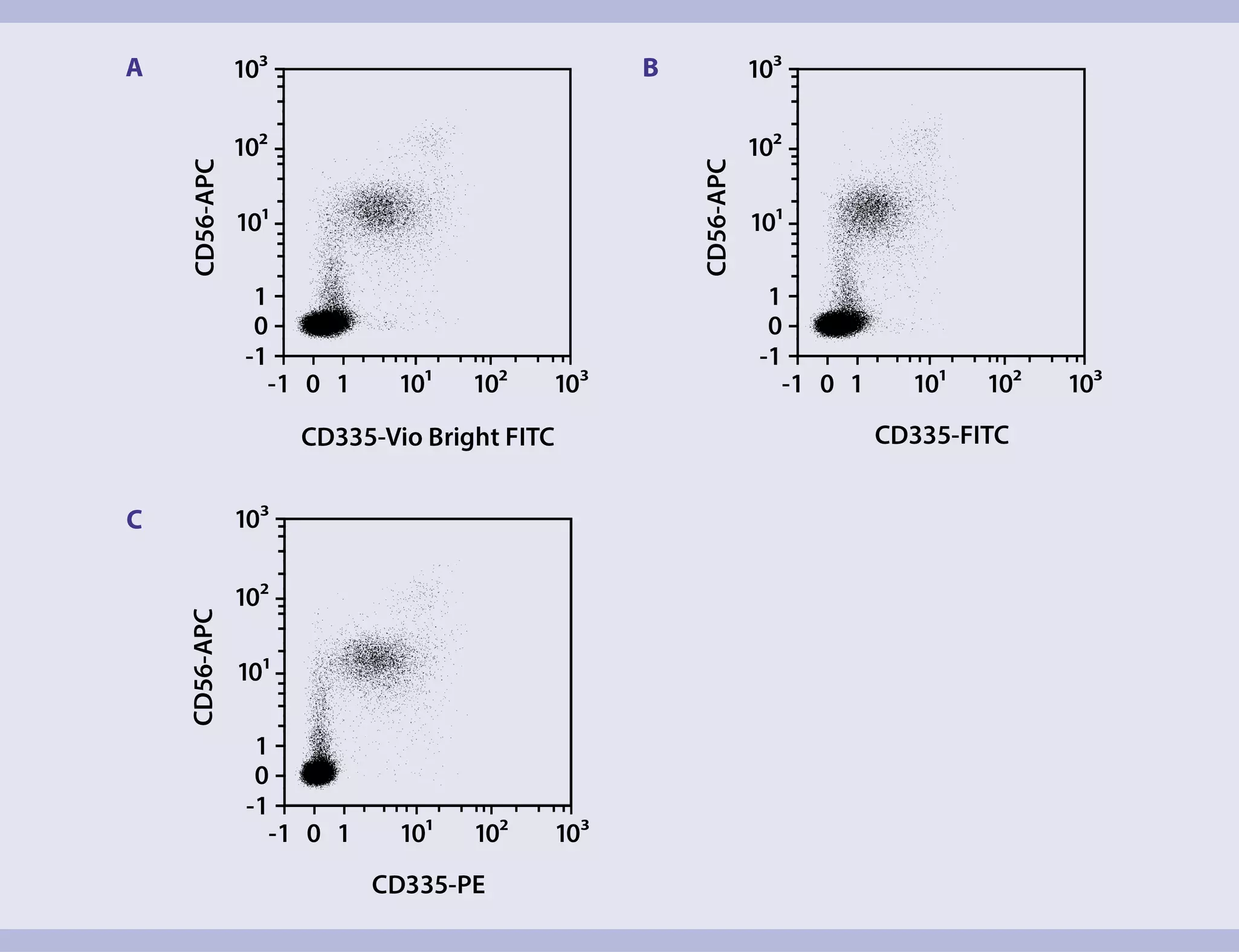
Reliable analysis of rare cell types requires the specific identification of cellular subsets with low frequencies and a clear resolution of the target population. Thus, highly specific antibodies together with bright conjugates are essential for detection of such rare cell populations. Vio Bright FITC is an exceptionally bright dye for optimal detection of cell subpopulations and their detailed phenotypic analysis.
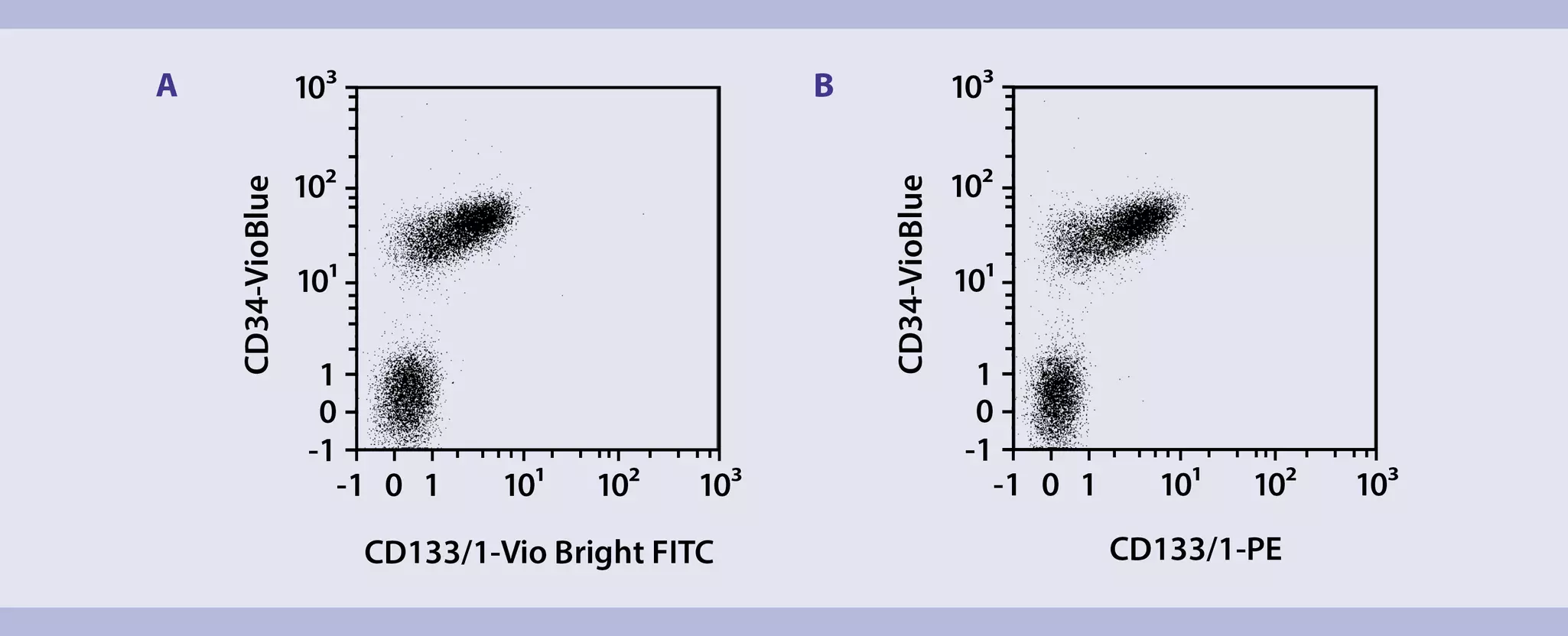
MFI and stain indices of CD25 (clone 4E3), CD335 (clone 9E2), and CD133/1 (clone AC133) antibodies conjugated to either Vio Bright FITC or PE.
| MFI | Stain index | |||
| Conjugate | Vio Bright FITC | PE | Vio Bright FITC | PE |
| CD25 | 3.3 | 2.0 | 5.0 | 4.0 |
| CD335 | 4.8 | 4.0 | 8.5 | 11 |
| CD133/1 | 3.5 | 4.7 | 4.7 | 4.7 |
Spillover
Compared to standard FITC, Vio Bright FITC displays only a minor increase in spillover into the PE channel. Thus, with a miniminal change in compensation settings, Vio Bright FITC provides the benefit of a brighter dye.
| Sample | Conjugate | MFI | Stain index | MACSQuant Analyzer 10 compensation in channel B2 (%) | MACSQuant VYB compensation in channel Y1 (%) |
| A | CD4-Vio Bright FITC | 66 | 106 | 8.5 | 0 |
| A | CD4-FITC | 29 | 49 | 6.5 | 0 |
| A | CD4-PE | 58 | 126 | – | - |
| B | CD4-Vio Bright FITC | 52 | 81 | 9.3 | 0 |
| B | CD4-FITC | 20 | 35 | 7.0 | 0 |
| B | CD4-PE | 39 | 73 | – | - |
PE-Vio® 615 (Emmax 619 nm)
PE-Vio® 615 is a tandem dye with PE as the donor and Vio 615 as the acceptor dye. PE-Vio 615 is optimized for efficient donor-to-acceptor energy transfer, high fluorescence intensity, and low spillover into the detection channel of the donor dye. Designed to be a superior alternative to ECD, PE-Texas Red, PE-eFluor 610, PE-CF594, and PE/Dazzle 594, this Vio Dye expands the options for flexible multicolor panel design and provides a bright dye for confident detection of dim and rare markers.
PE-Vio 615 at a glance:
- Optimal excitation with blue (488 nm), green (532 nm), and yellow (561 nm) laser lines for maximum flexibility
- Excellent brightness for confident detection of dim, rare, and uncharacterized markers
- Extensive portfolio of PE-Vio 615–conjugated, recombinantly engineered REAfinity™ Antibodies for high reproducibility
Absorption and emission maxima of fluorochromes related to PE-Vio 615.
| Fluorochrome | Aborption max. (nm) | Emission max. (nm) |
| PE-Vio 615 | 565 | 619 |
| ECD, PE-Texas Red | 565 | 613 |
| PE-eFluor 610 | 565 | 606 |
| PE-CF594 | 565 | 614 |
| PE/Dazzle 594 | 566 | 612 |
Laser and filter compatibility
The PE molecule shows peak absorption at two wavelengths, 496 nm and 565 nm. This allows for optimal excitation of PE-containing tandem dyes, such as PE-Vio 615, by blue, green, and yellow laser lines (488–561 nm). Absorption at 565 nm is greater than at 496 nm. Therefore, maximum excitation of PE-Vio 615 is achieved with instruments such as the MACSQuant VYB, which uses yellow laser lines for excitation of PE and PE-containing tandem dyes. The emission signal can be detected using typical filters designed for PE-Texas Red, such as a 615/20 nm filter.

Enhanced brightness
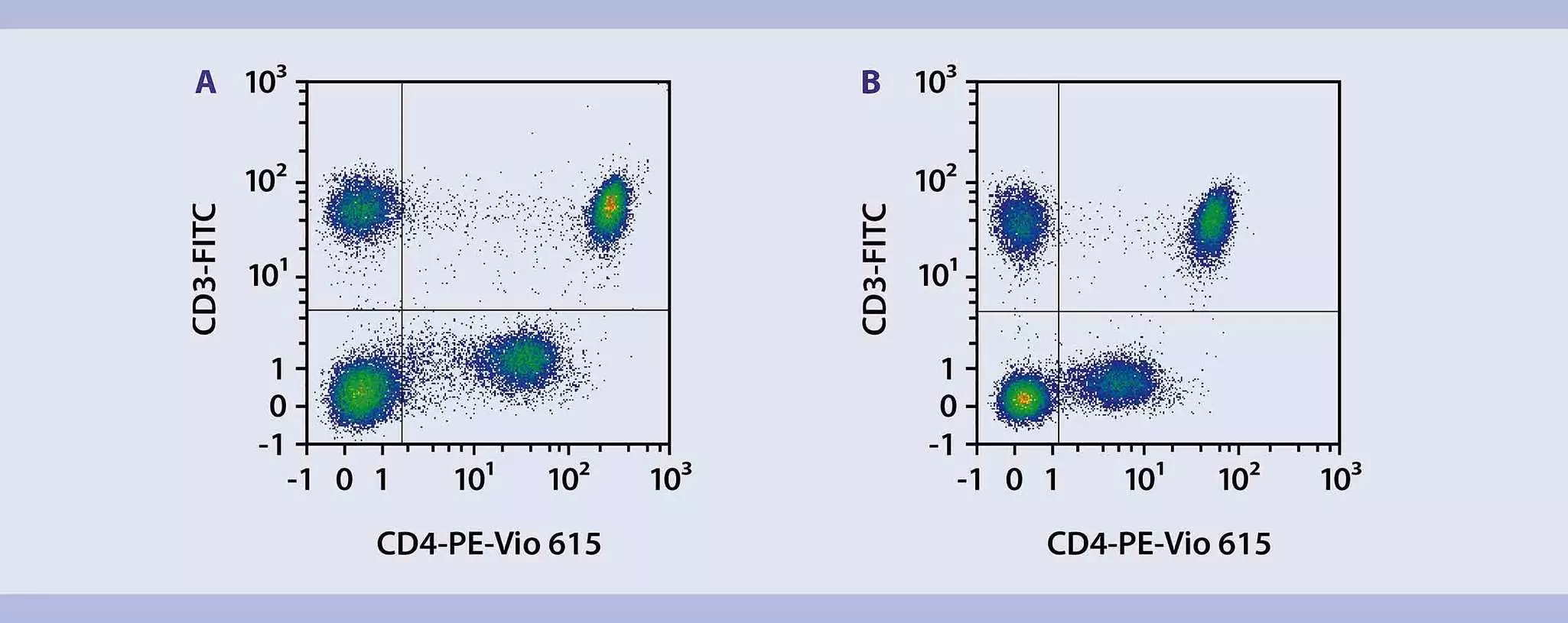
PE-Vio 615 is designed to offer a bright alternative to dyes such as PE-eFluor 610, PE-CF594, ECD, and PE/Dazzle 594.
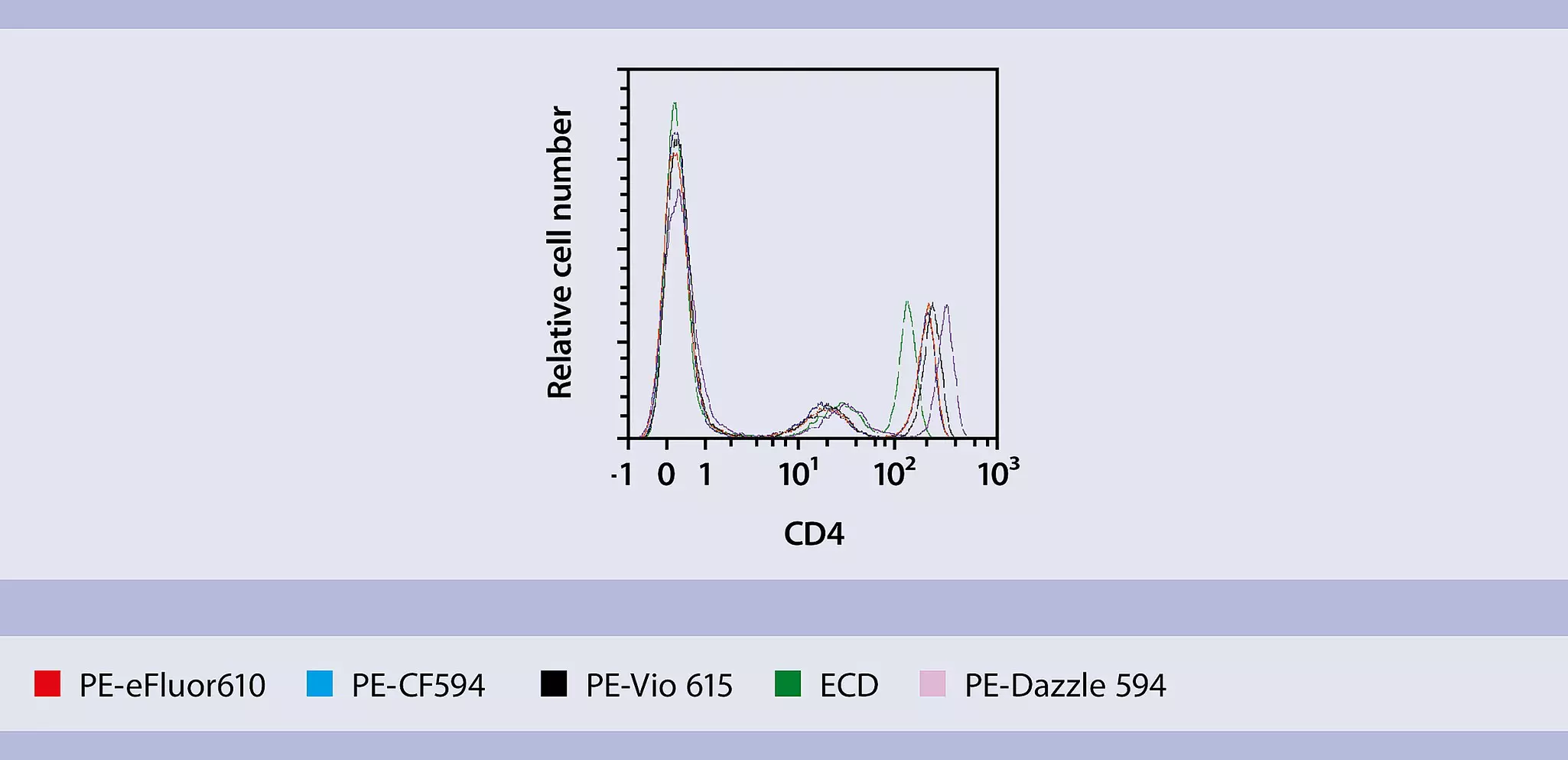
MFI and stain indices of CD4 antibodies conjugated to PE-Vio 615, ECD, PE-CF594, PE-eFluor 610, and PE/Dazzle 594.
| Conjugate | Clone | MFI | Stain index | MACSQuant VYB compensation in channel Y (%) |
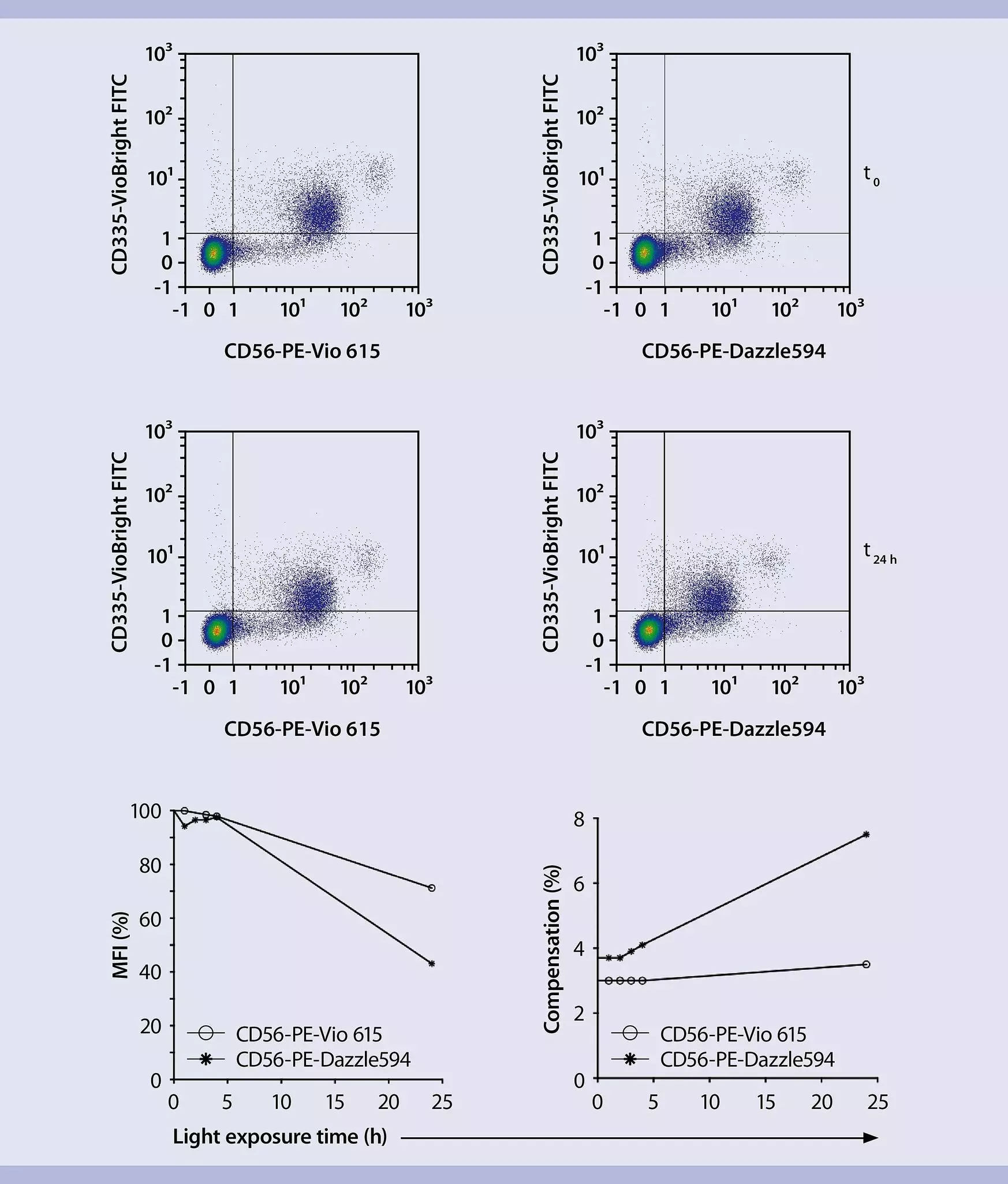
| CD4-PE-Vio 615 | Vit-4.3 | 236 | 309 | 3.0 |
| CD4-ECD | SFCI12T4D11 | 133 | 185 | 3.3 |
| CD4-PE-CF594 | RPA-T4 | 201 | 295 | 2.6 |
| CD4-PE-eFluor 610 | RPA-T4 | 202 | 259 | 5.5 |
| CD4-PE/Dazzle 594 | RPA-T4 | 316 | 287 | 3.9 |
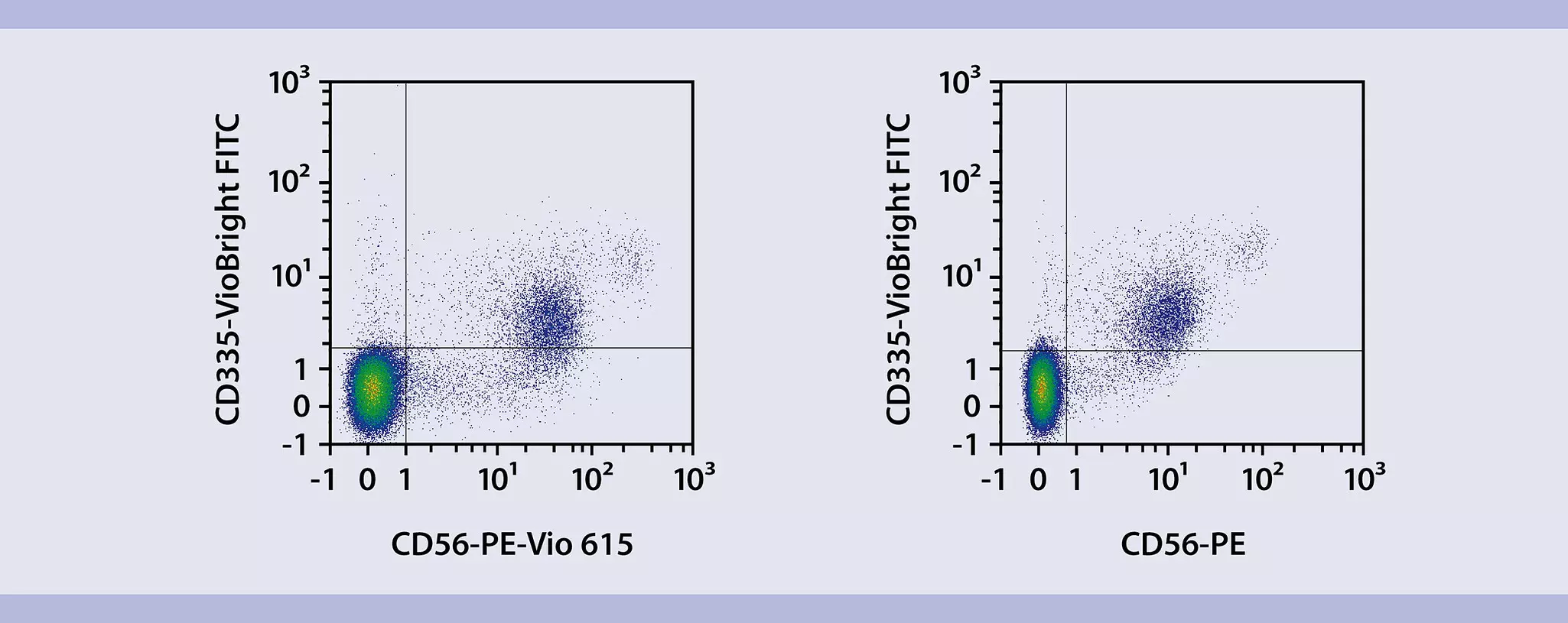
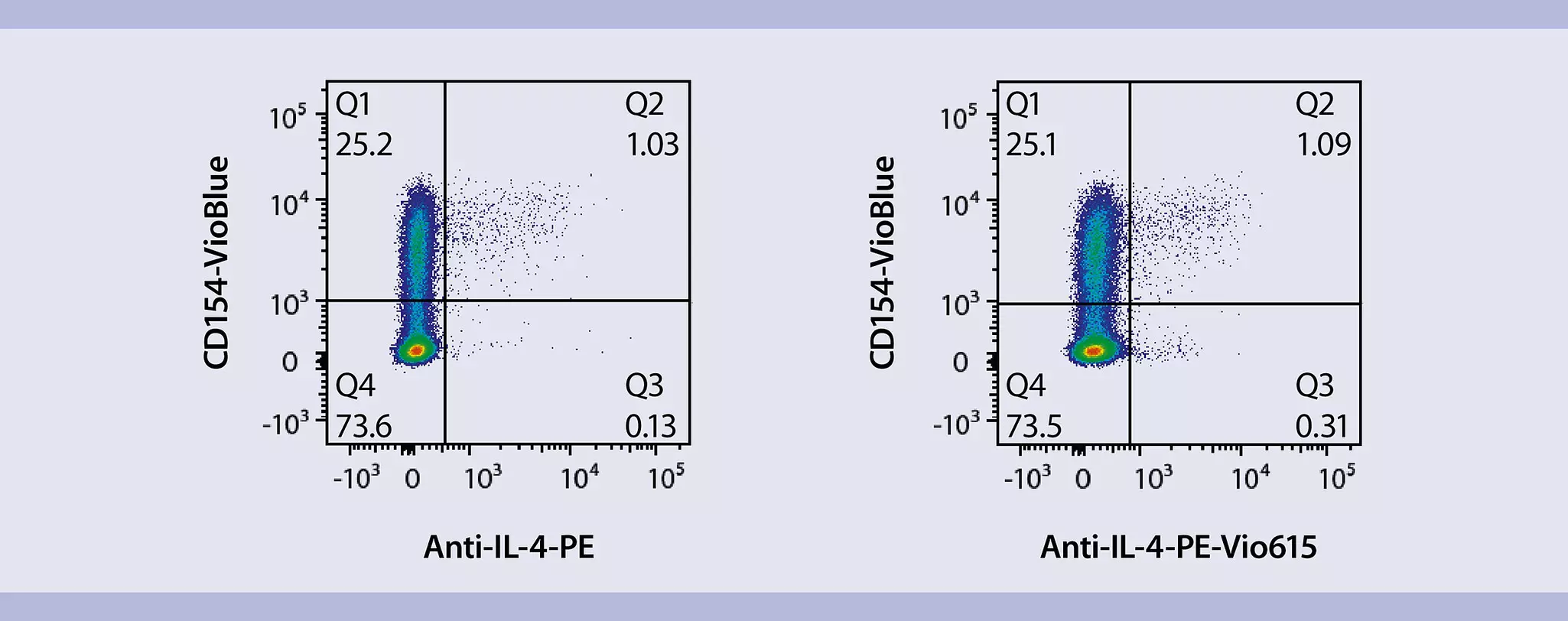
PE-Vio 615 allows for high fluorescent intensities and stain indices, enabling excellent distinction between positive and negative cell populations. This makes PE-Vio 615 an optimal dye for the analysis of dim markers and markers that are difficult to characterize.
High stability during fixation
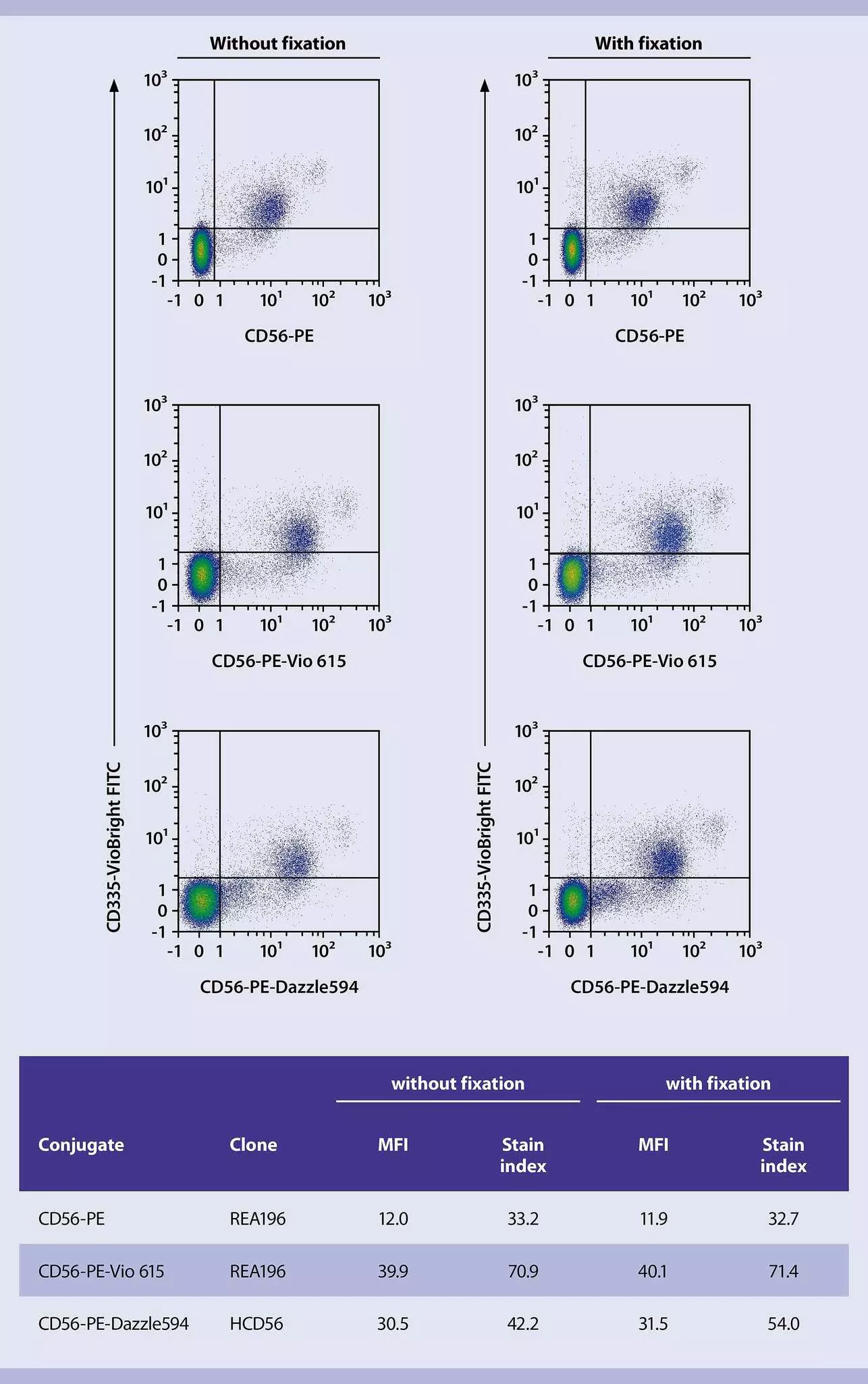
Tandem conjugates are often sensitive to fixatives. However, for many flow cytometric analyses requiring prior fixation, stability of tandem conjugates is critical. PE-Vio 615 shows excellent stability to paraformaldehyde fixation without any increase in background signal.
Photostability
The stability of PE-Vio 615 upon exposure to ambient light was analyzed at different time points. PE-Vio 615 showed significantly higher mean fluorescence intensities (MFI) and stain indices at these time points than commercially available alternatives.
PerCP-Vio® 700 (Emmax 704 nm)
PerCP-Vio® 700 is a tandem conjugate that combines the peridinin chlorophyll protein (PerCP) and the Vio 700 dye to emit strong fluorescence at 655–730 nm upon excitation with a blue laser at 488 nm. This dye is suited perfectly for the B3 channel of the MACSQuant Analyzer.
PerCP-Vio 700 at a glance:
- Optimal excitation with blue laser (488 nm)
- Emits strong fluorescence at 655–730 nm
- Extensive portfolio of PerCP-Vio 700–conjugated, recombinantly engineered REAfinity Antibodies for high reproducibility
Absorption and emission maxima of fluorochromes related to PerCP-Vio 700.
| Fluorochrome | Absorption max. (nm) | Emission max. (nm) |
| PerCP | 482 | 675 |
| PerCP-Vio 700 | 482 | 704 |
| PerCP-Cy5.5 | 490 | 695 |
Laser and filter compatibility
When used in combination with a standard 655–730 nm bandpass filter, PerCP-Vio 700 exhibits a very narrow emission spectrum profile, thus allowing the majority of light to be captured and retained.

Enhanced brightness
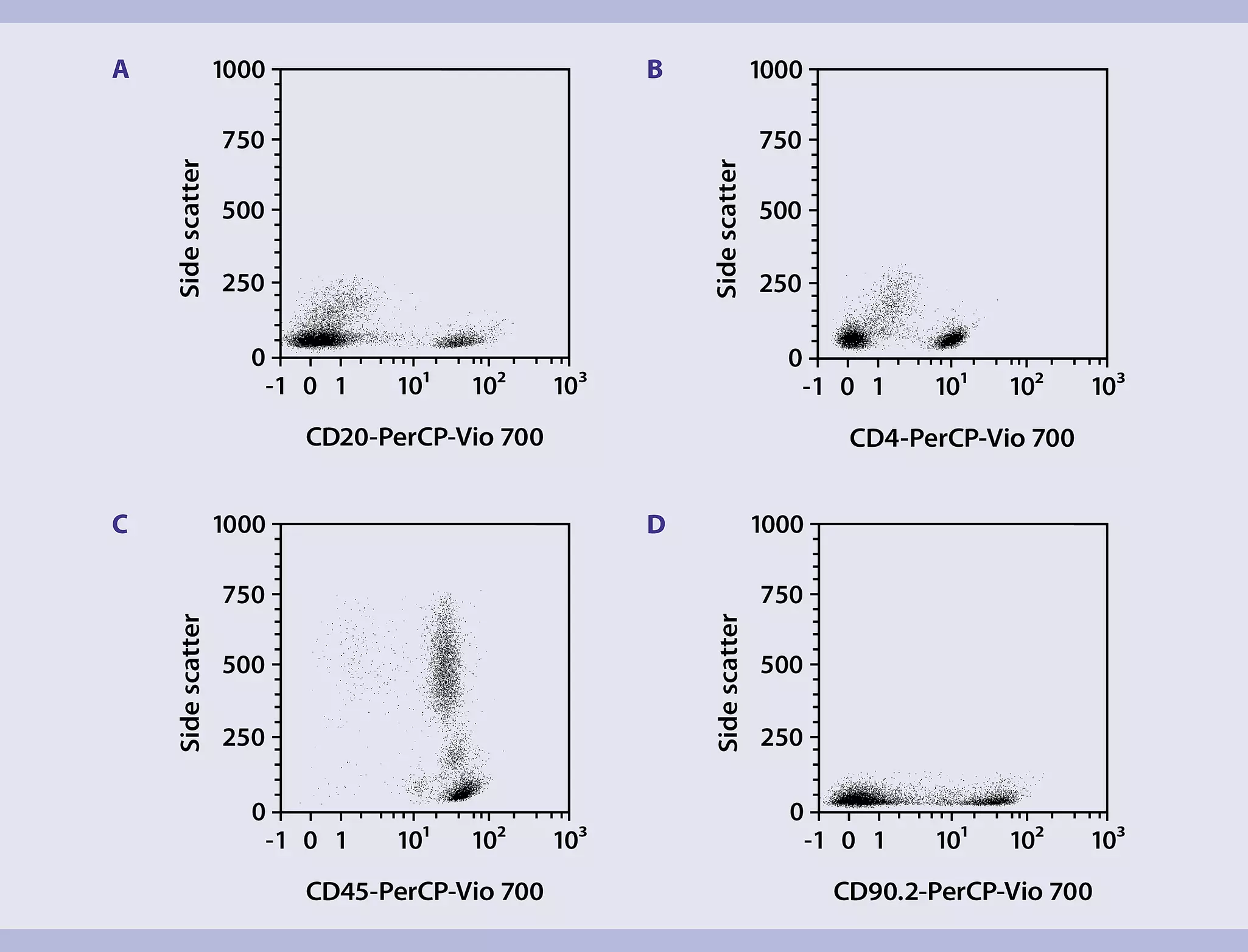
Human peripheral blood mononuclear cells and mouse splenocytes were stained with various antibodies conjugated to PerCP-Vio 700. Excellent distinction between positive and negative cell populations was observed for many different antibody specificities.
High stability during fixation
PerCP-Vio 700 shows excellent stability towards fixatives, with only minimal decrease in fluorescence after fixation.

Photostability
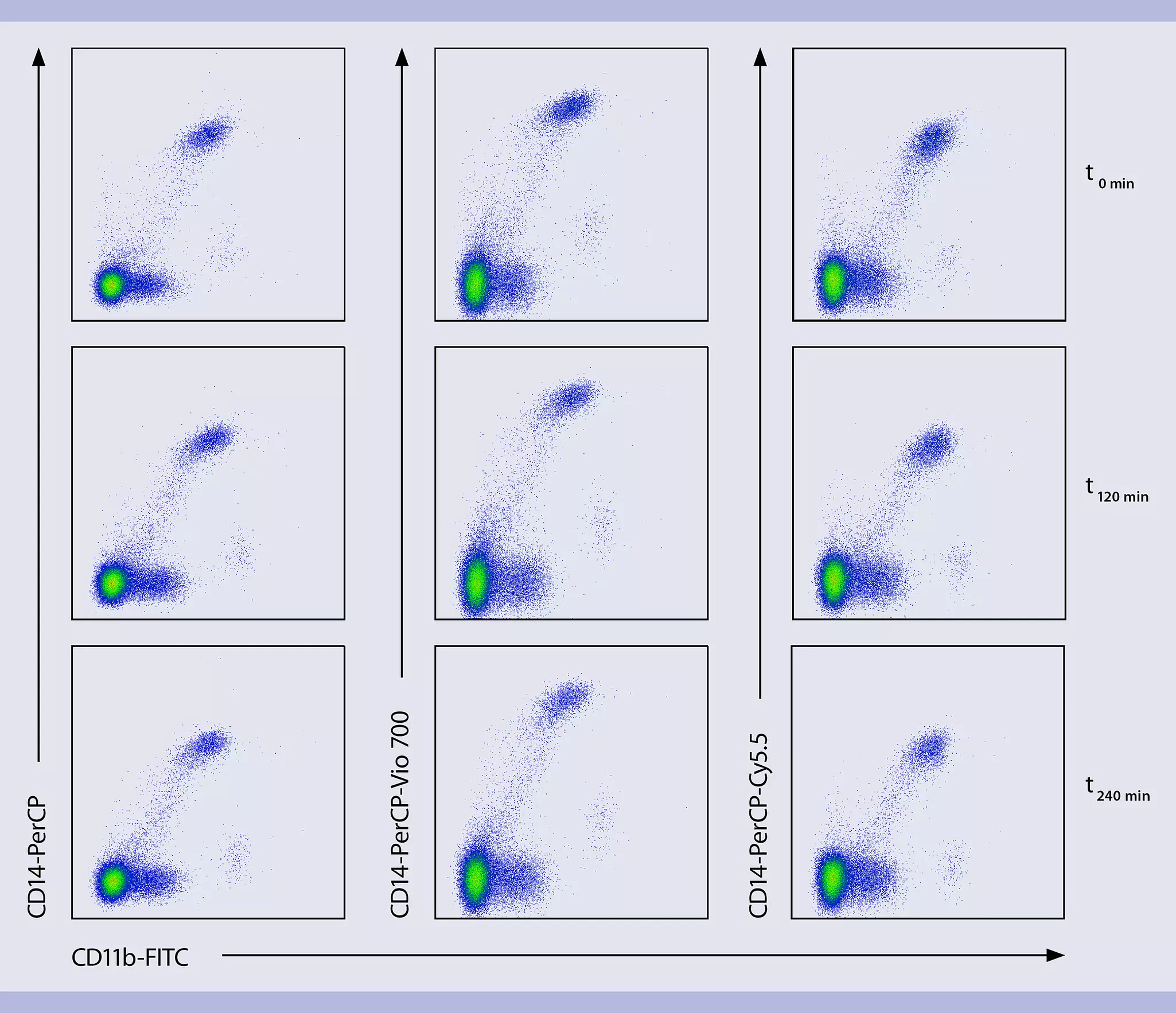
Analysis of the photostability of CD14-PerCP-Vio 700 indicated no discernable changes after up to four hours of continuous exposure to ambient light (~850 lux). PerCP-Vio 700 showed significantly higher mean fluorescence intensities (MFI) and stain indices at these time points than commercially available alternatives.
| Marker | Clone | Stain index | |||
| t0 min | t120 min | t240 min | |||
| CD14-PerCP | TÜK4 | 53 | 44 | 36 | |
| CD14-PerCP-Vio 700 | TÜK4 | 75 | 75 | 75 | |
| CD14-PerCP-Cy 5.5 | 61D3 | 36 | 31 | 28 | |
PE-Vio® 770 (Emmax 770nm)
PE-Vio® 770 is a tandem conjugate, like PE-Cy7, which is based on the principle of fluorescence resonance energy transfer (FRET) allowing for large Stokes shifts between the absorbed energy of a fluorescence donor (PE) and the emission wavelength of a suitable acceptor (Vio 770) dye.
PE-Vio 770 at a glance:
- Excitation with the blue (488 nm) or yellow (561 nm) laser; emission in the near-infrared region at 775 nm
- The combination of Vio 770 as the acceptor dye and an optimized chemistry gives rise to a tandem dye that is characterized by a high fluorescence intensity, minimal spillover into adjacent detection channels, and low non-specific binding to non-target cells to meet the complexity of multiparameter flow cytometry
- Higher mean fluorescence intensity (MFI) and stain index values, in addition to lower compensation requirements compared to PE-Cy7
Absorption and emission maxima of fluorochromes related to PE-Vio 770.
| Fluorochrome | Absorption max. (nm) | Emission max. (nm) |
| PE-Vio 770 | 565 | 775 |
| PE-Cy7 | 496 | 774 |
| PE-Alexa Fluor 750 | 496 | 775 |
Laser and filter compatibility
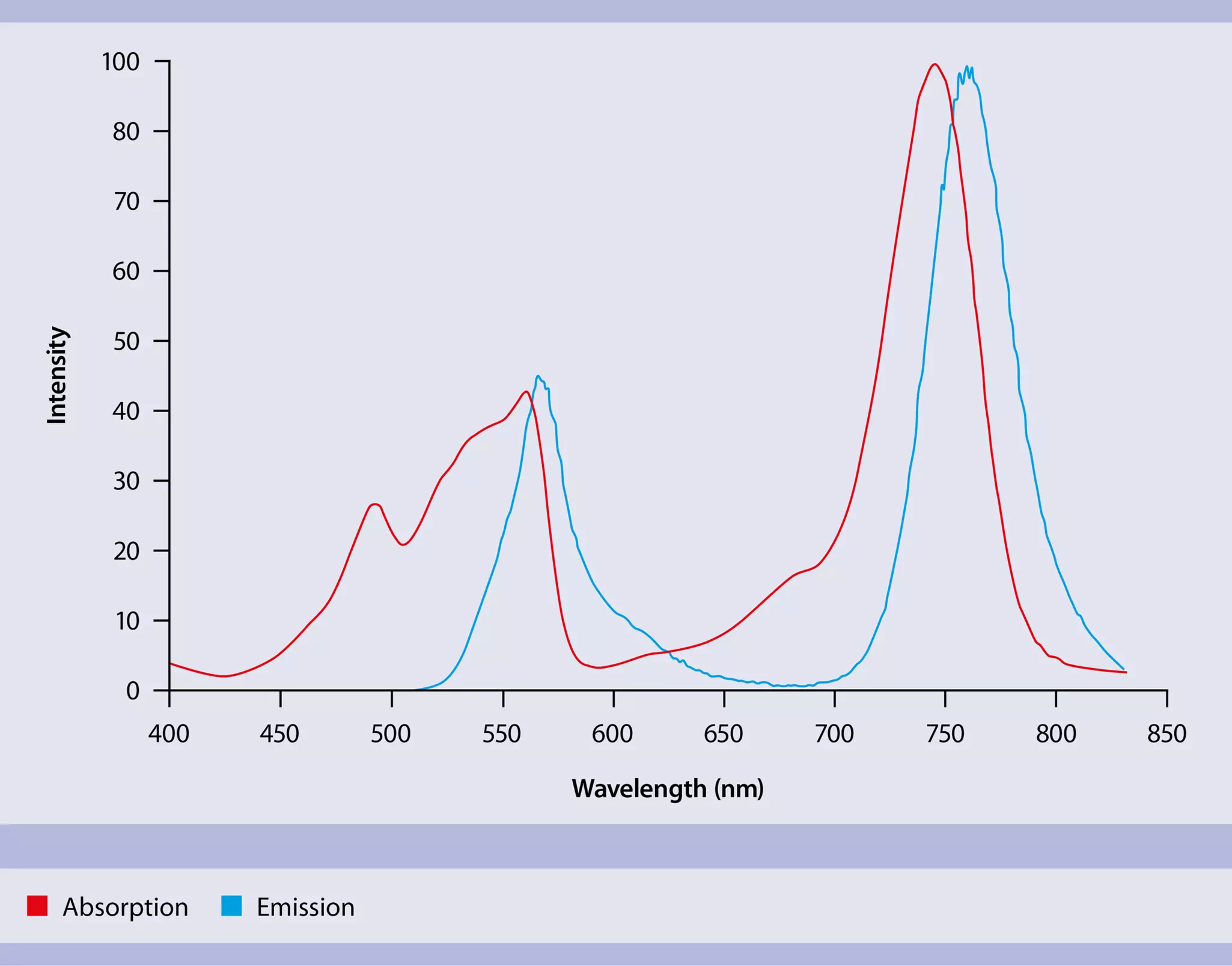
The tandem dyes PE-Vio 770, PE-Cy7, and PE-Alexa Fluor 750 all use PE as the donor molecule, showing absorption at 495 nm and, to a greater extent, at 567 nm. Consequently, the MACSQuant VYB, equipped with a yellow 561 nm laser, is best suited to provide maximum excitation of the PE molecules, which in turn transfer this energy to the respective acceptor molecule. Vio 770 shows emission properties similar to Cy7 and Alexa Fluor 750.
Enhanced brightness
PE-Vio 770 provides the greatest fluorescence intensity of the Vio Dye family, with excellent distinction between positive and negative cells.

Compared to other spectrally similar tandem conjugates, such as PE-Cy7 or PE-Alexa Fluor 750, PE-Vio 770 exhibits significantly higher mean fluorescence intensities (MFI) and stain indices, and requires less compensation. These properties make PE-Vio 770 a superior tandem conjugate compared to PE-Cy7 or PE-Alexa Fluor 750.

MFI, stain indices, and compensation requirements of CD8-PE-Vio 770 and CD8-PE-Cy7.
| Sample | Conjugate | MFI | Stain index | Compensation in channel B2 (%) |
| A | CD8-PE-Vio 770 | 109.2 | 97.3 | 0.4 |
| A | CD8-PE-Cy7 | 67.0 | 72.7 | 2.2 |
| B | CD8-PE-Vio 770 | 101.0 | 72.7 | 0.4 |
| B | CD8-PE-Cy7 | 65.6 | 81.7 | 2.2 |
High stability during fixation
Tandem conjugates are usually less stable after fixation than single-absorption/emission fluorochromes. However, PE-Vio 770 shows excellent stability as shown below.
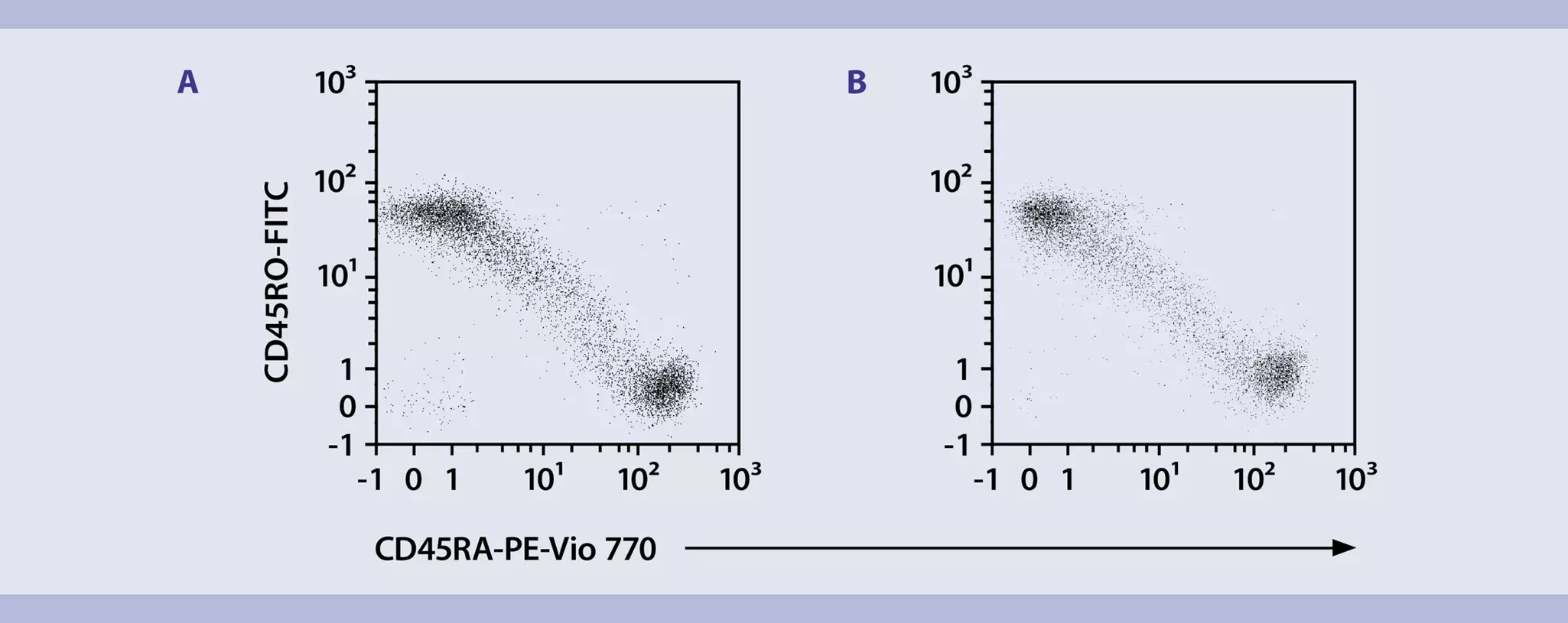
1.1.3 Yellow laser (561 nm)
PE-Vio® 615 (Emmax 619 nm)
PE-Vio® 615 is a tandem dye with PE as the donor and Vio 615 as the acceptor dye. PE-Vio 615 is optimized for efficient donor-to-acceptor energy transfer, high fluorescence intensity, and low spillover into the detection channel of the donor dye. Designed to be a superior alternative to ECD, PE-Texas Red, PE-eFluor 610, PE-CF594, and PE/Dazzle 594, this Vio Dye expands the options for flexible multicolor panel design and provides a bright dye for confident detection of dim and rare markers.
PE-Vio 615 at a glance:
- Optimal excitation with blue (488 nm), green (532 nm), and yellow (561 nm) laser lines for maximum flexibility
- Excellent brightness for confident detection of dim, rare, and uncharacterized markers
- Extensive portfolio of PE-Vio 615–conjugated, recombinantly engineered REAfinity Antibodies for high reproducibility
Absorption and emission maxima of fluorochromes related to PE-Vio 615.
| Fluorochrome | Absorption max. (nm) | Emission max. (nm) |
| PE-Vio 615 | 565 | 619 |
| ECD, PE-Texas Red | 565 | 613 |
| PE-eFluor 610 | 565 | 606 |
| PE-CF594 | 565 | 614 |
| PE/Dazzle 594 | 566 | 612 |
Laser and filter compatibility
The PE molecule shows peak absorption at two wavelengths, 496 nm and 565 nm. This allows for optimal excitation of PE-containing tandem dyes, such as PE-Vio 615, by blue, green, and yellow laser lines (488–561 nm). Absorption at 565 nm is greater than at 496 nm. Therefore, maximum excitation of PE-Vio 615 is achieved with instruments such as the MACSQuant VYB, which uses yellow laser lines for excitation of PE and PE-containing tandem dyes. The emission signal can be detected using typical filters designed for PE-Texas Red, such as a 615/20 nm filter.
Enhanced brightness
PE-Vio 615 is designed to offer a bright alternative to dyes such as PE-eFluor 610, PE-CF594, ECD, and PE/Dazzle 594.
MFI and stain indices of CD4 antibodies conjugated to PE-Vio 615, ECD, PE-CF594, PE-eFluor 610, and PE/Dazzle 594.
| Conjugate | Clone | MFI | Stain index | MACS Quant VYB compensation in channel Y1 (%) | ||
| CD4-PE-Vio 615 | Vit-4.3 | 236 | 309 | 3.0 | ||
| CD4-ECD | SFCI12T4D11 | 133 | 185 | 3.3 | ||
| CD4-PE-CF594 | RPA-T4 | 201 | 296 | 2.6 | ||
| CD4-PE-eFluor 610 | RPA-T4 | 202 | 259 | 5.5 | ||
| CD4-PE/Dazzle 594 | RPA-T4 | 316 | 287 | 3.9 | ||
PE-Vio 615 allows for high fluorescent intensities and stain indices, enabling excellent distinction between positive and negative cell populations. This makes PE-Vio 615 an optimal dye for the analysis of dim markers and markers that are difficult to characterize.
High stability during fixation
Tandem conjugates are often sensitive to fixatives. However, for many flow cytometric analyses requiring prior fixation, stability of tandem conjugates is critical. PE-Vio 615 shows excellent stability to paraformaldehyde fixation without any increase in background signal.
Photostability
The stability of PE-Vio 615 upon exposure to ambient light was analyzed at different time points. PE-Vio 615 showed significantly higher mean fluorescence intensities (MFI) and stain indices at these time points than commercially available alternatives.
PE-Vio® 770 (Emmax 770 nm)
PE-Vio® 770 is a tandem conjugate, like PE-Cy7, which is based on the principle of fluorescence resonance energy transfer (FRET) allowing for large Stokes shifts between the absorbed energy of a fluorescence donor (PE) and the emission wavelength of a suitable acceptor (Vio 770) dye.
PE-Vio 770 at a glance:
- Excitation with the blue (488 nm) or yellow (561 nm) laser; emission in the near-infrared region at 775 nm
- The combination of Vio 770 as the acceptor dye and an optimized chemistry gives rise to a tandem dye that is characterized by a high fluorescence intensity, minimal spillover into adjacent detection channels, and low non-specific binding to non-target cells to meet the complexity of multiparameter flow cytometry
- Higher mean fluorescence intensity (MFI) and stain index values, in addition to lower compensation requirements compared to PE-Cy7
Absorption and emission maxima of fluorochromes related to PE-Vio 770.
| Fluorochrome | Absorption max. (nm) | Emission max. (nm) |
| PE-Vio 770 | 565 | 775 |
| PE-Cy7 | 496 | 774 |
| PE-Alexa Fluor 750 | 496 | 775 |
Laser and filter compatibility
The tandem dyes PE-Vio 770, PE-Cy7, and PE-Alexa Fluor 750 all use PE as the donor molecule, showing absorption at 495 nm and, to a greater extent, at 567 nm. Consequently, the MACSQuant VYB, equipped with a yellow 561 nm laser, is best suited to provide maximum excitation of the PE molecules, which in turn transfer this energy to the respective acceptor molecule. Vio 770 shows emission properties similar to Cy7, and Alexa Fluor 750.
Enhanced brightness
PE-Vio 770 provides the greatest fluorescence intensity of the Vio Dye family, with excellent distinction between positive and negative cells.
Compared to other spectrally similar tandem conjugates, such as PE-Cy7 or PE-Alexa Fluor 750, PE-Vio 770 exhibits significantly higher mean fluorescence intensities (MFI) and stain indices, and requires less compensation. These properties make PE-Vio 770 a far superior tandem conjugate compared to PE-Cy7 or PE-Alexa Fluor 750.
MFI, stain indices, and compensation requirements of CD8-PE-Vio 770 and CD8-PE-Cy7.
| Sample | Conjugate | MFI | Stain index | Compensation in channel B2 (%) | ||
| A | CD8-PE-Vio 770 | 109.2 | 97.3 | 0.4 | ||
| A | CD8-PE-Cy7 | 67.0 | 72.2 | 2.2 | ||
| B | CD8-PE-Vio 770 | 101.0 | 112.0 | 0.4 | ||
| B | CD8-PE-Cy7 | 65.6 | 81.7 | 2.2 | ||
High stability during fixation
Tandem conjugates are usually less stable after fixation than single-absorption/emission fluorochromes. However, PE-Vio 770 shows excellent stability as shown below.
1.1.4 Red Laser (640 nm)
APC-Vio® 770 (Emmax 770 nm)
APC-Vio® 770 dye is a tandem conjugate, like APC-Cy7 or APC-H7, which is based on the principle of fluorescence resonance energy transfer (FRET) allowing for large Stokes shifts between the absorbed energy of a fluorescence donor (APC) and the emission wavelength of a suitable acceptor (Vio 770).
APC-Vio 770 at a glance:
- Excitation with the yellow (561 nm) or red (640 nm) laser; emission in the near-infrared region at 775 nm
- The combination of Vio 770 as the acceptor dye and an optimized chemistry gives rise to a tandem dye that is characterized by a high fluorescence intensity, minimal spillover to adjacent detection channels, and low non-specific binding to non-target cells to meet the complexity of multiparameter flow cytometry
- Higher mean fluorescence intensity (MFI) and stain index values, in addition to lower compensation requirements compared to APC-Cy7
Absorption and emission maxima of fluorochromes related to APC-Vio 770.
| Fluorochrome | Absorption max. (nm) | Emission max. (nm) |
| APC-Vio 770 | 652 | 775 |
| APC-Cy7 | 650 | 774 |
| APC-Alexa Fluor 750 | 650 | 775 |
Laser and filter compatibility
The tandem dyes APC-Vio 770, APC-Cy7, and APC-H7 all use APC as the donor fluorochrome, showing maximum absorption around 652 nm. Emission spectra for Vio 770, Cy7, H7, and Alexa Fluor 750 are similar. Therefore, APC-Vio 770 is an ideal tandem conjugate for this channel in all flow cytometers.

Enhanced brightness
APC-Vio 770 provides strong staining, allowing the identification and analysis of specific cell populations .

Compared to other spectrally similar conjugates, such as APC-Cy7 and APC-H7, APC-Vio 770 exhibits equal or stronger staining patterns. In addition, APC-Vio 770 generally shows higher mean fluorescence intensities (MFI) and greater stain index values, and requires less compensation in the R1 channel than both APC-Cy7 and APC-H7. These properties make APC-Vio 770 an ideal fluorochrome for use in the R2 channel.
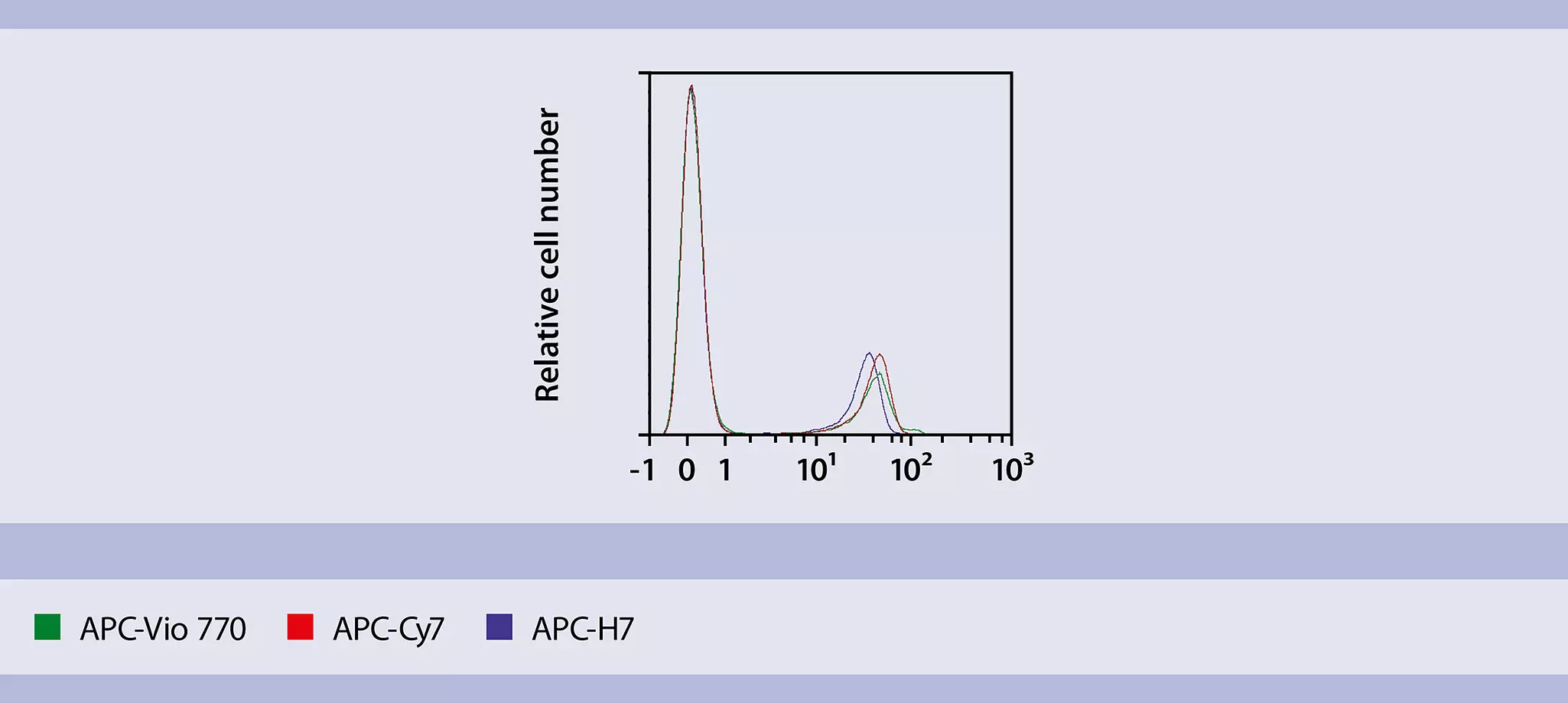
MFI, stain indices, and compensation requirements of CD8-APC-Vio 770, CD8-APC-Cy7, and CD8-APC-H7.
| Sample | Conjugate | MFI | Stain index | ||
| A | CD8-APC-Vio 770 | 41.4 | 52.8 | 7.0 | |
| A | CD8-APC-Cy7 | 40.6 | 50.6 | 11.0 | |
| A | CD8-APC-H7 | 32.2 | 45.8 | 9.0 | |
| B | CD8-APC-Vio 770 | 39.4 | 57.8 | 7.0 | |
| B | CD8-APC-Cy7 | 38.8 | 58.5 | 11.0 | |
| B | CD8-APC-H7 | 31.2 | 51.8 | 9.0 | |
High stability during fixation
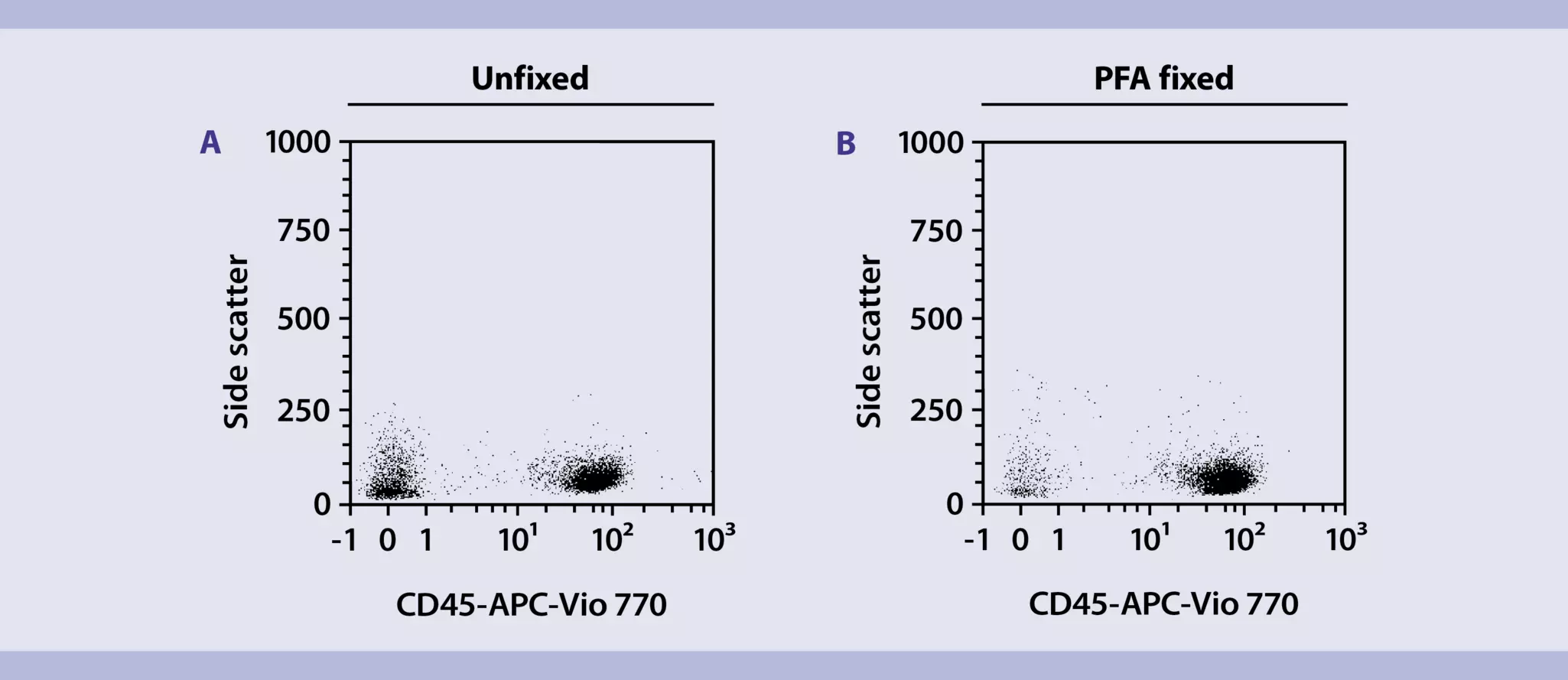
APC-Vio 770 shows excellent stability after fixation with paraformaldehyde, similar to PE-Vio 770.
You have previously chosen International as your location.
What do you want to do?