Content overview
Positive cell isolation
Negative cell isolation
Sequential cell separation
Quick guide
Resources
Products
Content
- Positive cell isolation
- Negative cell isolation
- Sequential cell separation
- Quick guide
- Resources
- Products
The diverse MACS Technology portfolio offers the ultimate flexibility for any cell separation procedure. Get the exact cells you want with various isolation strategies such as positive cell isolation, negative cell isolation, or sequential cell separation to isolate a specific cell subtype.
Not sure of which one you should choose for your experiment? Not to worry, here we will explain the different cell separation strategies in detail so you can choose the best method for your experimental setup.
Content overview
Positive cell isolation
Negative cell isolation
Sequential cell separation
Quick guide
Resources
Products
Magnetically label your cells of interest for positive cell isolation
Positive cell isolation is ideal:
Positive cell isolation involves magnetic labeling of a specific target cell type. During the separation process these cells are retained within the column, while the unlabeled cells flow through. When the column is removed from the magnetic field, the target cells can be eluted.
Positive cell selection can be achieved through both direct and indirect magnetic labeling using specialized MACS MicroBeads. These nano-sized microbeads enable minimal labeling of the target cells while preserving numerous surface epitopes for further applications. Their low labeling concentration and small size also contribute to preventing the activation of target cells, rendering this method gentle and efficient for a wide variety of cell types and tissues.
Click here to learn more about cell separation and the different labeling strategies.
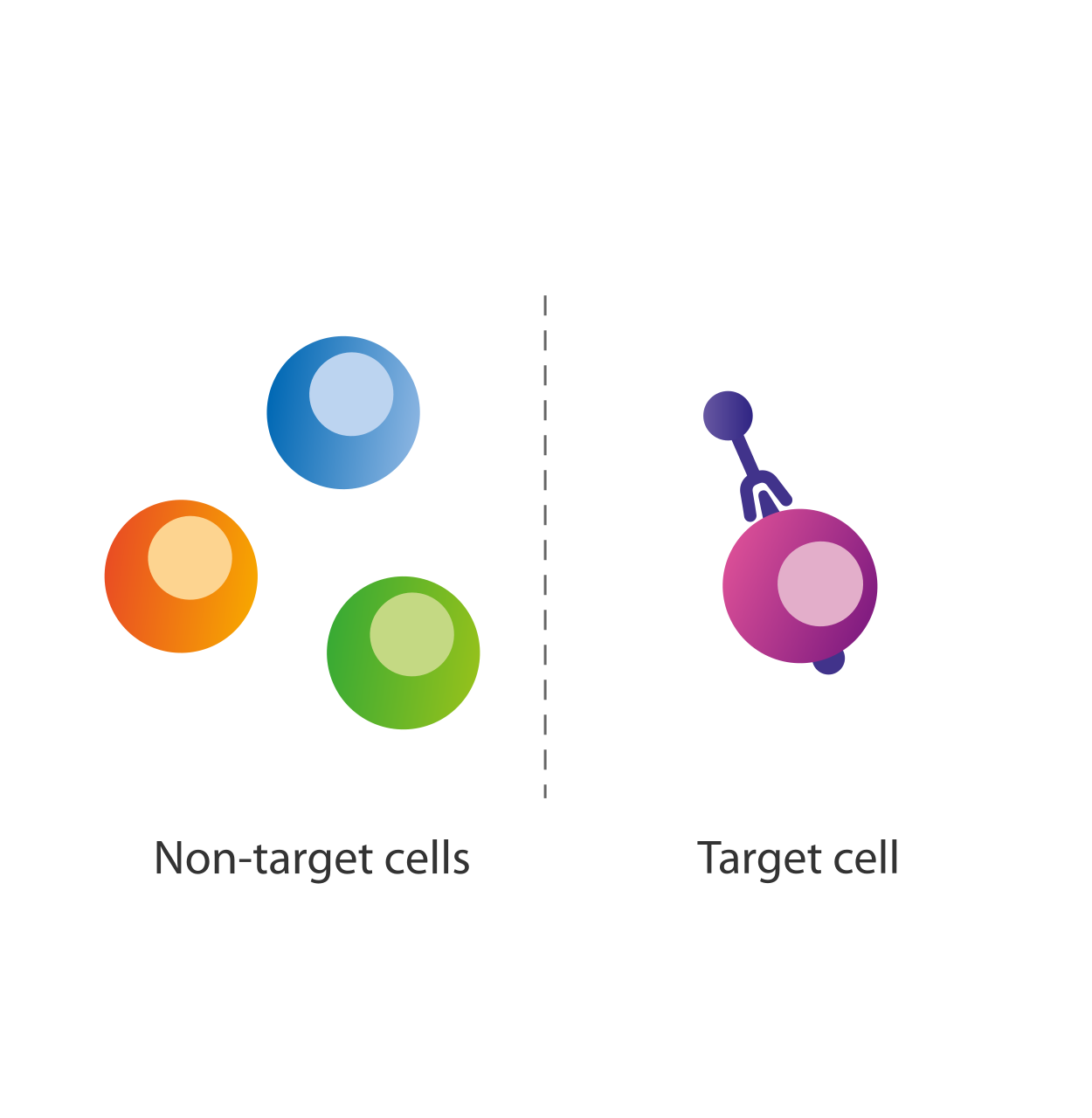


Magnetically label and deplete unwanted cells for negative cell isolation
Negative cell isolation is ideal:
To isolate the target cell type while keeping it unlabeled i.e untouched, the non-target cells are magnetically labeled and retained in the column. During separation, the unlabeled target cells are collected in the flow-through fraction. If needed, the magnetically labeled non-target cells can be eluted after the removal from the magnetic field.
MACS Cell isolation kits for untouched isolation contain a cocktail of titrated antibodies and MACS MicroBeads for indirect magnetic labeling. They are the preferred choice if the binding of antibodies to target cells is not desired.
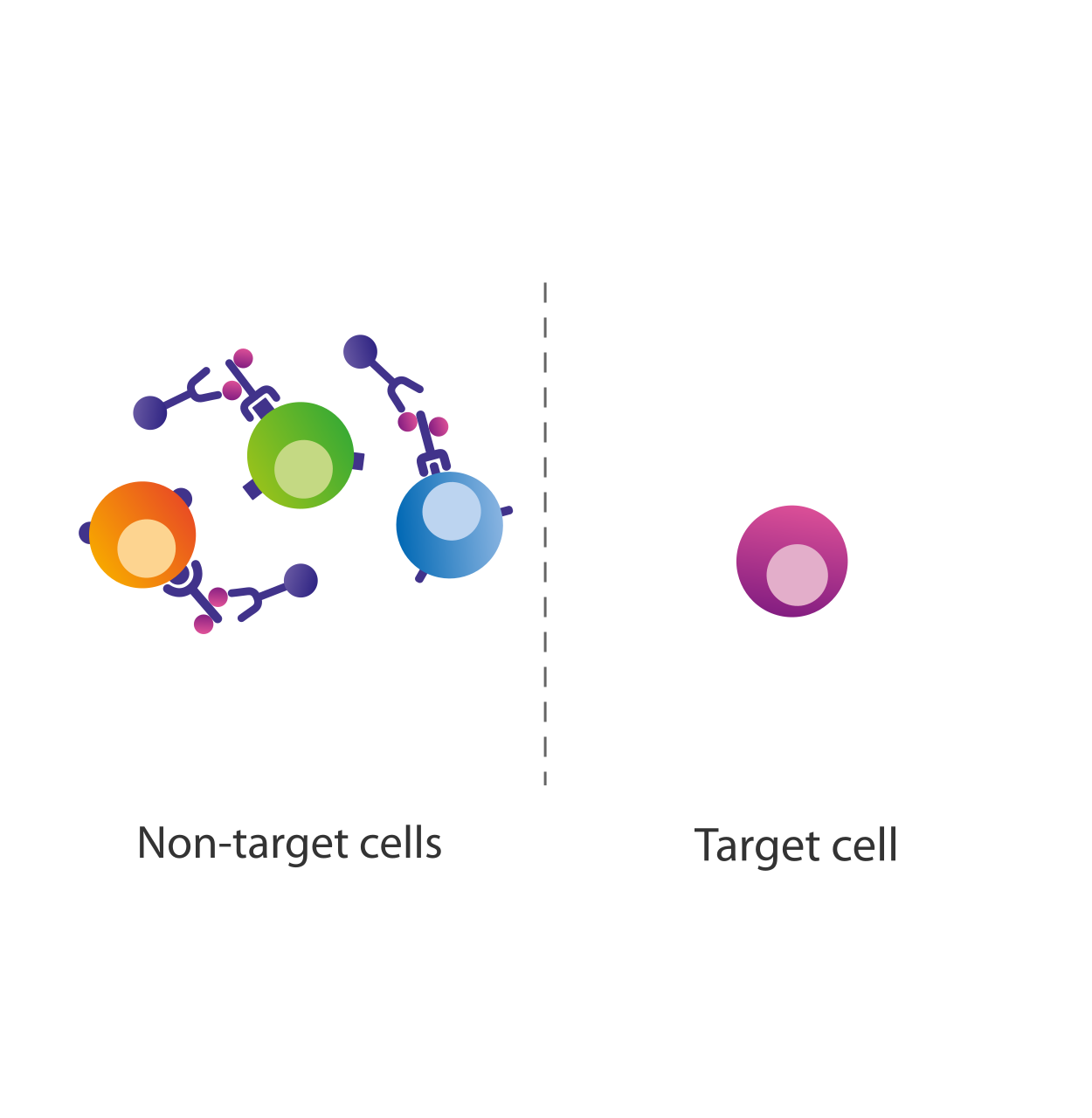
To remove or deplete a specific cell type from a mixture of cells, this cell type is magnetically labeled. During separation, the unlabeled target cells are collected in the flow-through fraction, while the unwanted cell type is retained within the column. If necessary, the retained cells can be eluted by removing the column from the separator.
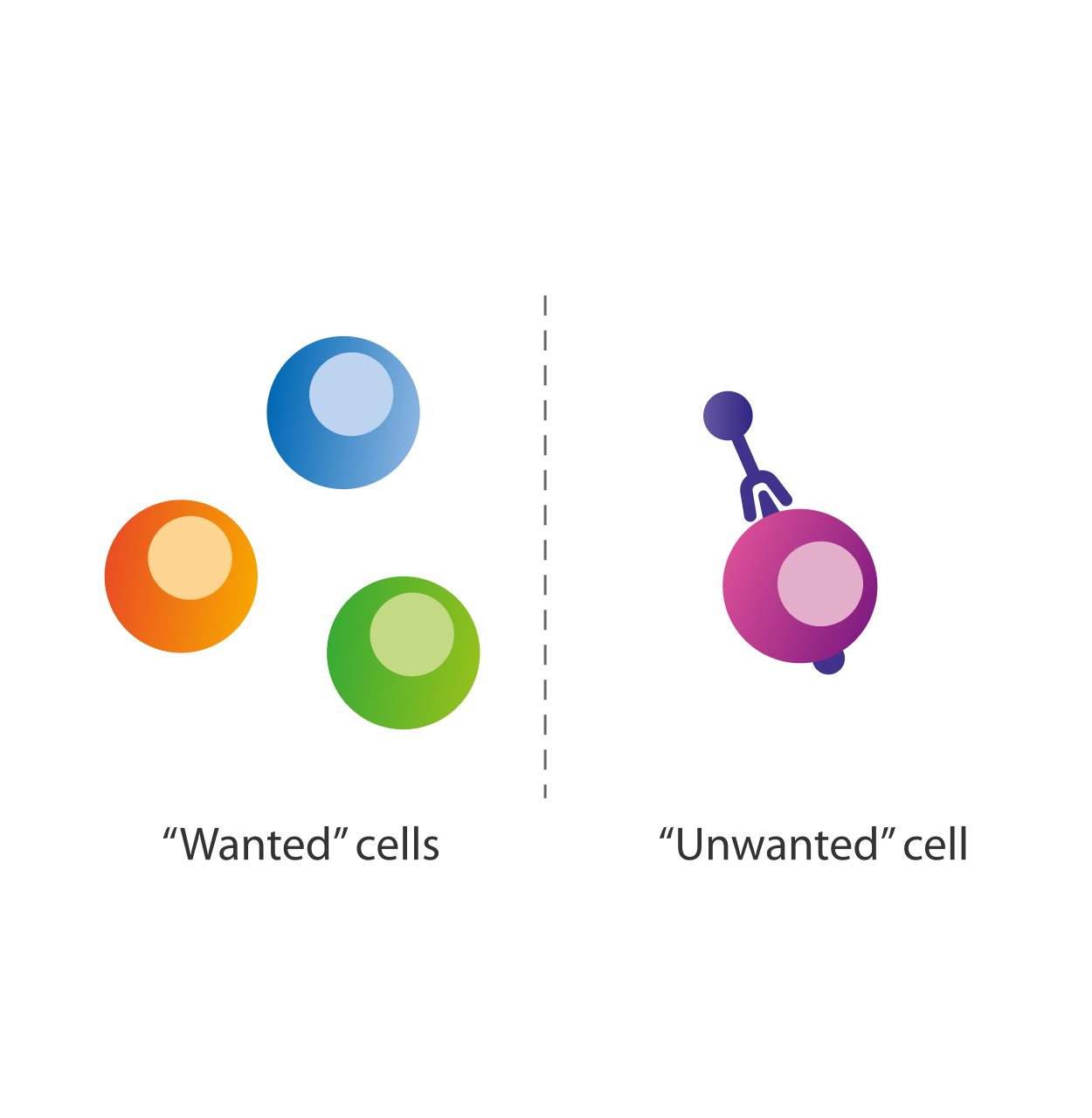
This method is ideal for when target cells and non-target cells share a common marker. Undesired cells, which share the common marker with the target cells, are depleted using a marker distinct from the common one. The flow-through will contain both the target cells and some undesired cells, lacking the shared marker with the target cell type. The next step involves positive selection using MACS Microbead that bind to the common marker to exclusively isolate the target cells.

This method involves multiple sequential positive isolations using MACS MicroBeads, targeting two different markers. The first positive isolation uses MACS MicroBeads binding to the first marker, for example CD14+ cells. Following the separation, unlabeled cells, i.e the negative fraction, is used in the second positive isolation. Here, MACS MicroBeads are used to target the second marker, for example T cells.

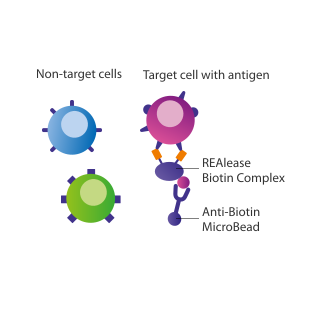
This method uses REAlease™ MicroBead technology, developed to make cell separation with maximal flexibility. It enables magnetic cell isolation by positive selection of target cells and the subsequent removal of beads and labels, making the cells ready for any downstream separation step.
The basic principle of REAlease MicroBead Technology relies on recombinantly engineered antibody fragments, instead of full antibodies, to tag specific cell surface markers. These fragments possess low affinity for cell surface epitopes, however, when they are multimerized as a complex, they bind to epitopes on target cells with high avidity, enabling efficient magnetic cell separation. REAlease Technology controls the multimer/monomer state of the fragments and therefore triggers the release of monomerized antibody fragments from the cell surface after isolation.
Ultimately, the positively selected target cells are free from antibody fragments and magnetic labels, therefore are suitable for subsequent separation steps. The negatively selected cell fraction, the non-labeled cells, are also available for further separation through positive isolation.
| Target cells | Key benefits | Required products | |
| Positive | Labeled cells: - Known marker on desired cells are labeled | - Quick and easy isolation directly from cell suspensions or blood products with known cell types and markers | MACS MicroBeads and MACS MicroBead kits (MACS MicroBeads, UltraPure, REAlease MicroBeads and StraightFrom MicroBeads) |
| Negative | Unlabeled cells: - Known marker on undesired cells are labeled | - Epitopes are completely free for downstream applications | MACS Cell isolation kits, MACSxpress Cell isolation kits |
| Sequential | - Cell types with an undefined marker - Cells sharing a common marker with an undesired cell type - Different cell subsets from the same sample. | - Separates target cells and unwanted cells sharing a common marker - Separate cell subets within one sample | - Depletion or negative isolation followed by positive isolation: MACS MicroBeads - Positive isolation followed by label and bead removal, and a second positive isolation: REAlease Microbeads - Multiple subsequent positive isolations: MACS MicroBeads |
Learn the basics of MACS Technology for magnetic cell separation and discover why it is the best choice for isolation of viable and functional cells. Get to know all solutions of the MACS Cell Separation portfolio providing a broad range of reagents, instruments, and strategies for the fast and gentle isolation of cells from virtually any cell type.

431 products found
|
You have previously chosen International as your location.
What do you want to do?
