Isolation and cultivation of GLAST-positive astrocytes from neonatal mouse brain
This application protocol describes the generation of highly purified and viable of GLAST-positive astrocytes from neonatal mouse brain tissue using GLAST antibodies and subsequent cultivation. A single cell-suspension is generated from brain tissue of mice younger than P8 through combined enzymatic and mechanical dissociation. Astrocytes are isolated from the single-cell suspension using the Anti-GLAST (ACSA-1) MicroBead Kit. This procedure was tested particularly on P5–7 dissociated mouse brain tissue, derived from CD-1® mice and containing approximately 12–18% GLAST+ cells.
Protocol
Isolation and cultivation of GLAST-positive astrocytes from neonatal mouse brain
35 min
Dissociation of brain tissue
75 min
Isolation of GLAST-positive astrocytes
30 min
Flow cytometric analysis
7 d
Cell culture
1 h
Immunocytochemical staining of cultured cells
Adjust cell culture time to meet experimental objectives.
Protocol

This protocol includes detailed instructions for preparing necessary reagents and materials and then carrying out each step.
PB buffer: Prepare a solution containing phosphate-buffered saline (PBS), pH 7.2, and 0.5% bovine serum albumin (BSA) by diluting MACS® BSA Stock Solution 1:20 with PBS. Keep buffer cold (+2 to +8 °C). Prepare fresh on the day of use and degas the buffer, as air bubbles could block the column.
▲ Note: BSA can be replaced by other proteins such as mouse serum albumin, mouse serum, or fetal bovine serum (FBS).
Preparation of cell culture plates
Coat a 24-well culture dish with 0.01% poly-L-lysine overnight at +37 °C. Wash three times with ddH2O the following day.
Use the Neural Tissue Dissociation Kit (T) to dissociate brain tissue and prepare a single-cell suspension. Follow the protocol of the kit data sheet.
Download the data sheet
Good to know
The data sheet for the Neural Tissue Dissociation Kits includes a set of tips & hints to improve the quality and yield of the dissociation procedure. Refer to the data sheet appendix if, for example, the yield of viable cells is too low or a cell pellet will not form.
Isolate GLAST-positive astrocytes from the single-cell suspension using the Anti-GLAST (ACSA-1) MicroBead Kit. Follow the protocol of the kit data sheet.
Download data sheet
 View details
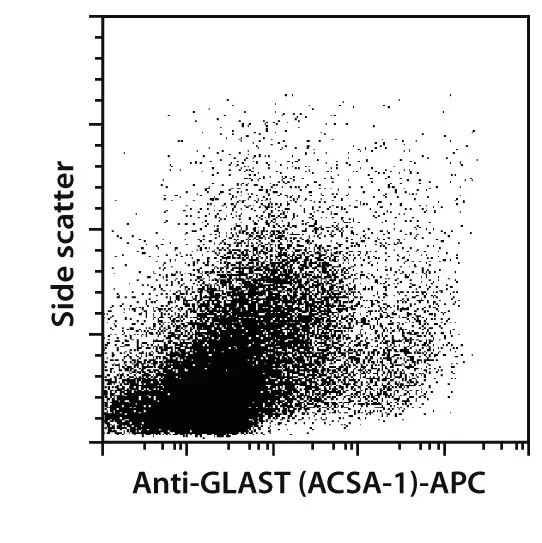
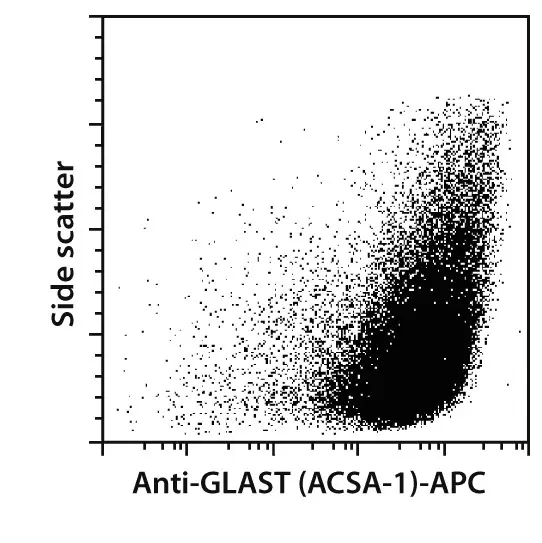
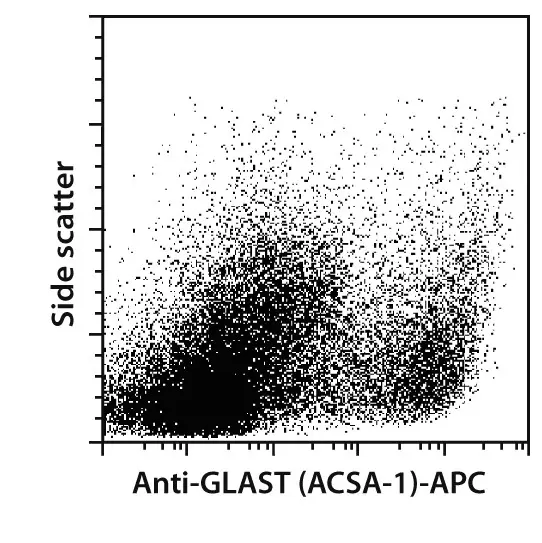
Figure 1: Effective isolation of GLAST+ cells from mouse brain tissue. Mouse brain tissue (P7) was dissociated using the Neural Tissue Dissociation Kit (T), the gentleMACS™ Dissociator, and FcR Blocking Reagent, mouse. Astrocytes were isolated from single-cell suspension using the Anti-GLAST (ACSA-1) MicroBead Kit, a MiniMACS™ Separator, and an MS Column. Cells were fluorescently stained with Anti-GLAST (ACSA-1)-APC and analyzed by flow cytometry on the MACSQuant® Analyzer. Cell debris and dead cells were excluded from the analysis based on scatter signals and propidium iodide fluorescence.
- The recommended antibody dilution for labeling cells is 1:10 for up to 1×10⁶ cells/50 μL of PB buffer.
- Volumes given below are for up to 1×10⁶ nucleated cells. When working with fewer than 1×10⁶ cells, use the same volumes as indicated. When working with higher cell numbers, scale up all reagent volumes and total volumes accordingly (e.g. for 2×10⁶ nucleated cells, use twice the volume of all indicated reagent volumes and total volumes).
- Use 100 μL of the GLAST+ fraction for analysis. Optionally, also analyze 100 μl of the negative fraction and 20 μL of the original fraction.
- Resuspend up to 1×10⁶ nucleated cells per 45 μL of PB buffer (see "Things to prepare in advance of cell isolation and cell culture").
▲ Note: Always use freshly prepared buffer. - Add 5 μL of GLAST (ACSA-1) Antibody, anti-mouse, APC.
- Mix well and incubate for 10 minutes in the refrigerator (+2 to +8 °C) in the dark.
▲ Note: Higher temperatures and/or longer incubation times may lead to non-specific cell labeling. Working on ice requires increased incubation times. - Wash cells by adding 1 mL of PB buffer and centrifuge at 300×g for 10 minutes. Aspirate supernatant completely.
- Resuspend cell pellet in a suitable amount of PB buffer for analysis by flow cytometry, e.g., using the MACSQuant® Analyzer 10.
- Plate 5×10⁴ cells in 50 μL of pre-warmed AstroMACS Medium as a drop in the middle of each well of a coated 24-well plate.
- Let the cells settle down for 30 minutes at +37 °C in the incubator.
- Carefully add 450 μL of AstroMACS Medium to each well.
- Maintain the culture by replacing 50% of AstroMACS Medium every other day.
Things to prepare in advance
Staining buffer: Prepare a solution containing autoMACS® Running Buffer with FcR Blocking Reagent, mouse in a ratio of 1:10, e.g., add 1 mL FcR Blocking Reagent to 9 mL autoMACS Running Buffer.
Staining protocol
- Wash cells 3× with PBS.
- Fix cells with 2% PFA for 10 minutes at room temperature.
- Wash cells 3× with PBS.
▲ Note: Fixed cells can be stored in azide-containing buffer at +2 to +8 °C for up to one week. - Add staining buffer (see section "Things to prepare in advance") and incubate for 10 minutes at room temperature.
- Discard staining buffer.
- Add primary antibody in staining buffer to the cells with a final concentration of 1–5 μg/mL and incubate at room temperature in the dark for 10 minutes.
- Wash cells 3× with autoMACS Running Buffer.
- Add a corresponding secondary antibody in staining buffer to the cells and incubate at room temperature in the dark for 10 minutes.
- Wash cells 3× with autoMACS Running Buffer.
▲ Note: For co-staining with additional antibodies repeat steps 6–9. - Store cells in autoMACS Running Buffer.
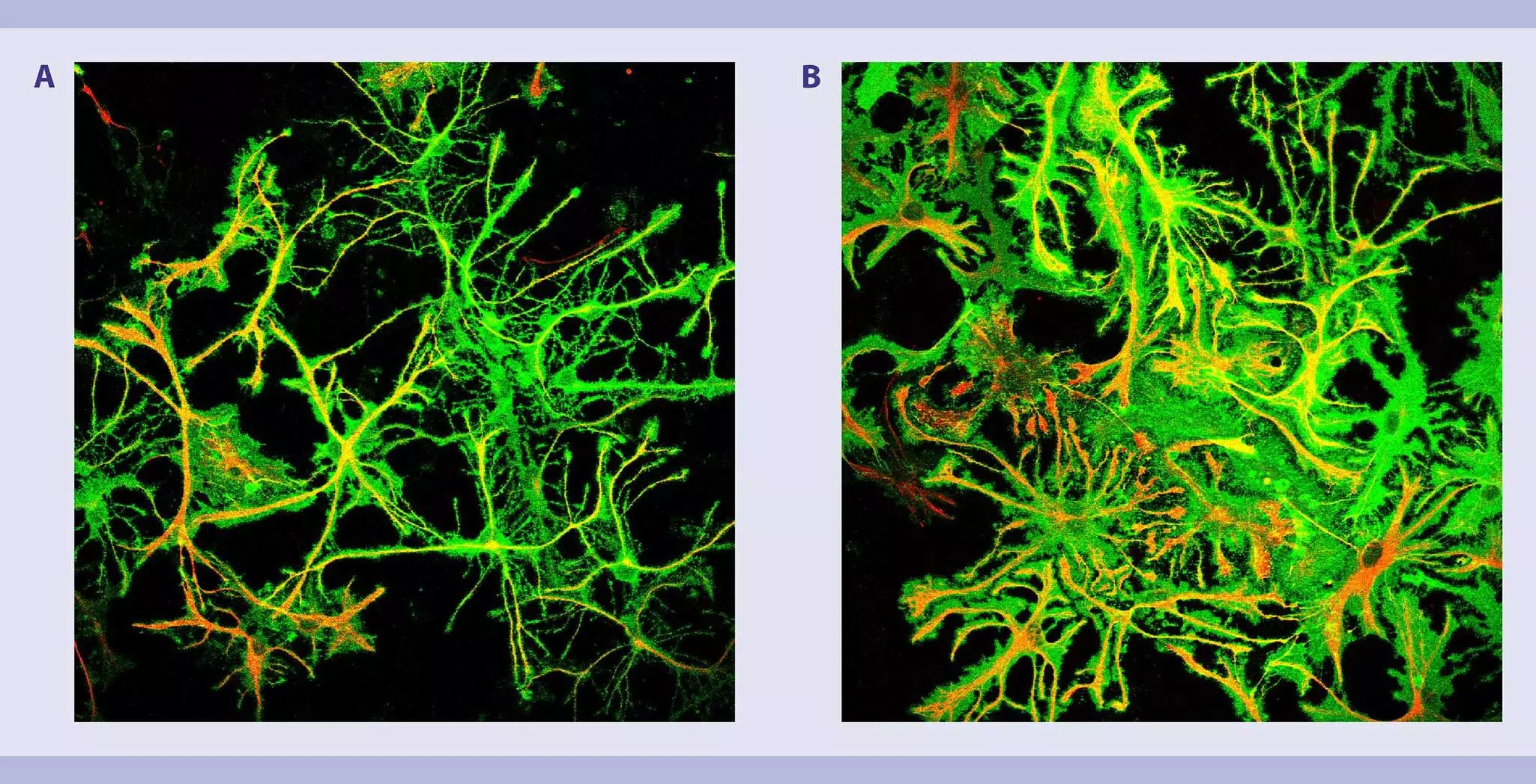
- Cells are now ready for immunofluorescence microscopy.
▲ Note: Samples can be stored at +2 to +8 °C in the dark for up to one week.
▲ Note: When working with cells cultured on coverslips, the coverslips need to be mounted onto slides before imaging.
 View details

14 products found
|
Catalog no. was copied to your clipboard
 130-093-237
For research use only
Size
25 tubes (sterile, single-packed)
25 tubes (sterile, single-packed)
Price
On request
Catalog no. was copied to your clipboard
130-095-823For research use only
Catalog no. was copied to your clipboard
130-095-823For research use only
Size
50 filters
50 filters
Price
On request
Catalog no. was copied to your clipboard
130-052-301For research use only
Size
for 2×10⁹ total cells
for 2×10⁹ total cells
Price
On request
Catalog no. was copied to your clipboard
130-098-265For research use only
Catalog no. was copied to your clipboard
130-098-265For research use only
Size
20 pieces
20 pieces
Price
On request
Catalog no. was copied to your clipboard
130-098-462For research use only
Catalog no. was copied to your clipboard
130-098-462For research use only
Size
50 filters (sterile, single-packed)
50 filters (sterile, single-packed)
Price
On request
Catalog no. was copied to your clipboard
130-097-418For research use only
Size
for 2×10⁹ total cells
for 2×10⁹ total cells
Price
On request
Catalog no. was copied to your clipboard
130-091-376For research use only
Size
6× 75 mL
6× 75 mL
Price
On request
Catalog no. was copied to your clipboard
130-093-233For research use only
Size
2 mL
2 mL
Price
On request
HIGHLIGHT
Catalog no. was copied to your clipboard
130-096-343For research use only
Size
1 unit
1 unit
Price
On request
Catalog no. was copied to your clipboard
130-107-677For research use only
Catalog no. was copied to your clipboard
130-107-677For research use only
Size
for 50 preparations
for 50 preparations
Price
On request
Catalog no. was copied to your clipboard
130-109-393For research use only
Catalog no. was copied to your clipboard
130-109-393For research use only
Source
Pichia pastoris
Pichia pastoris
Size
1000 µg
1000 µg
Price
On request
Catalog no. was copied to your clipboard
130-111-568For research use only
Size
1 mL
1 mL
Price
On request
HIGHLIGHT
Catalog no. was copied to your clipboard
130-134-029For research use only
Catalog no. was copied to your clipboard
130-134-029For research use only
Price
On request
Catalog no. was copied to your clipboard
130-117-031For research use only
Size
500 mL
500 mL
Price
On request
You have previously chosen International as your location.
What do you want to do?