Content overview
What is breast cancer?
Types of breast cancer
Risk factors
Markers
Advances in treatment
New developments
Content
- What is breast cancer?
- Types of breast cancer
- Risk factors
- Markers
- Advances in treatment
- New developments
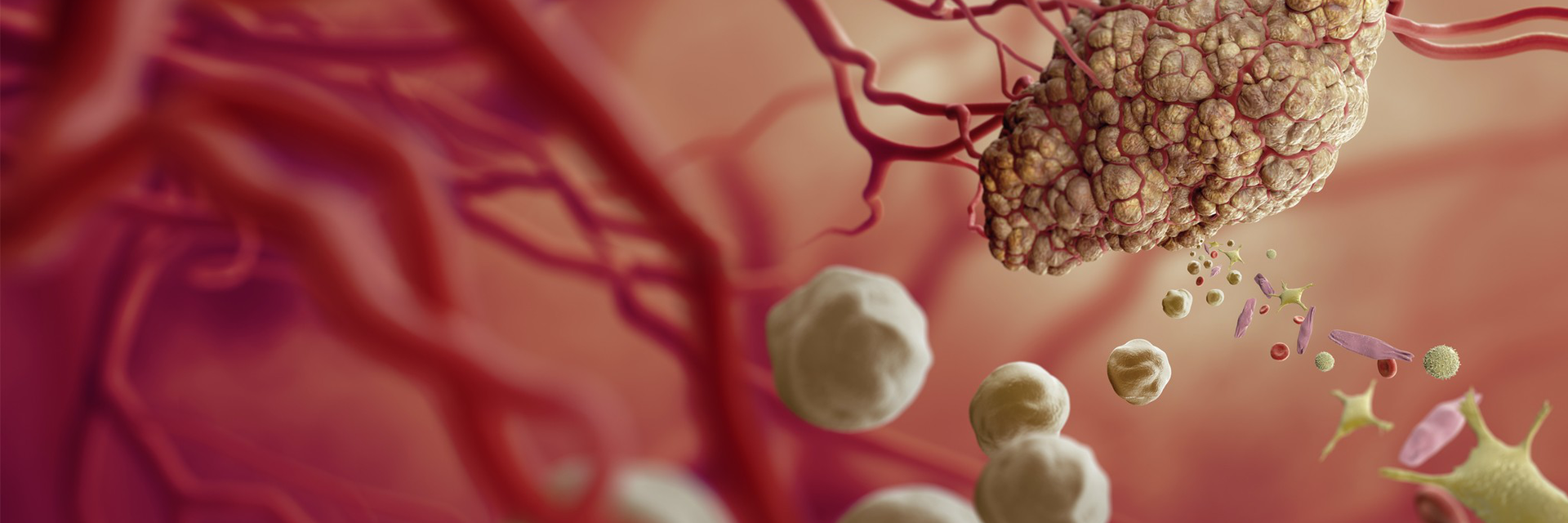

Breast cancer is one of the most common cancers worldwide, affecting millions of people each year. While it predominantly impacts women, it can also occur in men, making it a disease everyone should be aware of. Understanding breast cancer – its causes, symptoms, and treatment options – can empower individuals to take charge of their health and promote early detection.
In this blog post we explore the different types and risk factors for breast cancer, markers that can be used for its investigation, and recent therapeutic developments shaping the future of breast cancer research.
Read time: 5–10 minutes
This information is intended for biological researchers and should not be viewed as advice on medical treatments for breast cancer.
Content overview
What is breast cancer?
Types of breast cancer
Risk factors
Markers
Advances in treatment
New developments
Breast cancer is a type of cancer that originates in the cells of the breast. It occurs when abnormal cells grow uncontrollably, forming a tumor that can invade surrounding tissues or spread to other parts of the body (metastasis). Most breast cancers begin in the milk-producing glands (lobules) or the ducts that carry milk to the nipple.
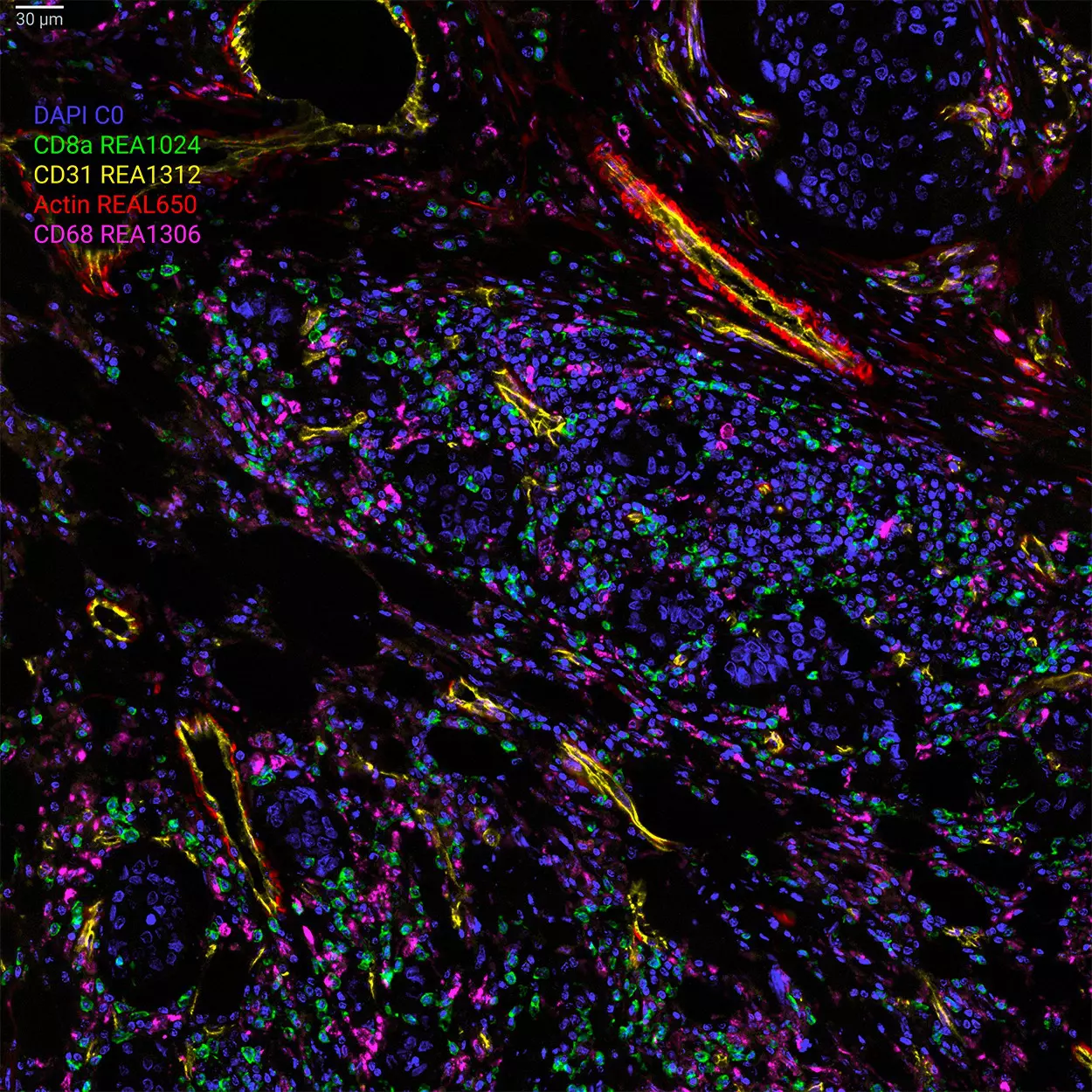
Breast cancer is a diverse disease with multiple subtypes, each defined by unique molecular characteristics, prognosis, and treatment responses. The main types of breast cancer include:1

Naked mole rats, a species of rodent, rarely develop cancer. These animals produce a specific type of sugar (high-molecular-mass hyaluronan) that prevents their cells from clumping together in a way that could lead to tumors.2 In addition, elephants, despite having many more cells than humans, have an incredibly low cancer rate. They have around 20 copies of the TP53 gene, which is known to suppress tumors, while humans only have one copy.3
Breast cancer develops due to a combination of genetic, environmental, and lifestyle factors. While some risk factors can’t be controlled, others can be addressed to lower the likelihood of developing the disease.4
Breast cancer biomarkers are molecules found in tumor cells, tissues, or blood that provide important information for diagnosis, prognosis, and treatment planning. Here are key markers commonly associated with breast cancer:

Mutations in BRCA1 and BRCA2 differentially affect the tumor microenvironment and response to checkpoint blockade immunotherapy
Samstein, R. et al. (2021) Nat Cancer. 1(12):1188-1203. | Read article

Early functional mismatch between breast cancer cells and their tumour microenvironment suppresses long term growth
Perdrix-Rosell, A. et al. (2022) Cancer Lett. 544:215800. | Read article
Cancer treatment has evolved significantly in recent decades, moving from traditional approaches like surgery, hormone therapy, and chemotherapy to more targeted and personalized therapies.
Here's an overview of two particularly promising key treatment options:
Breast cancer research is rapidly evolving, with groundbreaking advancements in early detection, targeted therapies, and personalized medicine offering new hope for patients. Recent studies explore a new understanding of cancer biology and the surrounding tissues, to better target therapies and novel drug combinations that could revolutionize care.
Recent studies have discovered that healthy breast tissues can contain cells with genetic changes characteristic of invasive breast cancer, such as aneuploidy and mutations commonly found in cancer. These findings raise concerns about diagnosis accuracy, as such cells could potentially be misdiagnosed as cancerous. This underscores the need for refined diagnostic criteria to distinguish between benign and malignant cells more effectively.
Normal breast tissues harbour rare populations of aneuploid epithelial cells
Lin, Y. et al. (2024) Nature. 636(8043):663-670. | Read article
Emerging research indicates that neurotransmitters, such as serotonin and dopamine, significantly influence breast cancer biology. They affect various processes, including the cell cycle, epithelial-mesenchymal transition, and angiogenesis, thereby contributing to cancer progression. Understanding these mechanisms opens avenues for novel therapeutic strategies targeting neurotransmitter pathways.
Breast cancer and neurotransmitters: emerging insights on mechanisms and therapeutic directions
Jayachandran, P. et al. (2023) Oncogene. 42(9):627-637. | Read article
A review highlights that the metabolic states of dormant breast cancer cells vary depending on the subtype and receptor status. These metabolic shifts are crucial in understanding how dormant cells survive and what triggers their reactivation, which is vital for developing treatments to prevent cancer recurrence.
Recent insights into the effects of metabolism on breast cancer cell dormancy
Bartlome, S. et al. (2022) Br J Cancer. 127(8):1385-1393. | Read article
You have previously chosen International as your location.
What do you want to do?