CD45RA MicroBeads were developed for positive selection or depletion of lymphocyte subsets from human PBMCs.


Related products for CD45RA MicroBeads, human

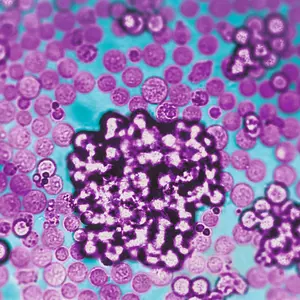

CD8+ cells were enriched from PBMCs by using the CD8 MultiSort Kit. After release of the MultiSort MicroBeads, the cells were magnetically labeled with CD45RA MicroBeads. Naive CD8+CD45RA+ T cells were isolated by positive selection.
CD45RA MicroBeads were developed for positive selection or depletion of lymphocyte subsets from human PBMCs.
CD45RA is expressed on naive CD4+ and CD8+ T cells as well as on CD8+ effector T cells. CD45RA is also present on subsets of B and NK cells as well as on plasmacytoid dendritic cells. The CD45RA antibody recognizes the 220 kDa isoform of the leukocyte common antigen (LCA).
CD45RA MicroBeads are used for the positive selection or depletion of CD45RA+ cells. For isolation of CD45RA+ T cell subsets, the CD45RA MicroBeads can be combined with MACS® Cell Isolation Kits6,7 or CD4 and CD8 MultiSort Kits1,2. The CD45RA MicroBeads can also be used to isolate CD45RO+ cells from pre-sorted CD4+ or CD8+ T cells by depletion of CD45RA+ cells.3,4,5,7
Cells isolated with CD45RA MicroBeads can be used for various studies, such as cytokine expression or receptor signaling.
For positive selection: MS, LS, XS, or autoMACS® Columns. For depletion: LD, D, or autoMACS Columns.
- Akdis, M. et al. (1999) Skin homing (cutaneous lymphocyte-associated antigen-positive) CD8+ T cells respond to superantigen and contribute to eosinophilia and IgE production in atopic dermatitis. J Immunol 163: 466-475
- Matsushima, T. et al. (2001) Receptor binding cancer antigen expressed on SiSo cells, a novel regulator of apoptosis of erythroid progenitor cells. Blood 98: 313-321
- Wolthers, K. C. et al. (1999) Normal T-cell telomerase activity and upregulation in human immunodeficiency virus-1 infection. Blood 93: 1011-1019
- Jonuleit, H. et al. (2000) Induction of interleukin 10-producing, nonproliferating CD4+ T cells with regulatory properties by repetitive stimulation with allogeneic immature human dendritic cells. J. Exp. Med. 192: 1213-1222
- Mattila, P. S. et al. (2000) Adenoids provide a microenvironment for the generation of CD4+, CD45RO+, L-selectin–, CXCR4+, CCR5+ T lymphocytes, a lymphocyte phenotype found in the middle ear effusion. Int. Immunol. 12: 1235-1243
- Verhasselt, V. et al. (2004) Induction of FOXP3-expressing regulatory CD4pos T cells by human mature autologous dendritic cells. Eur. J. Immunol. 34: 762-772
- Hafsi, N. et al. (2004) Human dendritic cells respond to Helicobacter pylori, promoting NK cell and Tʜ1-effector responses in vitro. J Immunol 173: 1249-1257
You have previously chosen International as your location.
What do you want to do?