The direct Anti-TRA-1-60 MicroBeads have been developed for the positive selection of human pluripotent stem cells based on the expression of the TRA-1-60 antigen.
The direct Anti-TRA-1-60 MicroBeads offer a 10 min isolation procedure, minimizing cell handling time.


Related products for Anti-TRA-1-60 MicroBeads, human
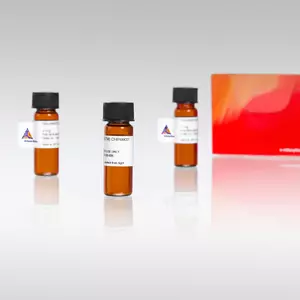


The direct Anti-TRA-1-60 MicroBeads have been developed for the positive selection of human pluripotent stem cells based on the expression of the TRA-1-60 antigen.
The direct Anti-TRA-1-60 MicroBeads offer a 10 min isolation procedure, minimizing cell handling time.
The Anti-TRA-1-60 monoclonal antibody reacts with a pluripotent stem cell–specific antigen expressed on undifferentiated human embryonic stem (ES) cells, induced pluripotent (iPS) cells, embryonal carcinoma (EC) cells, and embryonic germ (EG) cells.2,3 The expression of TRA-1-60 on human ES cells is down-regulated upon differentiation. The Anti-TRA-1-60 antibody recognizes a neuraminidase-resistant carbohydrate epitope expressed on podocalyxin, a member of the CD34-related family of sialomucins. Podocalyxin is a transmembrane glycoprotein, which has been implicated in the development of aggressiveness in a variety of cancers including breast cancer and prostate cancer.
- Positive selection of undifferentiated TRA-1-60+ pluripotent stem cells, for example, human ES and iPS cells.
- Efficient enrichment of iPS cells during or after reprogramming1,5.
MS or autoMACS® Columns for use with Anti-TRA-1-60 MicroBeads.
Pluripotent (TRA-1-60+) iPSCs were isolated from cultures containing spontaneously differentiated iPSCs grown on mouse embryonic feeder cells using Anti-TRA-1-60 MicroBeads, an MS Column, and a MiniMACS™ Separator. Cells were fluorescently stained with Anti-TRA-1-60-PE (# 130-100-347) and Anti-Feeder-APC after separation and analyzed by flow cytometry using the MACSQuant® Analyzer. Cell debris and dead cells were excluded from the analysis based on scatter signals and propidium iodide fluorescence.
- Grabundzija, I. et al. (2013) Sleeping Beauty transposon-based system for cellular reprogramming and targeted gene insertion in induced pluripotent stem cells. Nucleic Acids Res. 41 (3): 1829-1847
- Andrews, P. W. et al. (1984) Three monoclonal antibodies defining distinct differentiation antigens associated with different high molecular weight polypeptides on the surface of human embryonal carcinoma cells. Hybridoma 3: 347-361
- Chan, E. M. et al. (2009) Live cell imaging distinguishes bona fide human iPS cells from partially reprogrammed cells. Nat. Biotechnol. 27: 1033-1037
- Dick, E. et al. (2011) Faster generation of hiPSCs by coupling high-titer lentivirus and column-based positive selection. Nat. Protoc. 6 (6): 701-714
- Tanabe, K. et al. (2013) Maturation, not initiation, is the major roadblock during reprogramming toward pluripotency from human fibroblasts. Proc. Natl. Acad. Sci. U.S.A. 110: 12172-12179
You have previously chosen International as your location.
What do you want to do?