
Synonyms: KRT14, CK-14, Keratin-14, K14, Cytokeratin-14
RECOMBINANT
- Clone:
- REAL831
- Type of antibody:
- Releasable fluorochromes, Primary antibodies, Recombinant antibodies
- Applications:
- MICS, IF, IHC Glossary
- Select a conjugate:


Related products for Cytokeratin 14 Antibody, anti-human, REAdye_lease™

MICS (MACSima Imaging Cyclic Staining) applications
APC
FITC
Fixation:
frozen – Acetone
Species tested:
human
Tissue used:
skin
Recommended dilution:
1:50
Data source:
Miltenyi Biotec
Compatible applications:
IF, IHC
Conjugate:
APC
Used products:
130-125-684
Testing grade:
Description:
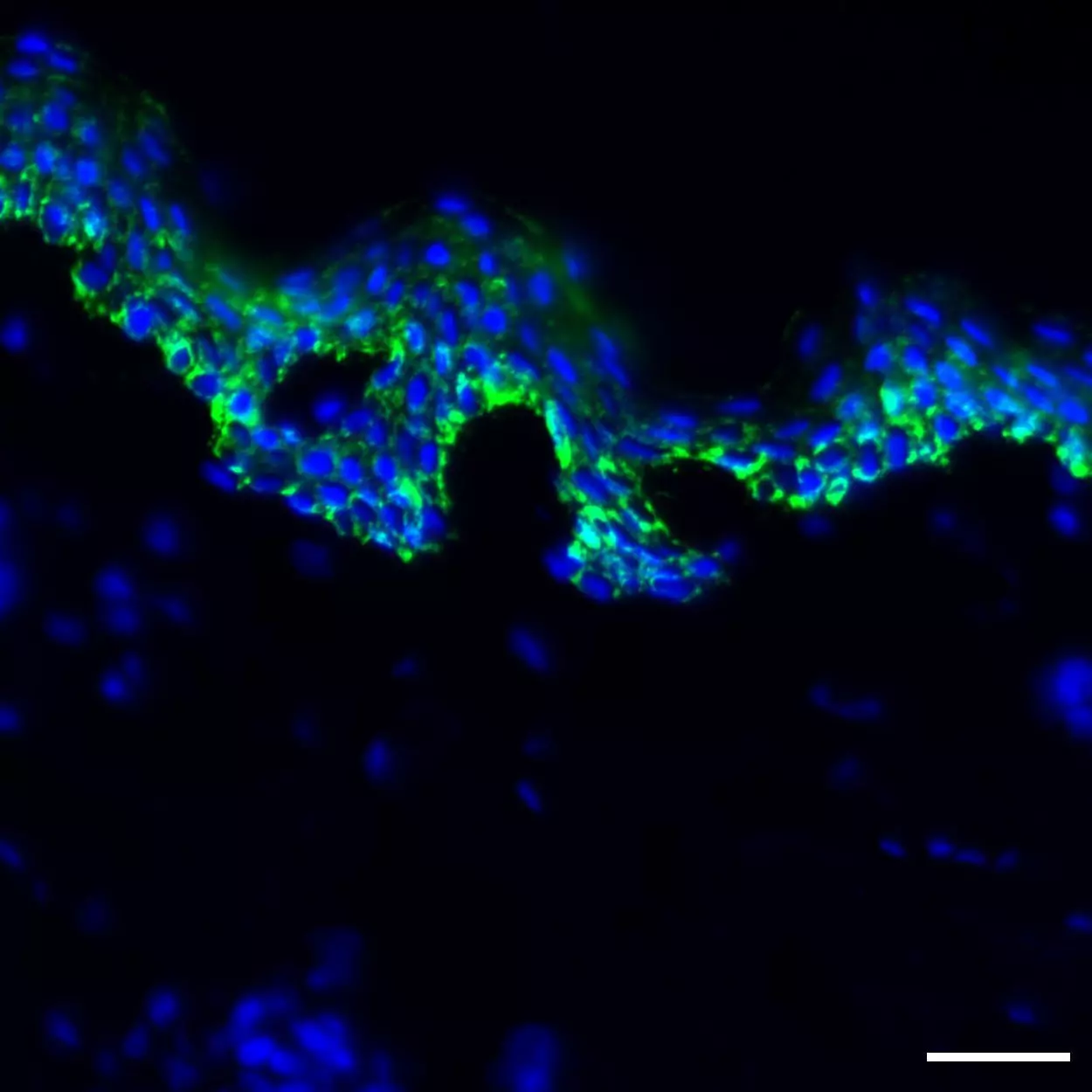
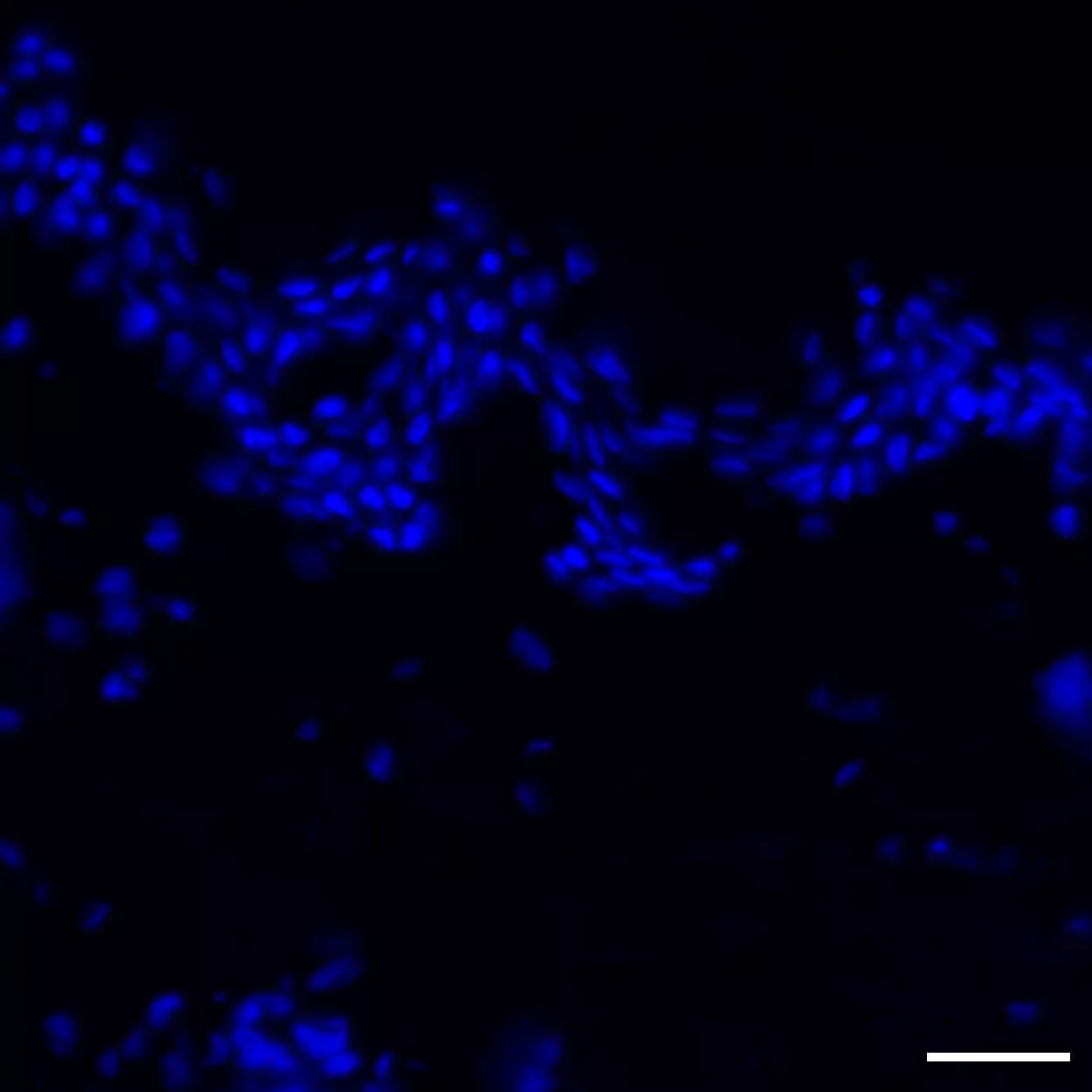
Immunofluorescence analysis of a human skin cryosection fixed with ice-cold acetone. The section was stained using Cytokeratin 14 Antibody, anti-human, APC (green) for 10 min at room temperature (A). Cytokeratin 14 Antibody, anti-human, APC staining was released using the REAlease Release Reagent (B). Nuclei were visualized with Hoechst™ (blue). Scale bar: 30 µm.
A
 view details
B
 view details
Fixation:
FFPE
Species tested:
human
Tissue used:
skin
Recommended dilution:
1:50
Data source:
Miltenyi Biotec
Compatible applications:
IF, IHC
Conjugate:
APC
Used products:
130-125-684
Testing grade:
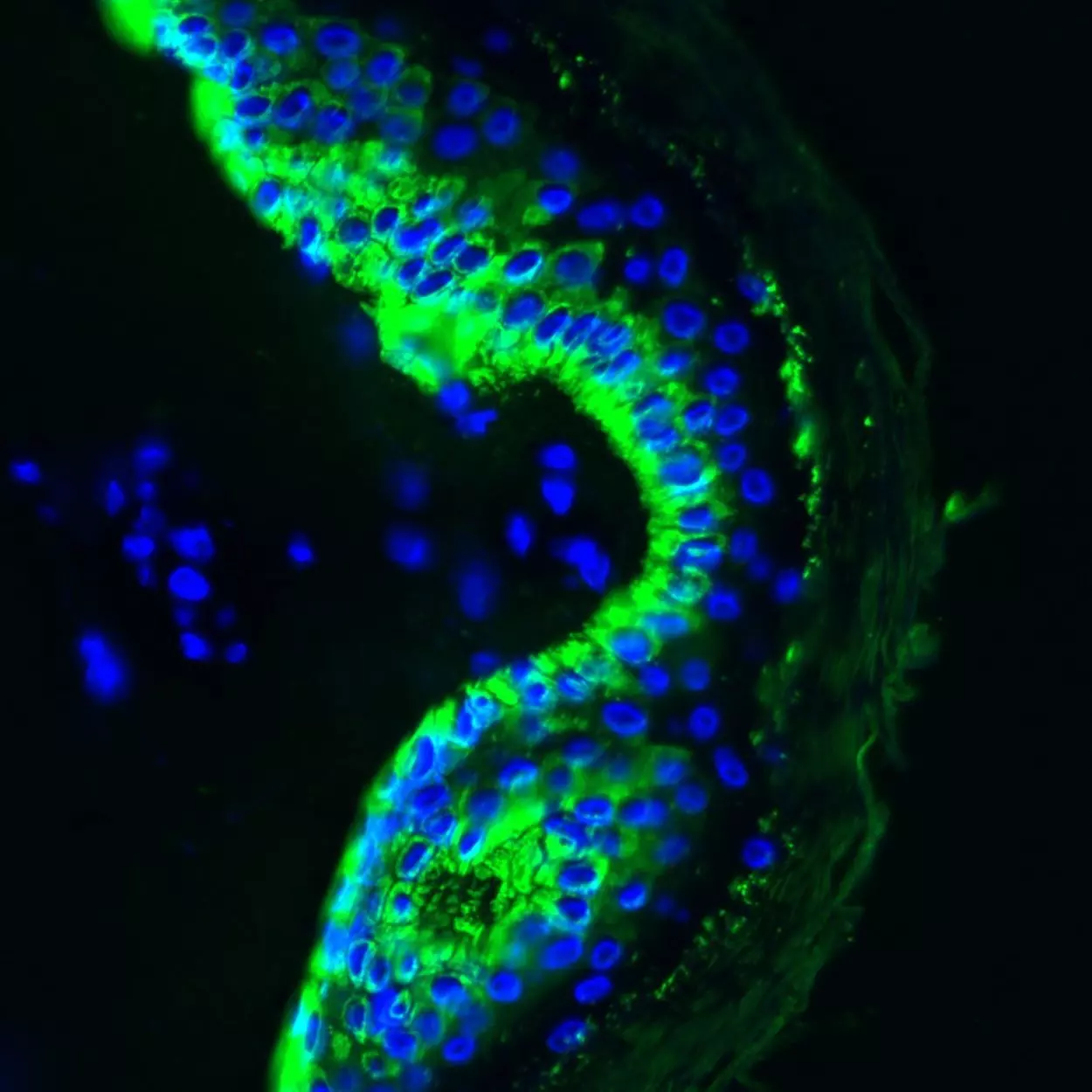
Description:
Immunofluorescence analysis of a formalin-fixed, paraffin embedded (FFPE) human skin. Before staining, antigens were retrieved using heat-induced epitope retrieval (HIER) at pH 9. The section was stained using Cytokeratin 14 Antibody, anti-human, APC (green) for 10 min at room temperature. Nuclei were visualized with Hoechst™ (blue). Scale bar: 30 µm.
Fixation:
frozen – PFA
Species tested:
human
Tissue used:
skin
Recommended dilution:
1:100
Data source:
Miltenyi Biotec
Compatible applications:
IF, IHC
Conjugate:
APC
Used products:
130-125-684
Testing grade:
Description:
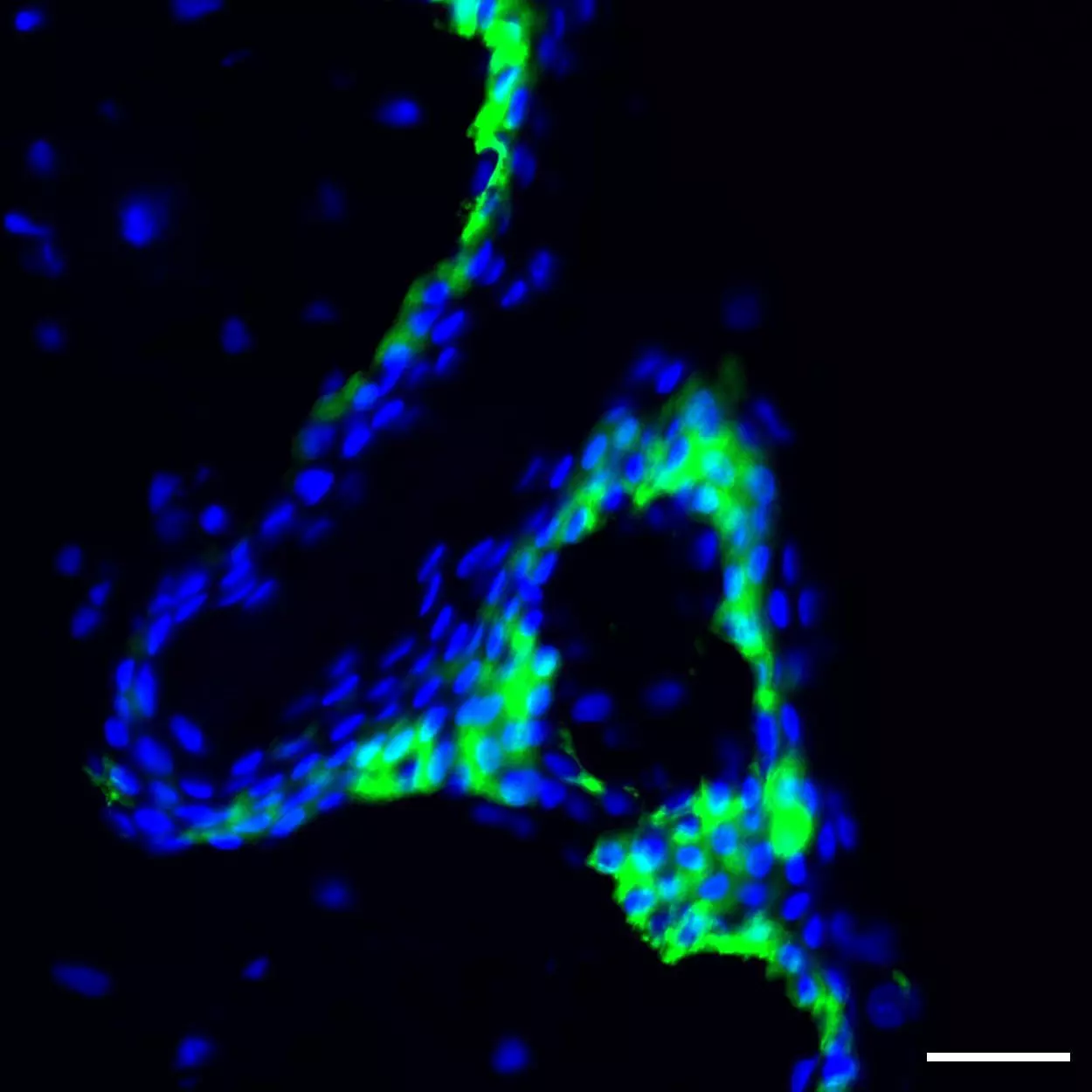
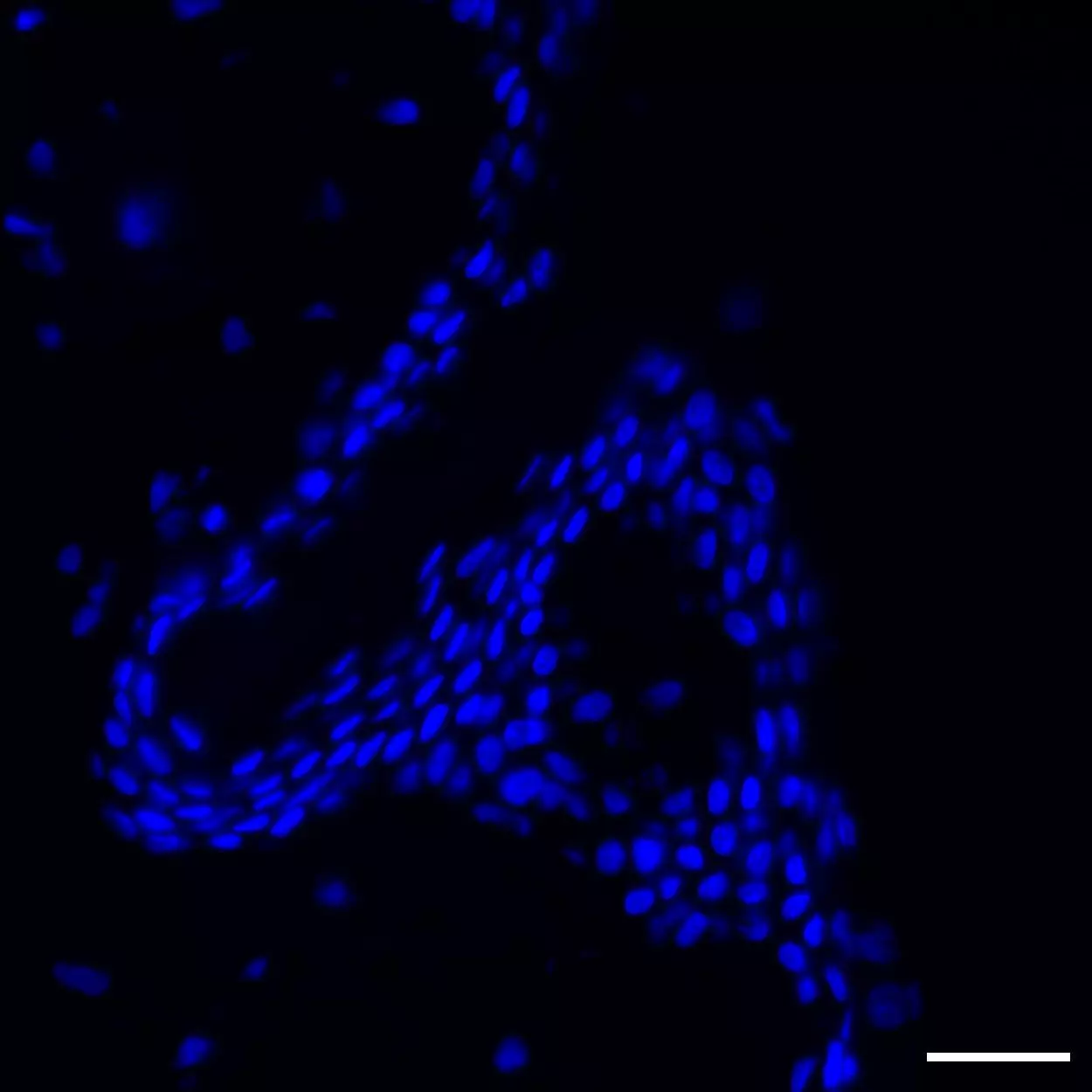
Immunofluorescence analysis of a human skin cryosection fixed with 4% PFA. The section was stained using Cytokeratin 14 Antibody, anti-human, APC (green) for 10 min at room temperature (A). Cytokeratin 14 Antibody, anti-human, APC staining was released using the REAlease Release Reagent (B). Nuclei were visualized with Hoechst™ (blue). Scale bar: 30 µm.
A
 view details
B
 view details
Specifications for Cytokeratin 14 Antibody, anti-human, REAdye_lease™
Overview
Clone REAL831 is an antibody fragment derived from the full Cytokeratin 14 antibody molecule. It displays no binding to Fc receptors. The recombinantly engineered antibody fragments are multimerized to form the REAdye_lease Complex to bind markers with high avidity.
Clone REAL831 recognizes Cytokeratin 14. Cytokeratins, which are found in almost all epithelial cells, are polypeptides with keratin-containing intermediate filaments, which ensure form stability and cohesiveness. Keratins play a critical role in mechanical stability and integrity of epithelial cells and tissues, have regulatory functions and are involved in intracellular signaling pathways. Cytokeratin 14 is a member of the type I keratin family and is mainly found as a heterodimer with type II keratin 5 and forms the cytoskeleton of epithelial cells. It is located in in the basal layer and in the stratum spinosum, stratum granulosum and also expressed in the outer root sheath of anagen follicles and keratinocytes surrounding the club hair during telogen.
For removal of REAdye_lease fluorochromes for optional relabeling with different fluorochrome-conjugated REAdye_lease antibodies use the REAlease Support Kit (130-120-675).
KRT14, CK-14, Keratin-14, K14, Cytokeratin-14
Detailed product information
Technical specifications
Clone
REAL831
Clonality
monoclonal
Isotype control
Control Antibody
Host
cell line
Type of antibody
Releasable fluorochromes, Primary antibodies, Recombinant antibodies
Species reactivity
human
Antigen
Cytokeratin 14
Distribution of antigen
epithelial cells, skin
RRID
AB_2889653, AB_2889654
Resources for Cytokeratin 14 Antibody, anti-human, REAdye_lease™
Certificates
To access a Certificate of Analysis (CoA) follow the link below and enter the specific lot of your product.
Should you wish to request additional documentation, such as a Safety Data Sheet (SDS) in other languages than English or Swedish, an SDS-replacement document, or a Certificate of Origin (CoO), please direct your inquiry to your local technical support team.
Citations for Cytokeratin 14 Antibody, anti-human, REAdye_lease™
Publications
- Bilandzic, M. et al. (2019) Keratin-14 (KRT14) Positive Leader Cells Mediate Mesothelial Clearance and Invasion by Ovarian Cancer Cells. Cancers (Basel) 11 (9): 1228
- Hanukoglu, I. et al. (1982) The cDNA sequence of a human epidermal keratin: divergence of sequence but conservation of structure among intermediate filament proteins. Cell 31 (1): 243-252
- Bowden, P. E. et al. (1998) Characterization and chromosomal localization of human hair-specific keratin genes and comparative expression during the hair growth cycle. J. Invest. Dermatol. 110 (2): 158-164
You have previously chosen International as your location.
What do you want to do?