
Realize better genomics results through gentle cell sorting
Quality and validity of results derived from single-cell genomics (SCG) and other next-generation sequencing (NGS) technologies strongly depends on an adequate upstream sample preparation. Learn how to get optimal sequencing results with the help of gentle tissue dissociation and cell sorting protocols.
Sample preparation considerations before single-cell sequencing
Single cell genomics and other next-generation sequencing applications depend strongly on adequate upstream sample preparation. Results can easily be affected by poor cellular viabilities, the presence of non-target cells or debris, or by a high contaminating background of free DNA or RNA. In addition, harsh conditions during sample preparation workflows can easily cause alterations to transcriptome, and thereby generate unwanted artifacts. This is especially troublesome if you are interested in genes related to cellular stress, activation, or metabolism.
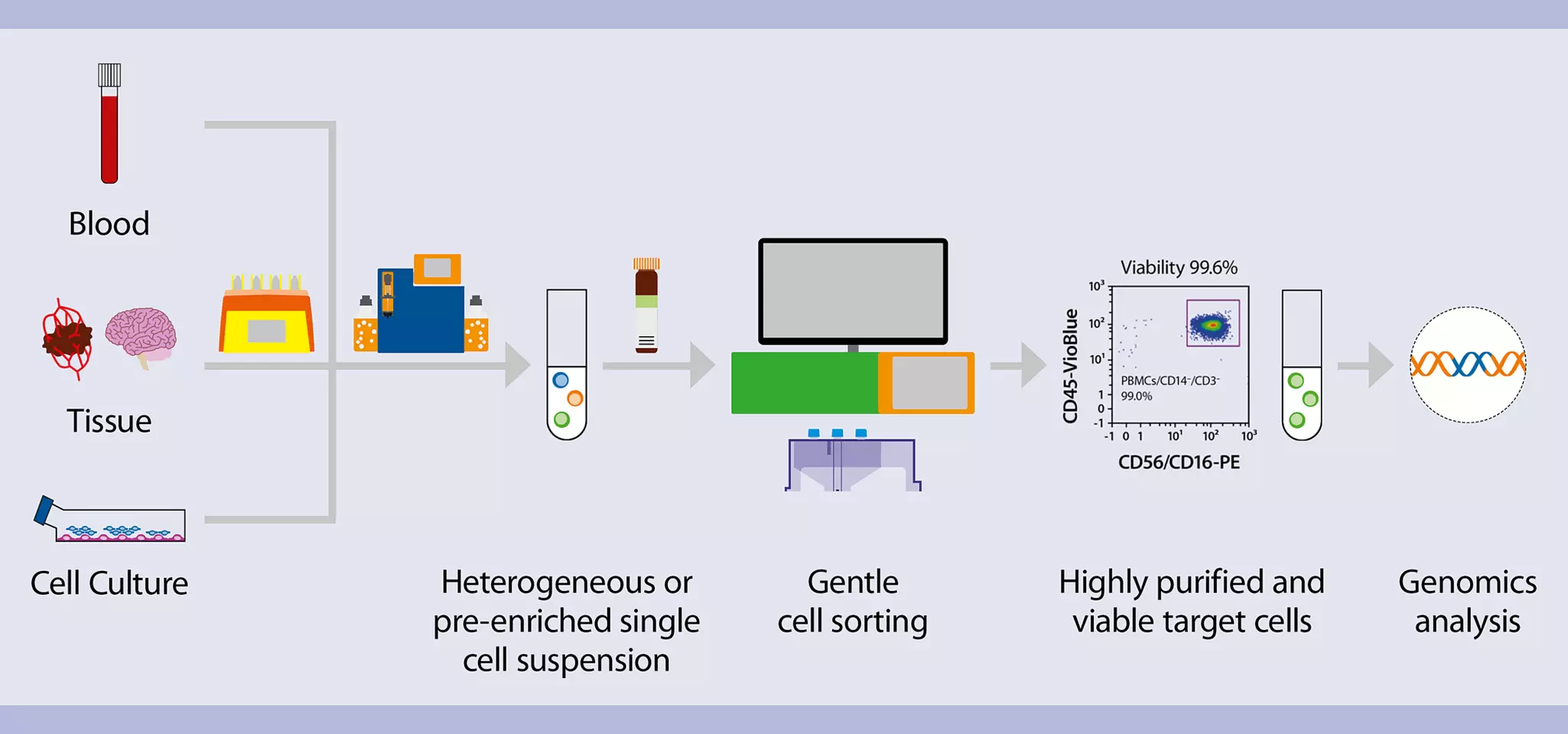
Obtain highly viable cells with the MACSQuant Tyto Cell Sorter
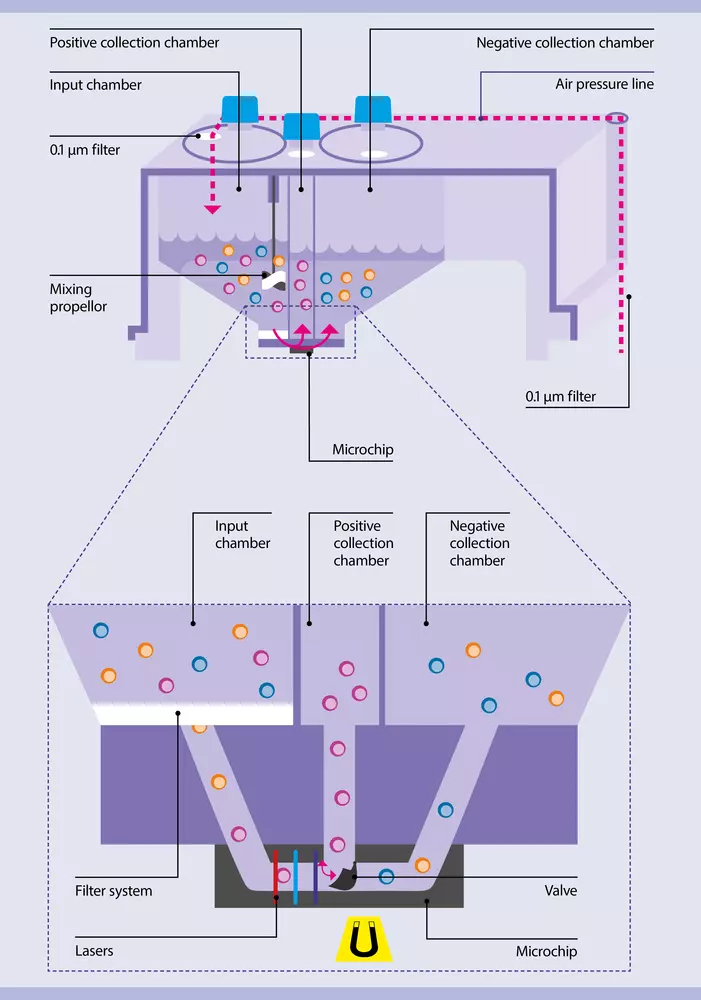
Gentle to cells
Unlike conventional droplet sorters, the MACSQuant Tyto Cell Sorter does not subject cells to excessive pressure, strong decompression, high shear forces, or exposure to electrical charge. By employing a gentle microchip, this cell sorting approach results in the highest cellular viabilities without exposing cells to stressful conditions. Furthermore, the MACSQuant Tyto Cell Sorter is equipped with a temperature-controlled cooling unit, stabilizing your samples at a temperature of your choice from 4–25 °C.
The sorting mechanism of the MACSQuant Tyto Cell Sorter
Coming from the input chamber, cells enter the microchip through a microchannel where they are interrogated by three lasers. Before entering the microchannel, potential cell aggregates are held back by a filter system, guaranteeing a smooth sorting process. When a target cell (magenta) is identified, a magnetic pulse coming from the solenoid opens the microvalve, which then redirects the target cell into the positive collection chamber. In the default state, the valve is closed allowing non-selected cells (blue and orange) to flow through into the negative collection chamber.
Low expression of genes related to stress and activation
Data provided by Quy Nguyen (Kessenbrock Lab, University of California, Irvine) demonstrate lower impact on EpCAM+/CD49f+ murine mammary gland epithelial cells sorted with the MACSQuant Tyto compared to conventional cell sorters. Prior to sequencing, library prep was performed using the 10x Chromium® system.

Lower expression of stress-related genes demonstrated by scRNA-Seq
Side-by-side comparison of gene expression of cells sorted on the MACSQuant Tyto and on a conventional droplet-based cell sorter. Dots colored in red indicate which dataset shows higher gene activation. The dot size indicates a relative gene-expression level.

Higher sample quality of cells demonstrated by mRNA-Seq
Whole transcriptome (mRNA) analysis showed that cells sorted using the MACSQuant Tyto resulted in higher numbers of total detected genes and unique molecular identifiers (UMIs) compared to cells sorted on a conventional droplet sorter, indicating a high sample quality.
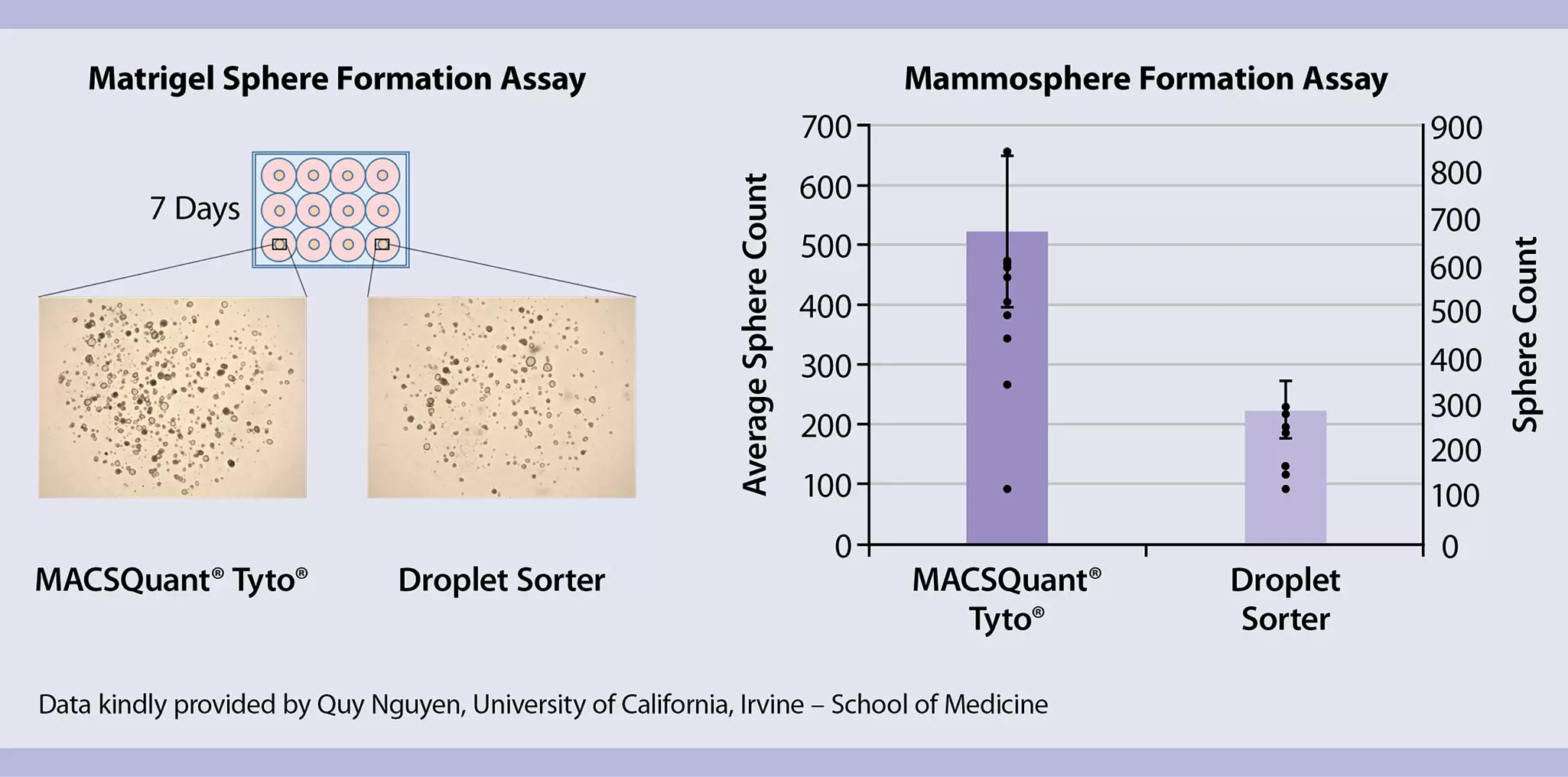
High viability and functionality of cells demonstrated by sphere-formation assay
A matrigel sphere formation assay was performed after cells were sorted using either a droplet-based cell sorter or the MACSQuant Tyto. Seven days after seeding, the Tyto-sorted samples showed a significantly higher sphere formation, speaking to a higher viability and functionality of these cells, and matching the results observed in the scRNAseq experiments.
Spotlight on scientists: MACSQuant Tyto Customer Stories
Watch the webinar: “Realize better NGS results through gentle cell sorting"
In this webinar Quy Ngyuen of the University of California discusses how the data quality of single cell genomics applications is greatly affected by the way cells are sorted beforehand.


You have previously chosen International as your location.
What do you want to do?