The µMACS and MultiMACS mRNA Isolation Kits facilitate fast and efficient mRNA isolation without prior preparation of total RNA. Pure mRNA is directly isolated from cells, tissue, or blood by magnetic labeling with µMACS Oligo(dT) MicroBeads. Due to the fast reaction kinetics the small (50 nm) µMACS Oligo(dT) MicroBeads instantly bind to mRNA molecules and allow for efficient and reproducible isolation of high-purity mRNA. This magnetic bead-based technology ensures reliable results from just a few cells up to 107 cells.


Related products for µMACS™ and MultiMACS™ mRNA Isolation Kits
Principle of MACS Technology for mRNA isolation and cDNA synthesis.
Quantification of 96 mRNA samples purified from 100 µg total RNA from mouse liver with the MultiMACS mRNA Isolation Kit using the MultiMACS Separator. Average yield: 1.3 µg mRNA; coefficient of variation of 96 samples: 5.2%.
Quantitative RT-PCR of 96 samples purified from 100 µg total RNA from mouse liver with the MultiMACS mRNA Isolation Kit using the MultiMACS Separator. A) After reverse transcription, quantitative amplification of the housekeeping gene GAPDH was performed. B) Mean cycle threshold: 12.0; coefficient of variation: 2.0%. Display of the dissociation curves of all 96 samples shows pure peaks.
The µMACS and MultiMACS mRNA Isolation Kits facilitate fast and efficient mRNA isolation without prior preparation of total RNA. Pure mRNA is directly isolated from cells, tissue, or blood by magnetic labeling with µMACS Oligo(dT) MicroBeads. Due to the fast reaction kinetics the small (50 nm) µMACS Oligo(dT) MicroBeads instantly bind to mRNA molecules and allow for efficient and reproducible isolation of high-purity mRNA. This magnetic bead-based technology ensures reliable results from just a few cells up to 107 cells.
A range of applications from reverse transcription (RT)-PCR to microarray analysis and cDNA library generation require high-quality RNA. Using mRNA instead of total RNA as starting material can significantly improve the sensitivity and specificity of the results. This is particularly important, when the starting material is limited or rare transcripts are analyzed. µMACS and MultiMACS mRNA Isolation Kits enable a highly sensitive mRNA isolation, faster even than traditional total RNA isolations.
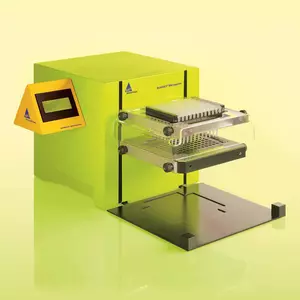
After cell lysis and clearing of the cell lysate, the mRNA is magnetically labeled with µMACS Oligo(dT) MicroBeads. Due to the small size of the MicroBeads, the hybridization to the poly(A)+ tail of the mRNA molecules is completed within seconds. The sample is loaded onto a MACS Column placed in the magnetic field of a µMACS Separator. After washing, the magnetically labeled mRNA is retained on the column. By applying Elution Buffer on the column, pure mRNA is eluted from the column. The µMACS mRNA Isolation Kits are designed for manual low-throughput mRNA isolation whereas the MultiMACS mRNA Isolation Kits are designed for high-throughput applications in a 96-well format. The MultiMACS Kits are used in combination with the MultiMACS M96 Separator that can be integrated in a robotic system to achieve a fully automated approach.
- Holtappels, R. et al. (2002) Processing and presentation of murine cytomegalovirus pORFm164-derived peptide in fibroblasts in the face of all viral immunosubversive early gene functions. J. Virol. 76: 6044-6053
- Fischer, A. et al. (2002) Cyclin-dependent kinase 5 is required for associative learning. J. Neurosci. 22: 3700-3707
- Dias Neto, E. et al. (2000) Shotgun sequencing of the human transcriptome with ORF expressed sequence tags. Proc. Natl. Acad. Sci. U.S.A. 97: 3491-3496
- Yamamoto, K. et al. (2000) P2X(4) receptors mediate ATP-induced calcium influx in human vascular endothelial cells. Am. J. Physiol. Heart Circ. Physiol. 279: H285-H292
- Gangi, E. et al. (2005) IL-10-producing CD4+CD25+ regulatory T cells play a critical role in granulocyte-macrophage colony-stimulating factor-induced suppression of experimental autoimmune thyroiditis. J Immunol 174: 7006-7013
- Okajima, T. et al. (1999) Molecular cloning of brain-specific GD1alpha synthase (ST6GalNAc V) containing CAG/Glutamine repeats. J. Biol. Chem. 274: 30557-30562
You have previously chosen International as your location.
What do you want to do?