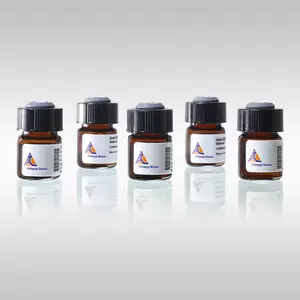
The Dead Cell Removal Kit is a fast and straightforward way of eliminating dead cells from cell cultures or tissue preparations. The Dead Cell Removal Kit contains ready-to-use MicroBeads and Binding Buffer for the magnetic labeling of cell debris, dead cells, and dying cells. The magnetically labeled material is removed by magnetic separation and pure, viable cells are obtained within 25 minutes.


Related products for Dead Cell Removal Kit
Dead cells were eliminated from cultured cells (Jurkat cells) by labeling of cells with Dead Cell Removal MicroBeads and separation over an LS Column in the magnetic field of a MidiMACS™ Separator. Dead cells were fluorescently stained with propidium iodide.
Working scheme for the Dead Cell Removal Kit.
The Dead Cell Removal Kit is a fast and straightforward way of eliminating dead cells from cell cultures or tissue preparations. The Dead Cell Removal Kit contains ready-to-use MicroBeads and Binding Buffer for the magnetic labeling of cell debris, dead cells, and dying cells. The magnetically labeled material is removed by magnetic separation and pure, viable cells are obtained within 25 minutes.
The Dead Cell Removal Kit has been successfully used for the following applications:
- Removal of dead cells prior to MACS® Separation of cells
- Reduction of flow sorting time by elimination of dead cells
- Elimination of dead cells from cell cultures
- Improvement of immunocytochemical analysis of frozen cells
- Preparation of viable, single-cell suspensions from tissue
- Removal of dead cells from spermatozoa samples
- Removal of dead cells prior to or following transfection of cells
MS, LS, XS, or autoMACS® Columns.
- Glander, H. J. et al. (2002) Deterioration of spermatozoal plasma membrane is associated with an increase of sperm lyso-phosphatidylcholines. Andrologia 34: 360-366
- Kinoshita, N. et al. (2002) Autocrine IL-15 mediates intestinal epithelial cell death via the activation of neighboring intraepithelial NK cells. J Immunol 169: 6187-6192
You have previously chosen International as your location.
What do you want to do?